Track and Sill Cleaning
Window track and sill cleaning is removing dust, dead insects, grit, and dirt from the channels where window sashes slide and from the ledge below the glass. It keeps windows gliding, keeps debris out of the small drain slots, and finishes the job so clean glass does not sit in a dirty frame.
Need this done on your property? See our window cleaning in Madison page.
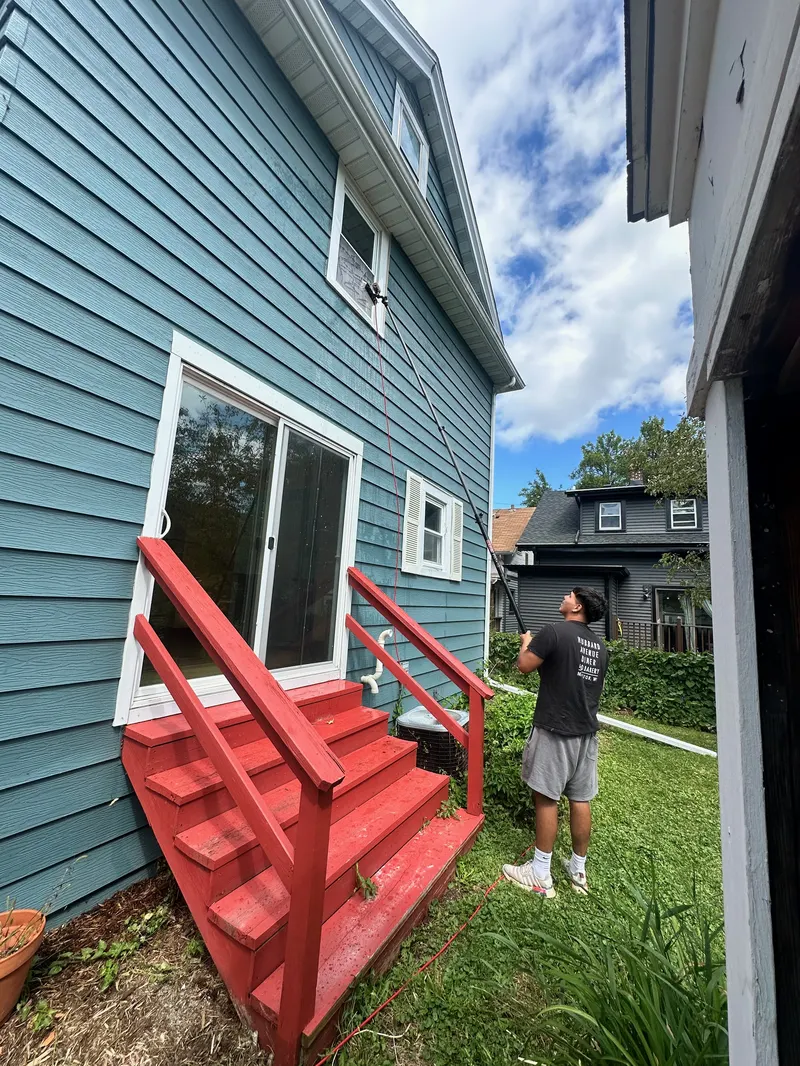
In depth
Tracks collect debris faster than glass does. Left alone, packed dirt wears weatherstripping, makes sliders stick, and blocks the weep holes that let rain drain out, which is how leaks and rot begin. The usual steps are to vacuum or brush out loose debris, scrub the channel with a small brush and mild cleaner, wipe it dry, and confirm the weep holes are open. Interior tracks hold winter dust, and exterior tracks hold pollen, leaves, and insects.
How this shows up on our jobs
Madison windows collect heavy pollen in spring and leaf debris in fall. We include a track and sill detail, and a weep hole check, with a full window cleaning.
Services where this matters
Frequently asked
- What is Track and Sill Cleaning?
- Window track and sill cleaning is removing dust, dead insects, grit, and dirt from the channels where window sashes slide and from the ledge below the glass. It keeps windows gliding, keeps debris out of the small drain slots, and finishes the job so clean glass does not sit in a dirty frame.
- How does Track and Sill Cleaning show up on our jobs?
- Madison windows collect heavy pollen in spring and leaf debris in fall. We include a track and sill detail, and a weep hole check, with a full window cleaning.
Need window cleaning in Madison?
Free quotes — most estimates back within a few hours. Prefer to talk? Call us anytime.
Related terms
Weep Hole
A weep hole is a small opening at the bottom of a brick veneer wall or window frame that lets trapped water drain out. On brick, weeps are gaps left in the mortar every few bricks along the bottom course; on windows, they are slots in the exterior frame.
Soft-Bristle Brush
A soft-bristle brush is the wash head of a water-fed pole or the hand tool used to gently agitate a surface during cleaning without damaging the substrate. For glass, a double-row flocked nylon or hog-hair brush is standard. For painted siding, soffit, and screens, a rotary or flagged polypropylene brush of medium-soft density is the norm. The goal is always enough mechanical action to lift dirt from the surface without micro-scratching the paint, glass coating, or finish.
Screen Washing
Screen washing is the process of removing, cleaning, and reinstalling window screens during a window cleaning service. Screens accumulate dust, pollen, dead insects, and oxidation on both sides over time, and a dirty screen significantly reduces the clarity and light transmission of a clean window pane behind it. Professional screen washing involves removing each screen from its frame, laying it flat and spraying it with a gentle detergent solution, scrubbing with a soft brush, rinsing thoroughly, and allowing to dry in a vertical position before reinstallation.
Storm Window Cleaning
Storm window cleaning is cleaning the extra pane added over a primary window, including its tracks, frame, and the glass on both sides, which often means removing the panel. Older homes commonly have triple-track aluminum storms, and each layer of glass collects its own dust, moisture, and grime.
Pure Water Window Cleaning
Pure water window cleaning washes glass with purified, mineral-free water delivered through a long pole with a soft brush, then lets the glass air dry. Because no dissolved minerals remain, the glass dries spot-free without squeegeeing, and the pole reaches upper windows safely from the ground.