Weep Hole
A weep hole is a small, deliberately-placed opening at the bottom of a brick-veneer wall, window frame, or storefront glazing that lets trapped water drain out. On brick homes, weeps are typically vertical gaps in the mortar every four to six bricks along the bottom course; on vinyl and aluminum windows, they are the small slots in the bottom of the exterior frame. Without weep holes, water that gets behind the brick veneer or inside the window frame has no escape path and causes efflorescence, mold, rot, and interior leaks.
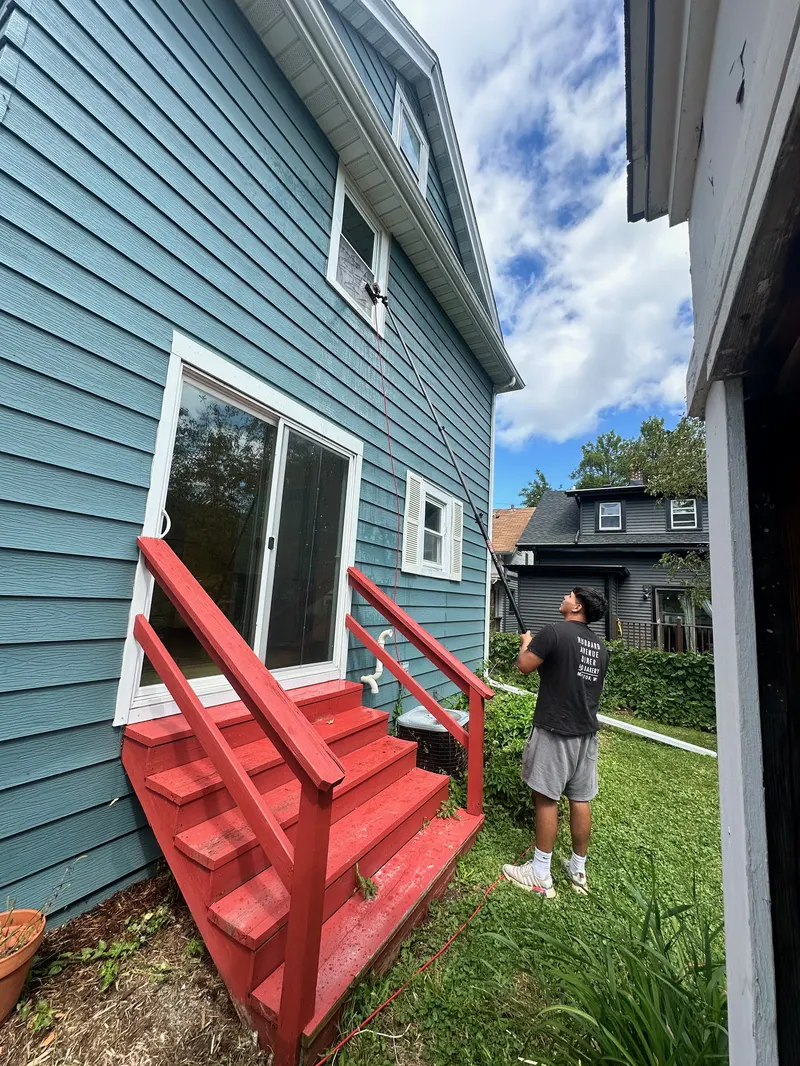
In depth
Weep holes are frequently clogged by paint, caulk, mortar, spider webs, mulch, or lawn debris. During a thorough window cleaning, we inspect and clear every weep on every window — a task most cleaners skip. Clogged weeps are the single most common cause of "leaking" windows in rainstorms. On brick homes, we also confirm the bottom-course weeps are open during a house wash; clogged brick weeps can turn a rainy Madison spring into an interior moisture problem.
How this shows up on our jobs
We clear every window weep hole on every window cleaning job and inspect brick-veneer weeps on every house wash. Most cleaners don't — and it's why their customers have leaks.
Services where this matters
Frequently asked
- What is Weep Hole?
- A weep hole is a small, deliberately-placed opening at the bottom of a brick-veneer wall, window frame, or storefront glazing that lets trapped water drain out. On brick homes, weeps are typically vertical gaps in the mortar every four to six bricks along the bottom course; on vinyl and aluminum windows, they are the small slots in the bottom of the exterior frame. Without weep holes, water that gets behind the brick veneer or inside the window frame has no escape path and causes efflorescence, mold, rot, and interior leaks.
- How does Weep Hole show up on our jobs?
- We clear every window weep hole on every window cleaning job and inspect brick-veneer weeps on every house wash. Most cleaners don't — and it's why their customers have leaks.
Need window cleaning in Madison?
Free quotes — most estimates back within a few hours. Prefer to talk? Call us anytime.
Related terms
Damp Proofing
Damp proofing is the application of a moisture-resistant coating or membrane to a masonry surface — most commonly foundation walls, brick veneer, and chimneys — to slow water absorption and reduce efflorescence, spalling, and interior moisture problems. It is less robust than true waterproofing (which forms a continuous, pressure-rated barrier) but more cost-effective and better-matched to surfaces that need to breathe.
Efflorescence
Efflorescence is the white, chalky, powdery deposit that forms on the surface of brick, concrete, stone, stucco, and block masonry when water dissolves mineral salts inside the material and carries them to the surface. As the water evaporates, the salts are left behind as a crystalline residue. It is cosmetic — not structural — but it is frustratingly persistent because every rain cycle can push more salts to the surface.
Crown Coat
A crown coat is the sloped mortar or cement cap that sits at the top of a masonry chimney, surrounding the flue tile(s). It is not the decorative cap piece (that's a chimney cap) — it is the poured or troweled waterproof seal that directs rainwater away from the flue and the chimney's interior bricks. A properly built crown coat is two inches thick at the flue, tapered outward to a drip edge overhanging the brick by about two inches, and cast from a waterproof mortar mix or a specialty elastomeric crown-coat product.