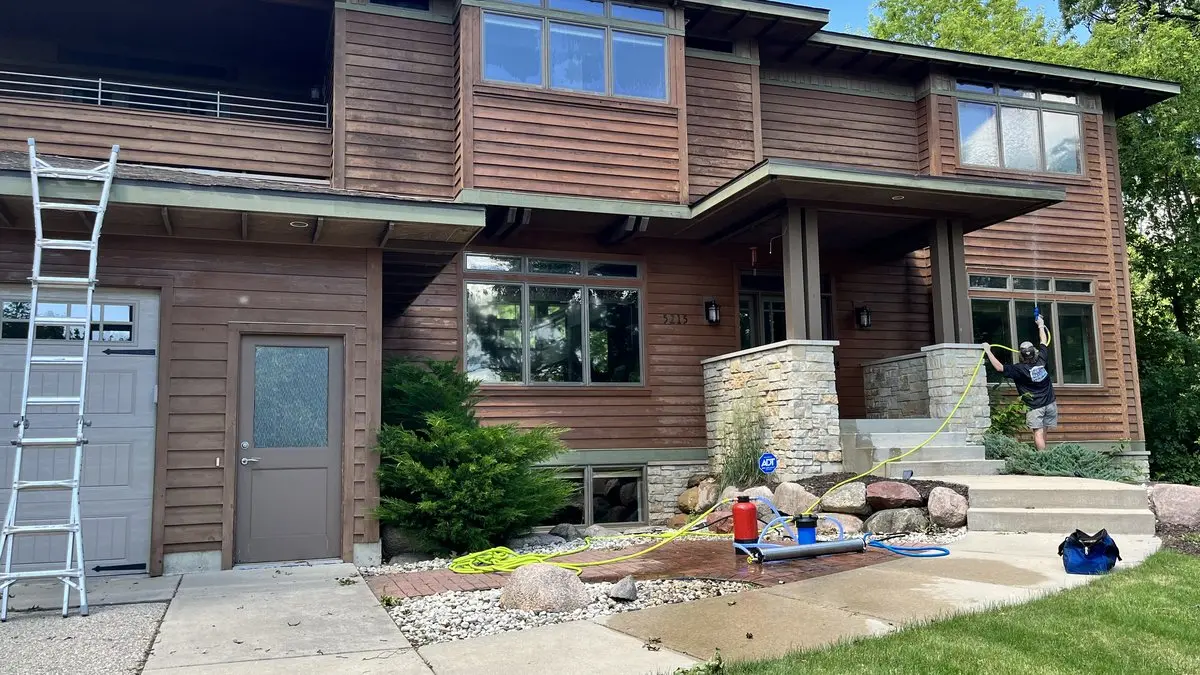
The specifics behind the work — chemistry, equipment, scheduling, and the discipline commercial properties actually require.
Why typical pressure-washing fails commercial buildings
The generalist crew that does great work on a single-family home in Maple Bluff is the wrong fit for a 40,000-square-foot industrial flex space in Verona or a downtown Madison Class A office building. Three gaps disqualify almost every residential-trained vendor. Gap one: equipment scale. Residential pressure-washing uses a 4 GPM cold-water rig; commercial work requires hot-water capability (200°F at 5 GPM minimum) to lift airborne grease, road grime, and oxidation embedded in industrial brick and precast concrete. Gap two: surface-specific protocols. Class A office building curtain wall, EIFS, anodized metal panel, historic brick, precast concrete, and metal panel cladding each require different chemistry and PSI ceilings — a generalist crew applies a single protocol to all of them and damages one. Gap three: documentation. Commercial property managers, ownership entities, and tenant procurement teams ask for COI naming multiple insureds, SDS binders, OSHA training records, and DNR-compliant runoff plans. We rebuilt our intake, dispatch, and documentation around those expectations.
Chemistry and PSI per commercial substrate
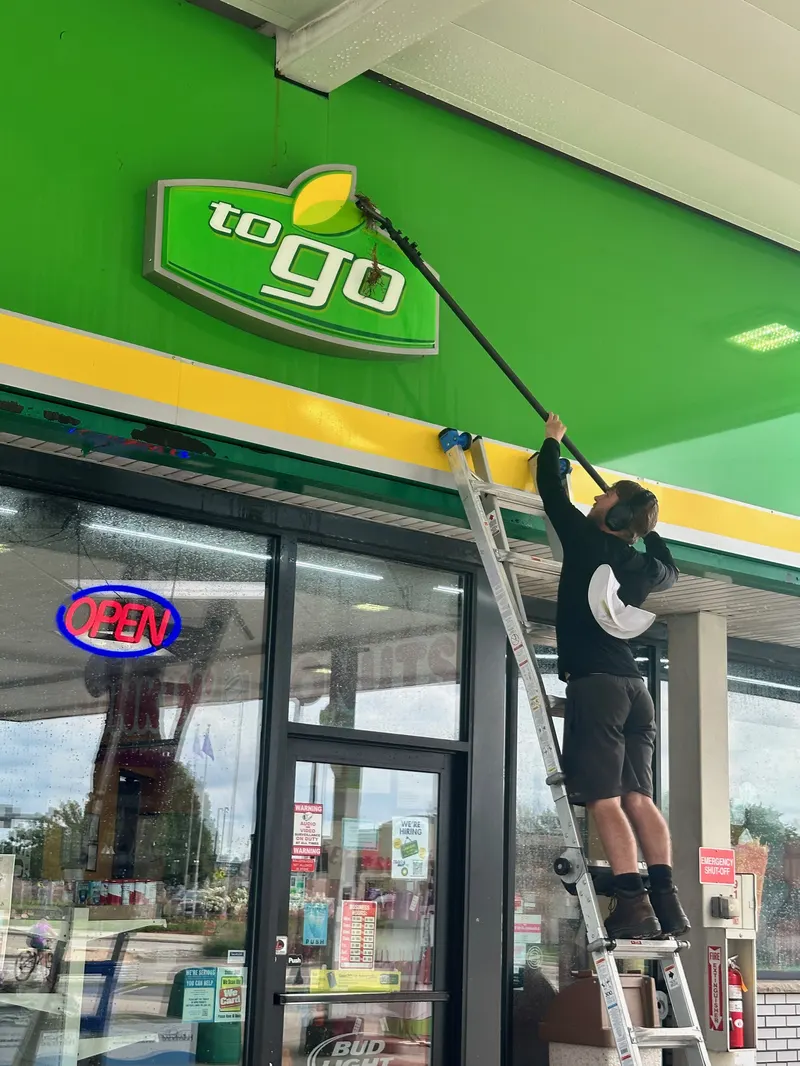
Every commercial substrate has a chemistry whitelist and a maximum-safe-PSI ceiling, and our crew knows both before opening a wand. Curtain wall and tempered exterior glass: pure-water-fed pole work (Tucker pole, RO-filtered water), zero chemistry, no contact pressure. EIFS and synthetic stucco: soft-wash only at 100-150 PSI maximum, 0.5% sodium hypochlorite + alkyl polyglucoside surfactant + pH-neutral rinse. High pressure on EIFS fractures the synthetic coat and creates water-intrusion paths — a five-figure repair we will not cause. Anodized aluminum and brushed-metal panels: 800-1,200 PSI with non-ionic surfactant; never use ammoniated cleaners (discolors anodized finish). Modern brick and precast concrete: 2,500-3,500 PSI with hot water 200°F, citrus-emulsifier degreaser pre-treatment for grease-bearing surfaces. Historic brick (pre-1950, particularly soft Cream City brick from Wisconsin's local Niagara Escarpment quarries): D/2 Biological Solution protocol at sub-500 PSI — the National Park Service-recommended method for historic masonry preservation. Painted commercial surfaces: 800 PSI cold-water rinse only; chemistry matched to paint chemistry.
Graffiti, drive-through, and same-day response capacity
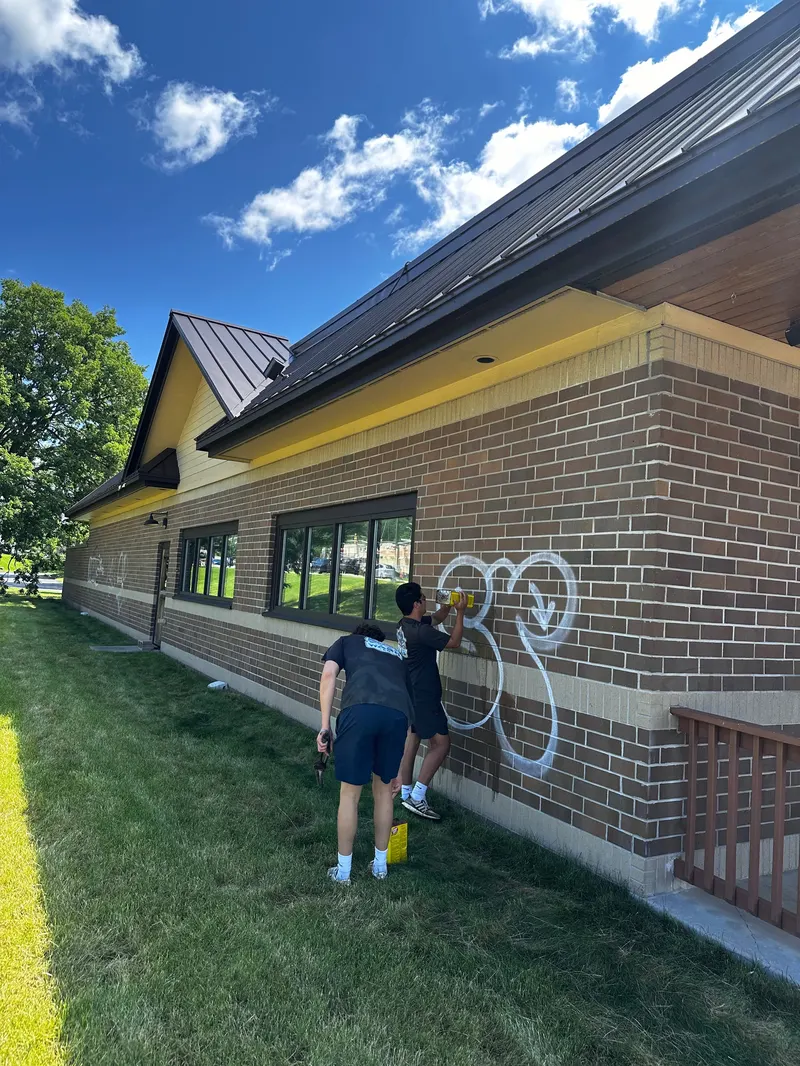
Commercial exterior emergencies don't wait for next Tuesday's standing visit. Two specific capacities matter most. One — graffiti removal, same-day or next-day response. Graffiti is a tenant-confidence issue (a tagged storefront discovered Monday morning is a customer-trust signal that erodes over hours), and quick removal discourages repeat hits — the longer graffiti stays up, the more attractive the surface becomes to additional taggers. We carry citrus-gel chemical removers, surface-specific approaches (brick, glass, anodized metal, painted concrete, stone all require different chemistry), and an anti-graffiti coating option that makes future removal a 15-minute pressure-wash instead of a chemistry-and-dwell event. Two — drive-through lane and overnight QSR cleaning. Restaurant chains, banks with drive-through ATMs, and pharmacy drive-throughs need their lane surfaces, canopies, speaker boxes, and menu boards cleaned overnight (typically 11 PM - 5 AM). We run light-tower-deployed overnight work, food-safe chemistry only, and have your operation back open by your morning shift arrival. Both capacities are reservation-based — recurring contracts unlock SLA on first-response time.
Equipment inventory and crew composition
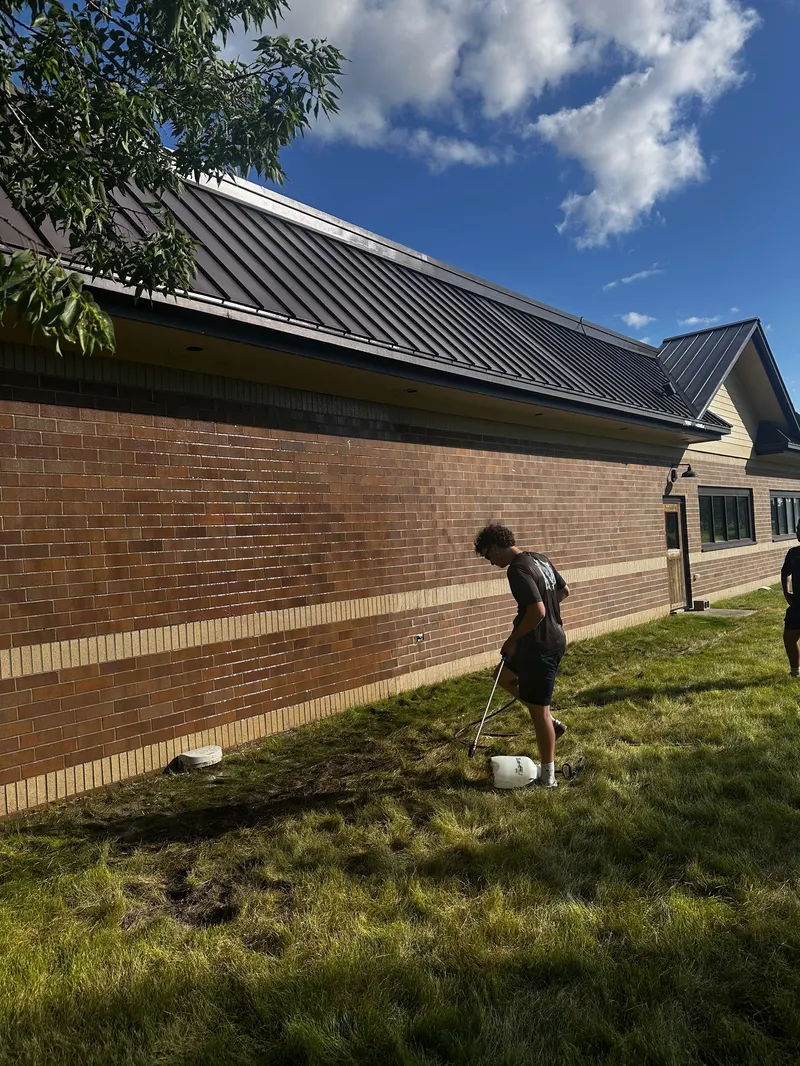
Our commercial fleet runs three hot-water rigs (Hydro Tek HD60005, 4,000 PSI, 5 GPM, 200°F sustained), two soft-wash pump systems (12 GPM X-Jet rigs), three pure-water-fed pole systems (Tucker pole with RO-filtered water tanks, up to 5-story reach), four vehicle-mounted hot-water boilers for large-scale work, containment-mat inventory for runoff management near storm drains, and an electric pressure washer (Ridgid R6020) for noise-sensitive work near patient-facing or contemplative spaces. Crew composition for commercial work is always 2-3 technicians plus a foreman — the foreman is responsible for substrate identification (visual + sometimes test patch), chemistry decisions, PSI setting, containment setup, and documentation. We do not run solo-tech commercial work because the cost of getting substrate identification wrong is too high. All crew members are W-2 employees, background-checked, uniformed, and dispatched in marked vehicles. For buildings taller than 5 stories we coordinate insured rope-access subcontractors and provide a single invoice and single COI to your management entity.