Freeze-Thaw Cycle
A freeze-thaw cycle happens when temperatures swing above and below freezing, so water that soaked into a surface freezes, expands, and melts again. Each round pushes cracks wider. Wisconsin delivers many cycles every winter and spring, which is why exterior surfaces here wear out faster than in warmer climates.
Need this done on your property? See our gutter cleaning in Madison page.
In depth
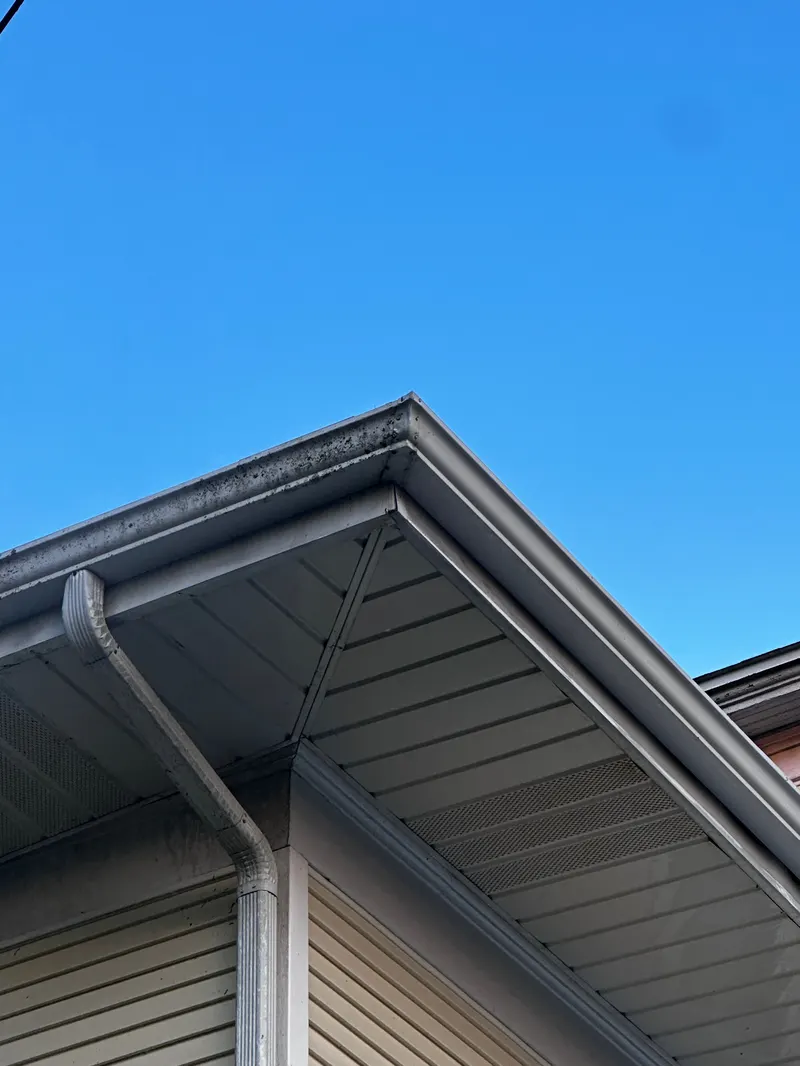
Concrete, brick, mortar, stucco, wood, and asphalt shingles are all porous to some degree. Water enters tiny pores or cracks, freezes, and expands with enough force to flake surfaces (spalling), crack mortar, loosen gutters, and feed ice dams. The risk peaks in late winter and early spring, when days thaw and nights freeze. Sealing surfaces, keeping gutters flowing, pointing downspouts away from the house, and cleaning off moss and algae, which hold moisture against surfaces, all reduce the damage.
How this shows up on our jobs
Freeze-thaw is the central fact of exterior maintenance in Madison. It is why we flag cracked mortar, scaled concrete, and clogged gutters in our reports, and why fall cleaning is cheaper than spring repair.
Services where this matters
Frequently asked
- What is Freeze-Thaw Cycle?
- A freeze-thaw cycle happens when temperatures swing above and below freezing, so water that soaked into a surface freezes, expands, and melts again. Each round pushes cracks wider. Wisconsin delivers many cycles every winter and spring, which is why exterior surfaces here wear out faster than in warmer climates.
- How does Freeze-Thaw Cycle show up on our jobs?
- Freeze-thaw is the central fact of exterior maintenance in Madison. It is why we flag cracked mortar, scaled concrete, and clogged gutters in our reports, and why fall cleaning is cheaper than spring repair.
Need gutter cleaning in Madison?
Free quotes — most estimates back within a few hours. Prefer to talk? Call us anytime.
Related terms
Spalling
Spalling is the flaking, chipping, or popping off of the surface layer of concrete, brick, or stone, usually because water got in, froze, and expanded. Spalled surfaces look pitted or peeled. Cleaning cannot repair them, and cleaning with too much pressure can make them worse.
Ice Dam
An ice dam is a ridge of ice that forms at the edge of a roof when heat escaping through the attic melts snow on the upper roof, the meltwater flows down toward the cold eave overhang, and refreezes against the cold roofline. As more water flows down and freezes behind the dam, the pool of water behind the ice ridge backs up under the shingles, seeps through the roof deck, and enters the attic and wall cavities below. Water damage from a single significant ice dam event can reach thousands of dollars in insulation replacement, drywall repair, and mold remediation.
Concrete Scaling
Concrete scaling is the peeling away of the thin top layer of a slab, leaving a rough, pitted surface with exposed stone. It is caused mainly by de-icing salt and freeze-thaw cycles acting on concrete that was not air-entrained or sealed. It is most common on driveways, walks, and steps.
Efflorescence
Efflorescence on brick or concrete is the white, chalky powder that forms when water dissolves mineral salts inside masonry and carries them to the surface. It also shows on stone, stucco, and block. As the water evaporates, the salts are left behind as a crystalline residue. It is cosmetic — not structural — but it is frustratingly persistent because every rain cycle can push more salts to the surface.
Concrete Sealer
A concrete sealer is a penetrating or film-forming coating applied to cleaned, dry concrete to reduce its absorption of oil, road salt, staining agents, and water. Penetrating sealers (silane, siloxane, or silane-siloxane blends) chemically bond below the surface to repel liquid without changing the appearance or traction of the concrete. Film-forming sealers (acrylic, epoxy, polyurethane) create a surface coating that is visible as a sheen and provides excellent stain resistance but requires periodic reapplication as it wears.
Damp Proofing
Damp proofing is the application of a moisture-resistant coating or membrane to a masonry surface — most commonly foundation walls, brick veneer, and chimneys — to slow water absorption and reduce efflorescence, spalling, and interior moisture problems. It is less robust than true waterproofing (which forms a continuous, pressure-rated barrier) but more cost-effective and better-matched to surfaces that need to breathe.