Table of Contents
- 1What Happens If You Never Clean Your Deck? Rot, Mold, and Liability
- 2How Madison's Climate Turns a Dirty Deck Into a Rotting One
- 3Where Rot Actually Starts — and Why You Don't See It Coming
- 4The Slip, Fall, and Liability Risk Nobody Talks About
- 5What "Never Cleaned" Actually Looks Like Season by Season
- 6How We Actually Clean a Deck — and What to Expect
- 7Frequently Asked Questions About Deck Cleaning and Rot Prevention
Quick Answer
Neglecting your deck [in Madison](/blog/vinyl-siding-washing-madison), Wisconsin is one of the fastest ways to turn a $5,000–$15,000 outdoor structure into a rotting liability. Deck cleaning importance — specifically to prevent rot, mold, and structural decay — cannot be overstated in a climate like
What Happens If You Never Clean Your Deck? Rot, Mold, and Liability
Neglecting your deck [in Madison](/blog/vinyl-siding-washing-madison), Wisconsin is one of the fastest ways to turn a $5,000–$15,000 outdoor structure into a rotting liability. Deck cleaning importance — specifically to prevent rot, mold, and structural decay — cannot be overstated in a climate like ours. Most industry sources agree that wood decks should be cleaned at least once every 12–18 months, and in Madison's freeze-thaw, high-humidity, heavy-snowfall environment, that timeline is not conservative — it's the bare minimum. Since we started The Total Wash Co. in Madison in 2021, I've walked more neglected decks than I can count, and the pattern is always the same: what started as a maintenance skip becomes a repair bill. Here's exactly what happens when a deck never gets cleaned — and what it costs you when you wait too long.
Deck cleaning at TWC runs $150–$400 depending on size and condition. A deck replacement in Wisconsin? Easily $8,000–$20,000. The math isn't complicated.
How Madison's Climate Turns a Dirty Deck Into a Rotting One
Madison sits in a cold, humid continental climate — and that combination is genuinely brutal on untreated wood. We get heavy snowfall from November through March, spring snowmelt that soaks everything, humid summers that keep things damp, and fall leaf drops that leave organic debris sitting on boards for months at a time. Every one of those seasons contributes to the same problem: prolonged moisture exposure on organic wood surfaces.
Here's the mechanism. Leaves, pine needles, and dirt accumulate between and on top of your deck boards. That debris acts like a sponge. It traps moisture against the wood surface 24 hours a day instead of letting it dry out between rain events. Fungal spores — which are always present in Wisconsin's atmosphere — land on that damp organic layer and find exactly what they need to colonize. Once fungal growth takes hold, it begins breaking down the lignin and cellulose in the wood fibers. That's rot. It doesn't happen overnight, but in Madison's climate, it happens faster than most homeowners expect.
A local deck builder I've spoken with put it plainly: heavy snow, frequent rain, and humidity in Madison create ideal conditions for fungal growth on deck boards. I see this confirmed every spring when I'm doing jobs in Nakoma and Maple Bluff — older neighborhoods with big mature trees that drop massive amounts of debris. The decks that haven't been cleaned in two or three years often have soft spots at the board ends and near the ledger board where water has been pooling since October.
Ice dams and overflowing gutters make this worse. When gutters are clogged — which, in Madison's fall, happens constantly — they overflow directly onto the deck surface below, adding concentrated water and organic runoff to boards that are already moisture-saturated. It's a compounding problem, not a linear one.
Where Rot Actually Starts — and Why You Don't See It Coming
One of the most common questions I get from homeowners — and one that shows up constantly in deck owner forums online — is: "How do I know if my deck is rotting if it looks okay on top?" It's a fair question. The honest answer is that rot typically starts where you can't see it.
The first areas to show decay on a wood deck are usually the boards sitting directly over structural contact points — joists, beams, and the ledger board where your deck attaches to the house. These are spots where water collects, ventilation is limited, and wood-to-wood contact traps moisture. The top surface of the board might look fine, stained or faded but solid, while the underside has been slowly degrading for a year or more.
The gaps between boards are another critical failure point. Debris that packs into those gaps — compacted leaves, seed pods, dirt — holds moisture in constant contact with the board edges. In Madison, that debris can sit there from October through April without ever fully drying out. The top quarter to half inch of the board edge begins softening first. By the time you notice the board feels spongy underfoot, the decay is already significant.
This is why deck cleaning importance for preventing rot isn't just about aesthetics. Cleaning removes the debris and biological material that drive the decay process. A clean deck dries faster. A deck that dries faster rots slower. That's the whole equation.
I also want to be honest about one limitation here: if your deck hasn't been cleaned or sealed in five or more years and the wood is already showing significant gray discoloration and soft spots, cleaning alone won't reverse structural damage. At that point, you're looking at board replacement alongside cleaning. Cleaning prevents rot — it doesn't undo it. That's why the 12–18 month cleaning cycle matters: it keeps you on the prevention side of that line.
The Slip, Fall, and Liability Risk Nobody Talks About
Here's the part that surprises a lot of homeowners: a dirty deck isn't just a maintenance problem. It can be a legal liability.
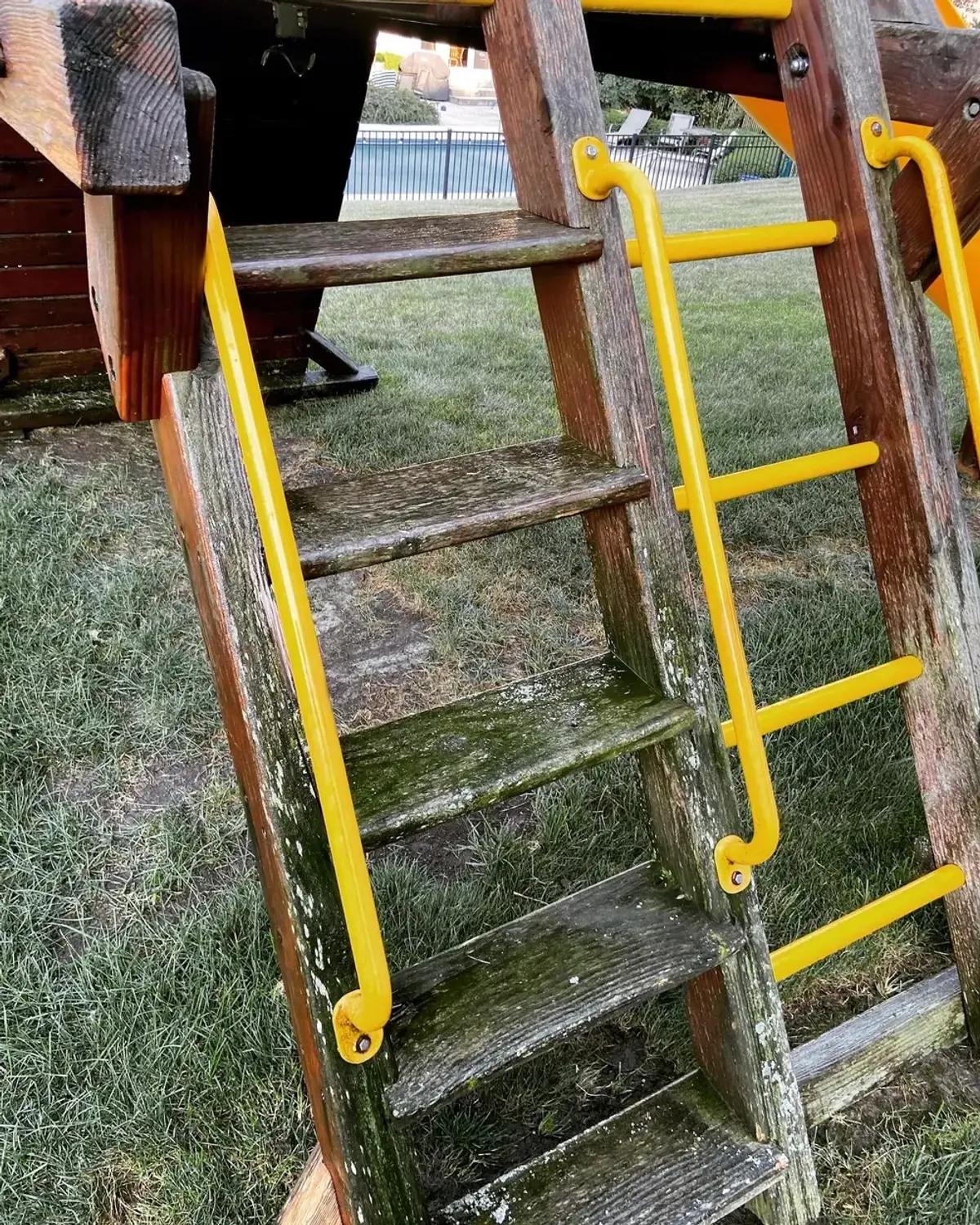
Mold and algae on a deck surface are genuinely slippery, especially when wet. In Wisconsin, that means they're dangerous from April through November — basically any time it rains or there's morning dew. If a guest, contractor, or neighbor slips and falls on your deck and you haven't maintained it, you can be held liable for the resulting injuries. Homeowner's insurance may cover some of this, but insurers also look at whether reasonable maintenance was performed. A deck that hasn't been cleaned in years, with visible black algae growth and soft boards, is a hard thing to defend as "reasonably maintained."
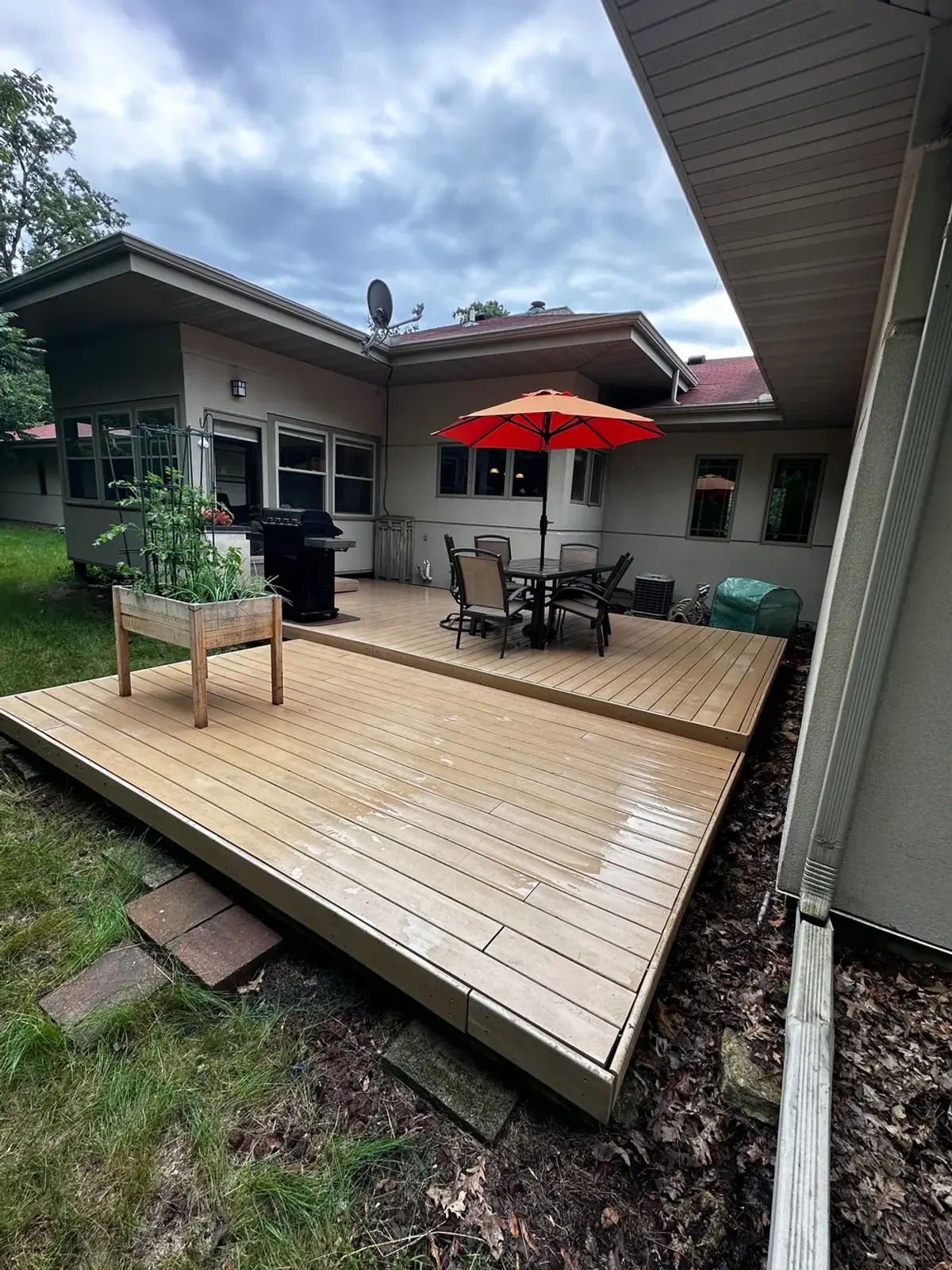
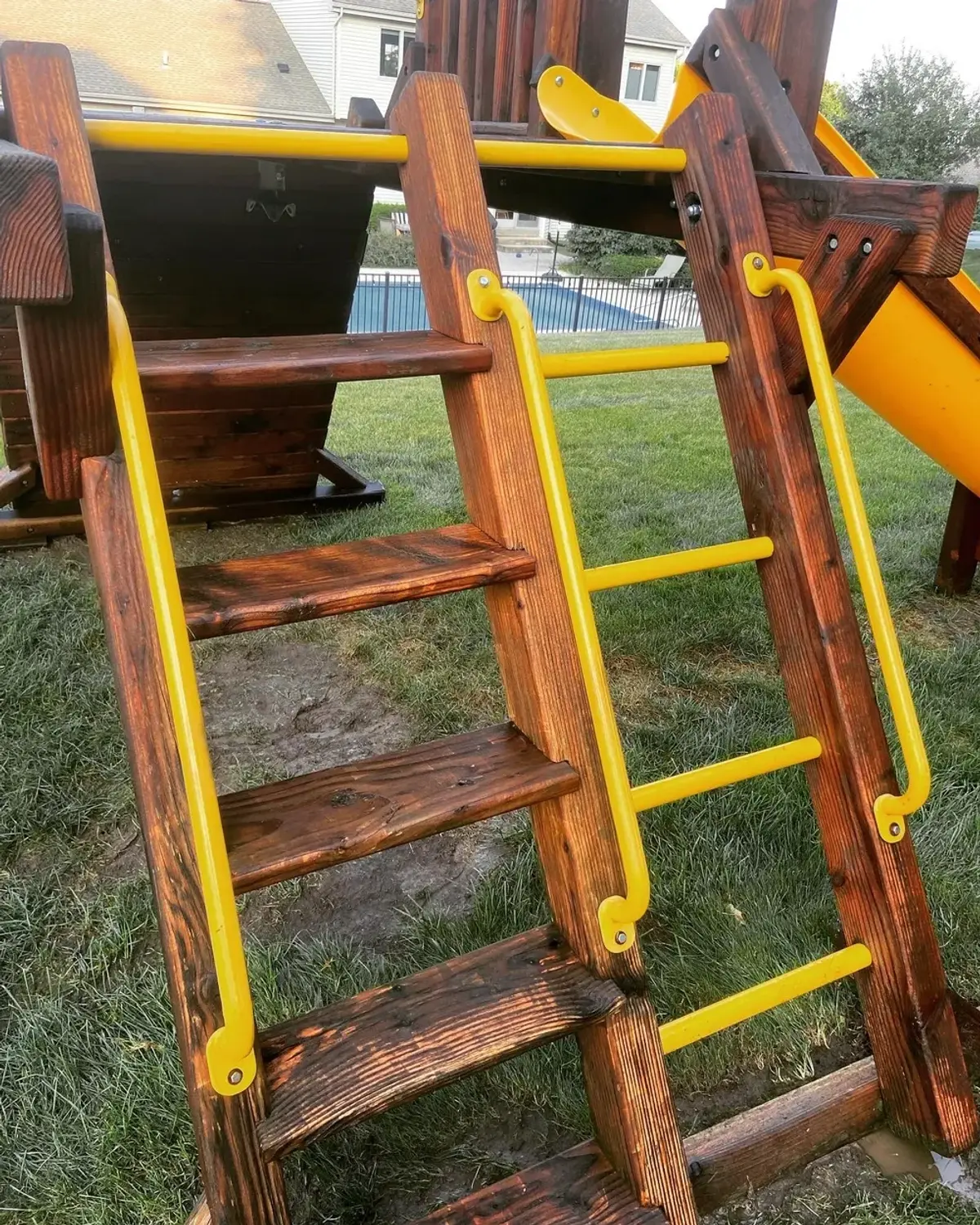
I've done deck cleaning jobs in Shorewood Hills and Fitchburg where the homeowner specifically mentioned their insurance renewal was coming up, or that a family member had already slipped on the surface. In both cases, the decks had heavy algae and mold growth that made the boards as slick as tile in the rain. A proper soft wash — using a diluted sodium hypochlorite solution and low-pressure rinsing — removed all of it in a few hours. The difference in surface texture was immediate and dramatic.
Beyond slip risk, there's the structural liability angle. In Wisconsin, decks that show visible rot or structural failure can create code compliance issues, particularly if you're selling the home or pulling permits for other work. A deck that's been neglected long enough to have failing joists or a compromised ledger connection is a safety hazard — and inspectors will flag it.
What "Never Cleaned" Actually Looks Like Season by Season
Let me walk you through what happens to a typical Madison wood deck that never gets cleaned. This is based on jobs I've seen firsthand, not hypotheticals.
Year One: Organic debris accumulates through fall. Leaves pack into board gaps. First winter adds snow load and freeze-thaw cycling that opens minor cracks in the wood grain. Surface starts to gray and oxidize. Mold spores begin colonizing shaded areas near the house and under furniture.
Year Two: Mold and mildew are now visibly present in black or green patches. Board gaps are packed with decomposing debris. The surface feels slightly rough and uneven. Boards near the ledger and over joists are beginning to soften at the edges. The deck looks dull and weathered. Surface is noticeably slippery when wet.
Year Three and Beyond: Rot is established in multiple boards, particularly at contact points. Fasteners may be showing rust staining. Algae growth creates significant slip hazard. Wood fibers in affected areas are visibly soft or spongy. Deck may have lost structural integrity at key points. Replacement of individual boards or sections is now likely necessary before the deck is safe to use.
That progression happens faster in shaded yards, near Lake Mendota or Lake Monona where ambient humidity is higher, or on decks with poor drainage design. I've seen Year Three damage on decks that were only two calendar years old — the right combination of shade, debris load, and Madison humidity can accelerate everything.
Fall, specifically, is the season that separates well-kept decks from ones that end up slippery and stained by spring. The wet leaves and debris of October and November set the conditions for the entire following year. Getting a professional deck cleaning done in late September or October — before that debris has a chance to sit through winter — is one of the highest-leverage maintenance decisions you can make as a Madison homeowner.
How We Actually Clean a Deck — and What to Expect
A lot of homeowners ask me whether [pressure wash](/blog/pressure-washing-deck-madison)ing a deck is safe, or whether they should DIY it. Here's my honest take: DIY deck cleaning is reasonable if you know what you're doing with the equipment and the right cleaners. The risk is using too much pressure, the wrong nozzle, or a cleaning solution that's too harsh. Pressure washing with a zero-degree or 15-degree tip at high PSI will raise the wood grain, gouge soft wood, and create more problems than you started with.
At TWC, we use a soft wash approach for most wood decks — a wood-safe cleaning solution applied at low pressure, allowed to dwell, then rinsed with a wide-fan nozzle at appropriate distance. For composite decks, we adjust the chemistry and pressure accordingly since composite materials respond differently than natural wood. We avoid salt-based de-icers on any deck surface we treat, consistent with manufacturer guidance that those products discolor and corrode deck materials.
One detail that matters: if you're planning to stain or seal your deck after cleaning — which you should be, especially on pressure-treated wood — you need to allow at least 48 hours of drying time before applying any product. Apply stain to a damp deck and it won't penetrate properly, which defeats the entire purpose of the sealing step.
Our deck cleaning service runs $150–$400 depending on the size of the deck, the level of buildup, and whether we're dealing with significant mold or algae that requires a longer dwell time. For most standard residential decks in the Madison area — Middleton, Verona, Sun Prairie, McFarland, Monona — we're typically in the $150–$250 range. Larger decks or heavily neglected surfaces run toward the higher end. We'll always give you a specific number before we touch anything.
The bottom line on deck cleaning importance for preventing rot is simple: a $150–$250 cleaning every 12–18 months protects a structure that costs $8,000–$20,000 to replace. If you have a wood deck in Madison and you can't remember the last time it was cleaned, that's your sign to schedule one before this winter's moisture load does any more damage.
We have 200+ five-star Google reviews from Madison-area homeowners, and deck cleaning is one of our most requested spring and fall services. The homeowners who call us every year to maintain their decks are the ones who aren't calling contractors for emergency board replacements five years later.
Ready to schedule? Get a free quote → or call us at (608) 393-7899.
Frequently Asked Questions About Deck Cleaning and Rot Prevention
How often should I have my deck cleaned in Madison, WI?
Most Madison wood decks benefit from professional cleaning every 12–18 months. If your deck is heavily shaded, near a body of water like Lake Mendota or Lake Monona, or surrounded by large trees that drop significant debris, annual cleaning is the smarter interval. Composite decks can often go 18–24 months between cleanings, but they still need regular attention to prevent mold growth in humid Wisconsin summers.
What does deck rot actually look like, and how do I check for it?
Early-stage rot often looks like gray or dark discoloration on board surfaces, soft or spongy texture when you press firmly with a finger or screwdriver, or visible crumbling at board ends and edges. The most common places to find rot first are boards directly over joists and beams, boards near the ledger where the deck attaches to the house, and any area where debris packs into gaps and holds moisture. If a screwdriver tip sinks into the wood more than a quarter inch with light pressure, that board likely needs replacement.
Can I pressure wash my own deck, or should I hire a professional?
DIY pressure washing is doable if you use the right equipment — a 40-degree or 25-degree fan tip, appropriate standoff distance (typically 12–18 inches for wood), and a wood-safe cleaning solution. The risk is using too much pressure, which raises wood grain and causes surface damage that actually traps more moisture over time. If your deck has significant mold, algae, or hasn't been cleaned in several years, a professional soft wash with proper chemistry will get better results and less risk of damage than most rental equipment setups.
What's the cost of deck [cleaning in](/blog/complete-guide-exterior-cleaning-madison-wi) the Madison, WI area?
The Total Wash Co. charges $150–$400 for deck cleaning in the Madison area, depending on deck size and condition. Most standard residential decks in neighborhoods like Nakoma, Middleton, Fitchburg, or Sun Prairie run $150–$250. Heavily neglected decks with significant mold or algae buildup may run toward the upper end due to extended dwell time and additional rinse passes. We always provide a firm quote before starting any work.
Does cleaning actually prevent rot, or is it just cosmetic?
Cleaning directly prevents rot by removing the organic debris and biological growth that drive the decay process. Leaves, mold, algae, and dirt trap moisture against wood surfaces and feed fungal colonies that break down wood fiber. Removing that material — and following up with a proper sealer or stain — dramatically slows the moisture intrusion cycle that causes rot. It's not cosmetic. A clean, sealed deck dries faster after rain and snow, and a deck that dries faster rots significantly slower. That said, cleaning doesn't reverse existing rot — it prevents new rot from forming.
Free — No Obligation
Get a Quote for This Service
Madison's most-reviewed exterior cleaning company. Same-week availability.
Real Results — Deck Cleaning Importance in Madison, WI
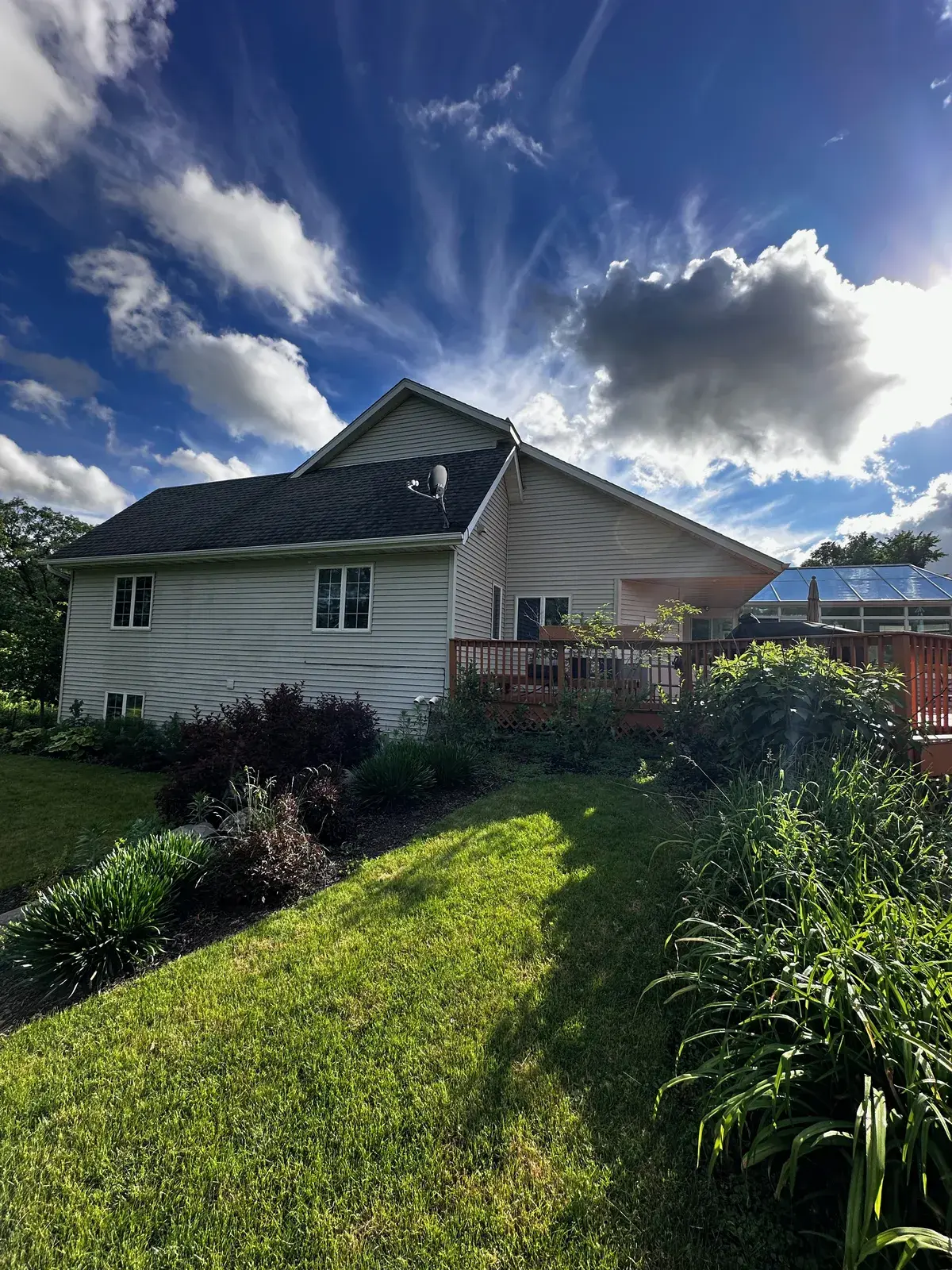
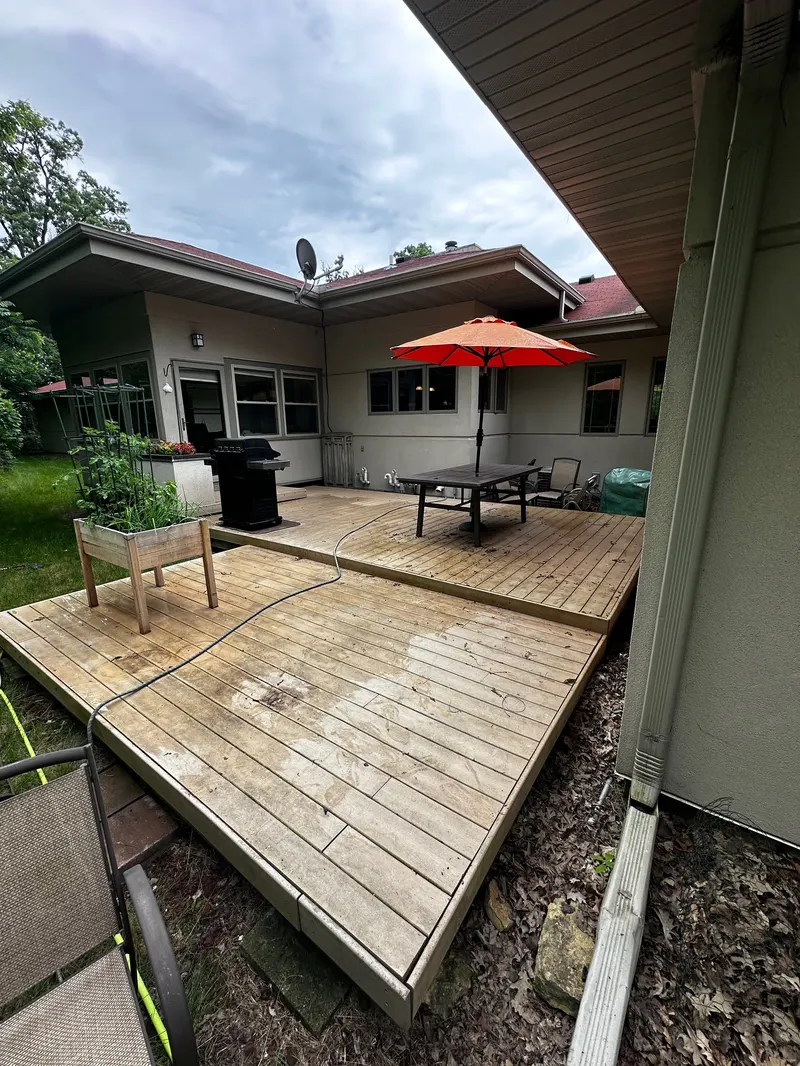
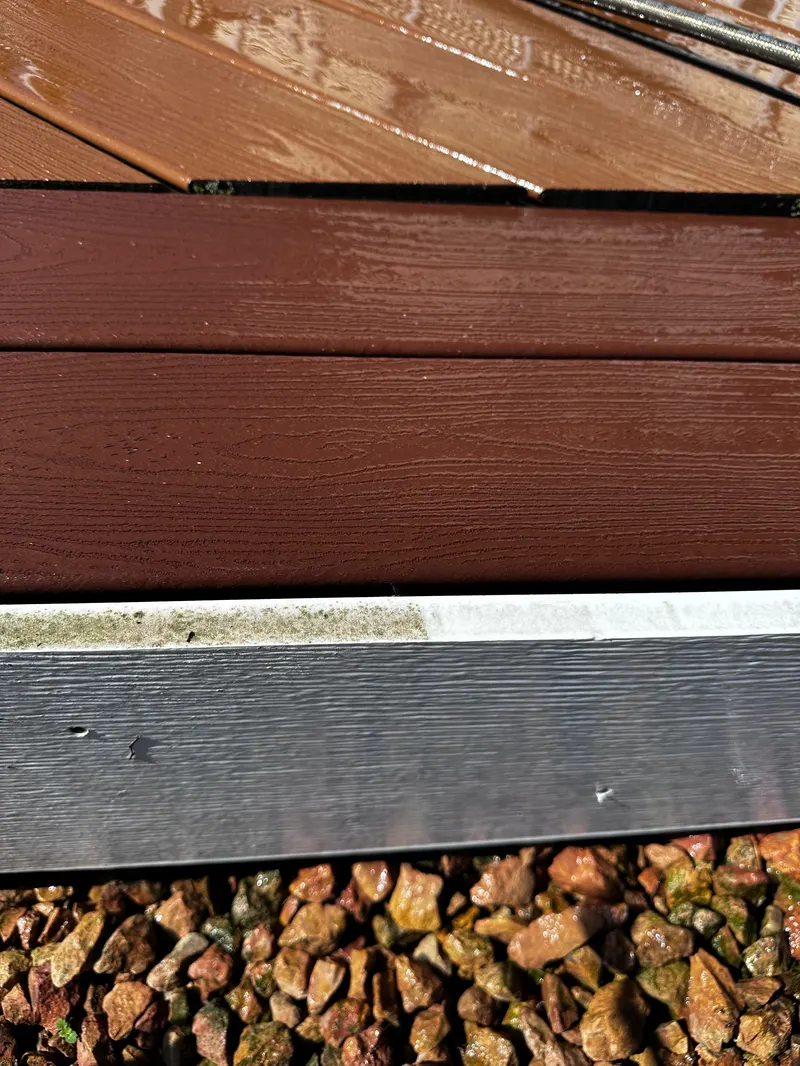
Actual job photos from The Total Wash Co. — not stock photography
More Results
Frequently Asked Questions
"Our wood deck was gray and slippery. After their cleaning it looks like new wood again. Also cleaned the patio pavers — night and day difference."
Serving Your Neighborhood
Written by
Ashton Ferry
Founder & Owner · The Total Wash Co. · Madison, WI
Ashton founded The Total Wash Co. in 2021 and the company has completed 1,500+ jobs across Dane County. Every article is grounded in real field experience — not generic content.