Table of Contents
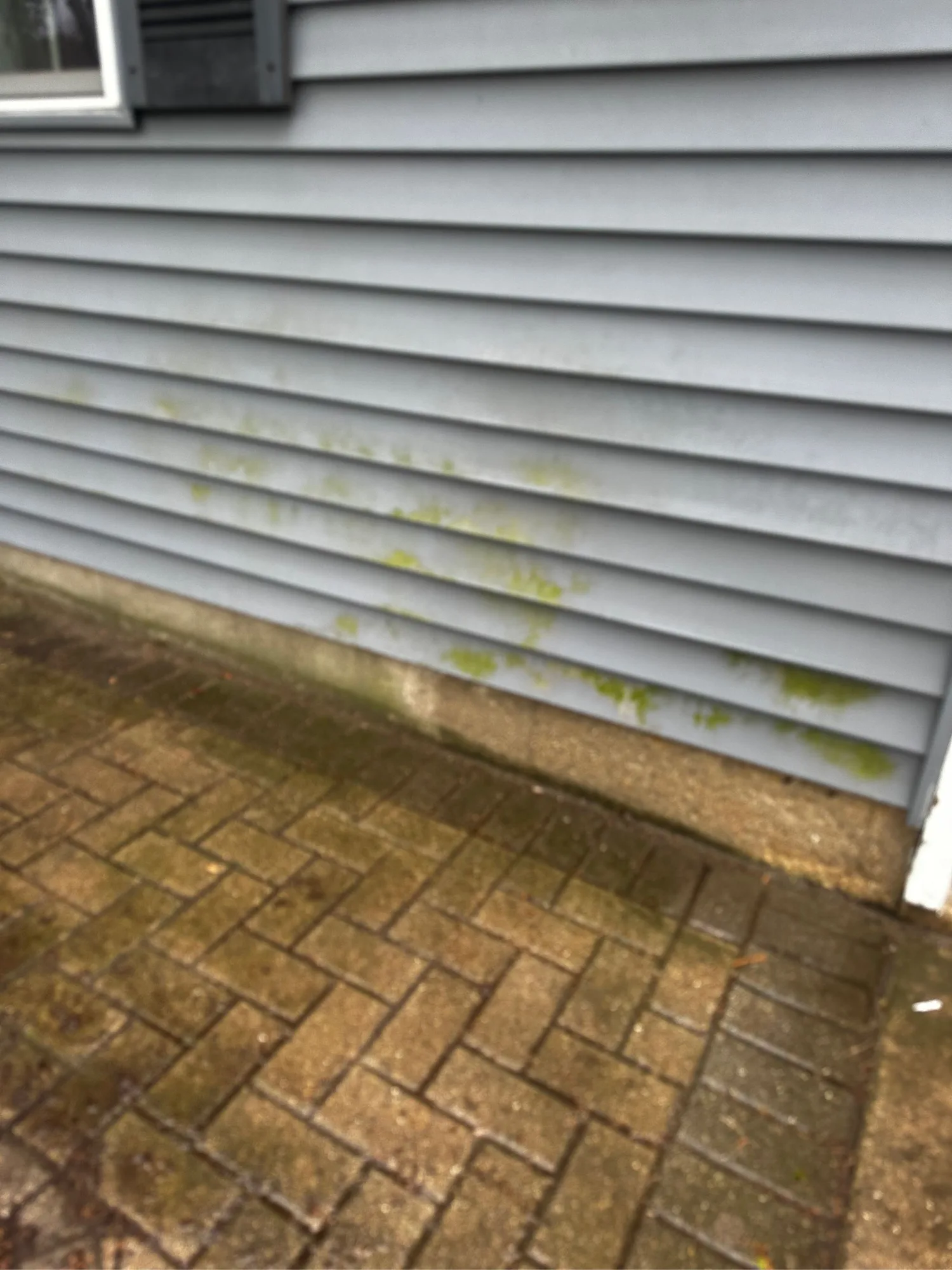
- 1Why Does Green Algae Grow on Concrete Driveways in Madison?
- 2Is Green Algae Dangerous, or Just Ugly?
- 3What Kills Green Algae on Concrete? (Safe DIY Options)
- 4What Should You Never Do to a Green Driveway?
- 5When Should You Call a Professional?
- 6How Do We Actually Remove Driveway Algae at The Total Wash Co.?
- 7How Much Does Driveway Algae Removal Cost in Madison?
- 8How Do You Keep Algae From Coming Back?
- 9Frequently Asked Questions About Green Algae on Concrete
- 10Ready for a Green-Free Driveway?
Quick Answer
Quick answer: Green algae grows on Madison driveways wherever concrete stays damp and shaded. Small patches respond to a stiff brush and a 1:4 bleach-and-water solution. Large or recurring growth needs a professional pre-treatment and surface clean — typically $199–$450 for most Madison drivew
Quick answer: Green algae grows on Madison driveways wherever concrete stays damp and shaded. Small patches respond to a stiff brush and a 1:4 bleach-and-water solution. Large or recurring growth needs a professional pre-treatment and surface clean — typically $199–$450 for most Madison driveways — because pressure alone doesn't kill the spores, so the green comes right back.
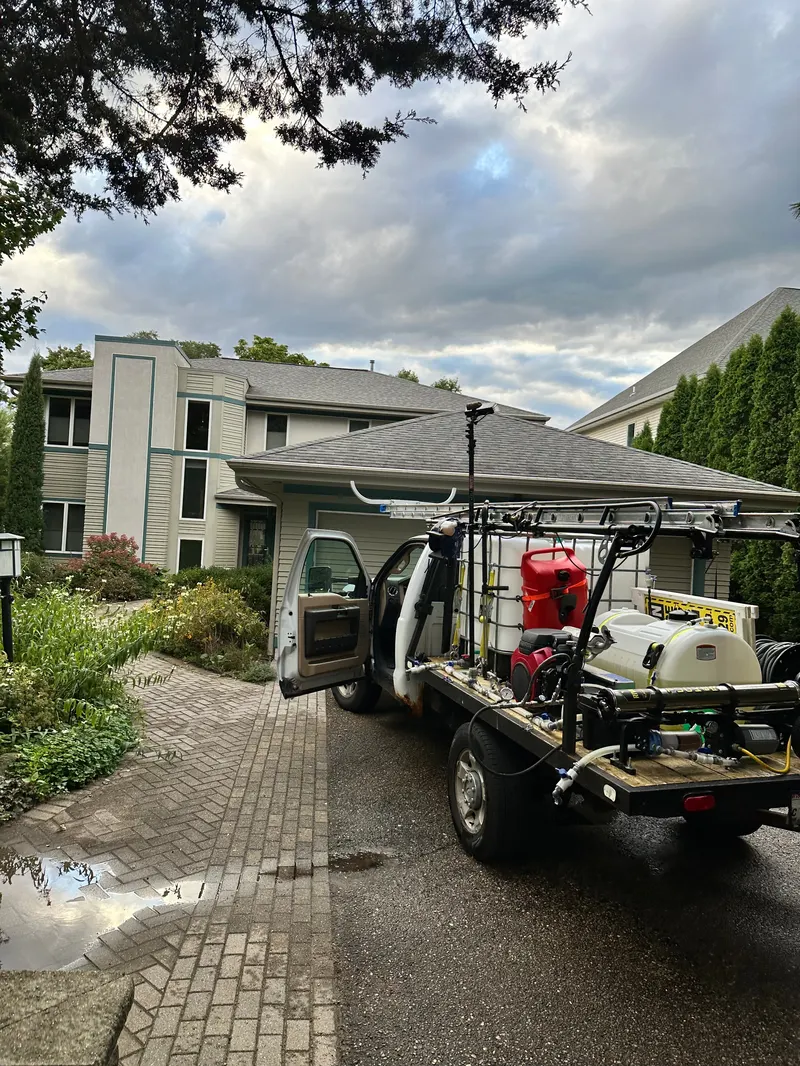
Hi, I'm Ashton Ferry — I own The Total Wash Co. here [in Madison](/blog/moss-algae-roof-treatment-madison-spring-timing), and since 2021 my crew and I have cleaned a lot of green driveways. Every summer, once the humidity settles in, the calls start: "My driveway's turning green and my kids keep slipping on it." If that's you, this guide walks through exactly what that green film is, what you can safely do yourself this weekend, what will quietly wreck your concrete, and when it makes sense to bring in a pro. I'll also share our actual process and real prices — our driveway and surface cleaning starts at $199, and most single-family driveways land between $199 and $450 depending on size and how established the growth is.
Why Does Green Algae Grow on Concrete Driveways in Madison?
Algae needs three things: moisture, shade, and something to feed on. Madison hands it all three.
- Shade and tree canopy. Concrete under mature trees almost never fully dries. We see the heaviest growth on the west side — streets in Nakoma and Dudgeon-Monroe with big oak and maple canopies have driveways that sit in shade most of the day.
- Lake humidity. Homes near Lake Monona and Lake Mendota live in noticeably damper air. Lakeside driveways in Monona and Maple Bluff green up faster than the same concrete would in a drier neighborhood.
- North-facing slabs. The north side of your driveway, or a slab shaded by the house itself, gets the least sun. That's why algae so often shows up as a green stripe along one edge.
- Food supply. Spring pollen, leaf litter, grass clippings, and fertilizer runoff all feed algae. Concrete is porous — it holds that organic material in millions of tiny pockets.
One thing worth knowing: concrete never stops being porous. Even a driveway that looks bone-dry on the surface holds moisture down in the pores, and that's where algae anchors. This is why a quick surface rinse never solves the problem for long.
Is Green Algae Dangerous, or Just Ugly?
Both, honestly — but the safety part is what surprises people.
Wet algae is genuinely slippery. A film of green algae on smooth concrete behaves like ice when it's wet. Morning dew is enough. We've had customers call us after a fall on their own driveway, and it's the number one reason I tell people not to ignore a green walkway or a shaded driveway strip, especially if grandparents or kids use it daily.
It gets worse when the temperature drops. Here's the Wisconsin-specific problem: algae holds moisture against the slab. Come November, that trapped moisture freezes and expands inside the concrete's pores. Repeat that freeze-thaw cycle all winter and you get surface flaking (the technical term is spalling) and widened hairline cracks. A $250 [cleaning in](/blog/parking-lot-cleaning-madison) July is a lot cheaper than concrete repair in April.
And yes, it drags down curb appeal. The driveway is often the single biggest hard surface visible from the street. A green, blotchy slab makes a well-kept house look neglected.
What Kills Green Algae on Concrete? (Safe DIY Options)
I'm never going to pretend you need a pro for a two-foot patch of green. Here's what actually works for small areas, in the order I'd try it.
1. Dish soap, hot water, and a stiff brush
For light, new growth: a squirt of dish soap in a bucket of hot water, a stiff-bristle deck brush (not wire — more on that below), and ten minutes of scrubbing. Rinse well with the hose. This lifts the algae off the surface but doesn't kill spores in the pores, so expect it back in a few weeks in shady spots.
2. Diluted bleach — the closest thing to what pros use
Regular household bleach is sodium hypochlorite, the same active ingredient in a professional soft-wash mix, just weaker. For DIY:
- Mix 1 part bleach to 4 parts water in a garden sprayer or bucket.
- Water down any grass or plants along the edges first — plain water on the greenery before and after protects it.
- Apply to the green areas and let it sit 10–15 minutes. You'll usually watch the green fade to brown-white in real time.
- Scrub stubborn spots, then rinse the whole area thoroughly.
- Never mix bleach with ammonia or any other cleaner. That combination creates toxic gas. Bleach and water only.
Done carefully, this kills surface algae and buys you a season in a moderately shaded spot. Budget maybe $15–$30 in supplies and an afternoon.
3. What about vinegar?
White vinegar will knock back a very small, very new patch, and I get why people reach for it — it feels gentler. It's fine for a spot the size of a dinner plate. It doesn't have the strength to deal with an established colony across a whole driveway, and repeated heavy vinegar use isn't great for concrete either, since it's an acid.
What Should You Never Do to a Green Driveway?
This is the section I wish every Madison homeowner would read before renting equipment. We get called to fix these mistakes every summer.
- Don't blast it with a rental pressure washer and a narrow tip. A zero-degree or 15-degree tip at 3,000+ PSI, held close, will physically etch lines into your concrete — permanent "striping" that shows forever, especially when the slab is wet. It can also open up the aggregate under the cream layer, which makes the surface rougher and, ironically, easier for algae to grip next time.
- Don't use pressure alone, period. Even done carefully, pressure without a cleaning agent just mows the algae down — it doesn't kill the spores rooted in the pores. Those driveways are green again in three to six weeks, and now the homeowner thinks cleaning "doesn't work."
- Don't use a wire brush. Wire scratches the concrete surface and leaves rust particles behind that can stain later.
- Don't apply muriatic or other strong acids for algae. Acid washing is a specialized prep technique, not an algae treatment. It eats the concrete surface along with the growth.
- Don't spray bleach on a hot, sunny slab. It flashes off before it can work. Early morning or an overcast day gives the solution time to dwell.
When Should You Call a Professional?
Honest answer from a guy who sells this service: not always. Call us (or any reputable pro) when one of these is true:
- The growth covers a large area — a whole driveway, a long shaded walkway, a patio and driveway together. DIY bleach-and-scrub on 800 square feet is a brutal weekend and the results are patchy.
- It keeps coming back. If you've cleaned it twice and it regrows within a couple of months, the spores are established deep in the pores. That takes a proper pre-treat and post-treat to break the cycle.
- The surface is a slip risk you can't manage — a sloped driveway, steps, or a walkway an older family member uses daily. That's a today problem, not a someday problem.
- There are other stains in the mix. Oil spots, rust, or tire marks need different chemistry than algae. (I wrote a separate guide on removing oil stains from your driveway if that's part of your situation.)
- You just don't want to handle bleach. Completely fair. Plenty of our customers could DIY it — they'd rather spend Saturday at the farmers' market.
How Do We Actually Remove Driveway Algae at The Total Wash Co.?
Since people always ask what they're paying for, here's our exact process — the same one we run on driveways from Middleton to Sun Prairie:
- 1. Walk the surface first. We check for cracks, spalling, loose caulk joints, and figure out where the moisture is coming from (shade, a downspout, a low spot).
- 2. Pre-treat with a sodium hypochlorite soft-wash mix. We apply a professionally mixed SH solution to the whole surface and let it dwell. This is the step that actually kills the algae — including down in the pores where a pressure washer can't reach. We wet down and rinse your lawn and plant beds before and after; protecting the landscaping is part of the job.
- 3. Clean with a commercial surface cleaner. Instead of a wand, we run a walk-behind surface cleaner — it looks like a big flat polisher with rotating jets inside a hood. It cleans with even, overlapping passes at a controlled height, which is how you get a uniform finish with zero wand striping. Our machines pull far more water volume than rental units, so the cleaning power comes from flow and chemistry, not raw pressure grinding on your slab.
- 4. Post-treat the surface. A final light treatment kills anything the cleaning stirred up and slows regrowth significantly. Skipping post-treatment is the main reason quick-and-cheap jobs turn green again by fall.
- 5. Rinse and final walk-through. Edges, expansion joints, and the apron get detailed, and we walk the finished surface with you.
Most driveways take us one to two hours. The concrete usually looks dramatically lighter the same day and continues to brighten over the following week as it fully dries out.
How Much Does Driveway Algae Removal Cost in Madison?
Our surface cleaning starts at $199, and most single-family driveways in the Madison area land between $199 and $450 depending on square footage and how heavy the growth is. Oversized driveways, long rural aprons, or driveway-plus-patio-plus-walkway combos can run more — our full published range is $199–$895. A few things that move the number:
- Size — a two-car slab vs. a three-car driveway with a turnaround.
- Growth density — years of established algae takes more dwell time and chemical than this spring's film.
- Add-ons — many customers bundle the patio or front walkway while we're set up, which is cheaper than a separate visit. Sealing after cleaning is also available as an add-on.
If you want a ballpark before talking to anyone, try our free [pressure washing](/blog/spring-pressure-washing-madison-complete-checklist-2026) cost calculator, or see the full breakdown in our Madison pressure washing cost guide.
How Do You Keep Algae From Coming Back?
Whatever you do — DIY or pro — the growth conditions are still there afterward. A few habits stretch the results:
- Fix the water first. If a downspout dumps across the driveway, extend it. If your gutters overflow onto a walkway, that constant moisture is feeding the algae.
- Let in more light where you can. Even modest tree trimming over the worst section makes a real difference.
- Sweep organic debris. Leaves and grass clippings left on concrete are an algae buffet. Two minutes with a broom after mowing helps more than you'd think.
- Consider sealing. A penetrating concrete sealer applied after a professional clean fills the pores algae anchors into. It's the single best regrowth prevention for chronically shaded slabs.
- Put it on a schedule. Shaded Madison driveways generally need a professional clean every 1–2 years; sunny ones can go 2–3. Same logic as any exterior maintenance — small and regular beats big and rare. Our complete driveway and surface cleaning guide covers timing in more detail.
And if your green problem is on pavers or natural stone instead of poured concrete, the chemistry and pressure change — see our patio cleaning guide for concrete, pavers, and stone. For the bigger picture on when low-pressure cleaning beats high pressure, our soft washing vs. pressure washing explainer is a five-minute read.
Frequently Asked Questions About Green Algae on Concrete
Will bleach damage my concrete driveway?
Properly diluted (1:4 with water) and rinsed, household bleach won't harm cured concrete — it's the same active ingredient professionals use at calibrated strengths. The real risks are to nearby plants and your clothes, so wet the landscaping down first and rinse everything thoroughly afterward.
Why did the algae come back a month after I pressure washed?
Because pressure removes the visible growth but doesn't kill the spores rooted inside the concrete's pores. Without a pre-treatment and post-treatment to kill the colony, regrowth in three to six weeks is normal in shaded spots. Chemistry first, then cleaning — that's the order that lasts.
Is professional algae removal safe for my lawn, plants, and pets?
Yes, when done right. We pre-wet and rinse all surrounding grass and beds, and the treated surface is fine for pets and kids once it's rinsed and dry — usually within a few hours. Tell your cleaner about any koi ponds, gardens, or drainage that runs somewhere sensitive so they can plan around it.
How long does a professional [driveway cleaning](/blog/driveway-surface-cleaning-madison-wi-guide) last?
On a sunny driveway, two to three years is common. Heavily shaded or lakeside slabs in the Madison area usually stay clean for one to two years. Post-treatment and optional sealing both push results toward the long end of those ranges.
Can you remove the black stains too, or is that something else?
The black or dark gray blotches on concrete are usually lichen or embedded organic staining — tougher than green algae, but they respond to the same soft-wash chemistry with longer dwell times. Oil, rust, and tire marks are separate chemistry; point them out when you get your quote so the visit covers everything at once.
Ready for a Green-Free Driveway?
If your driveway's turning green and you'd rather not spend a weekend fighting it, we'd love to help. We're a local, owner-operated crew — I'm on the jobs, not behind a desk — and we clean driveways across Madison, Middleton, Monona, Sun Prairie, and the surrounding area. Get your free instant quote here — it takes about a minute, and you'll get a real price, not a "starting at" teaser.
— Ashton Ferry, Owner, The Total Wash Co.
   ## Related Reading - [The Complete Guide to Exterior Cleaning in Madison, WI](/blog/complete-guide-exterior-cleaning-madison-wi)Free — No Obligation
Get a Quote for This Service
Madison's most-reviewed exterior cleaning company. Same-week availability.
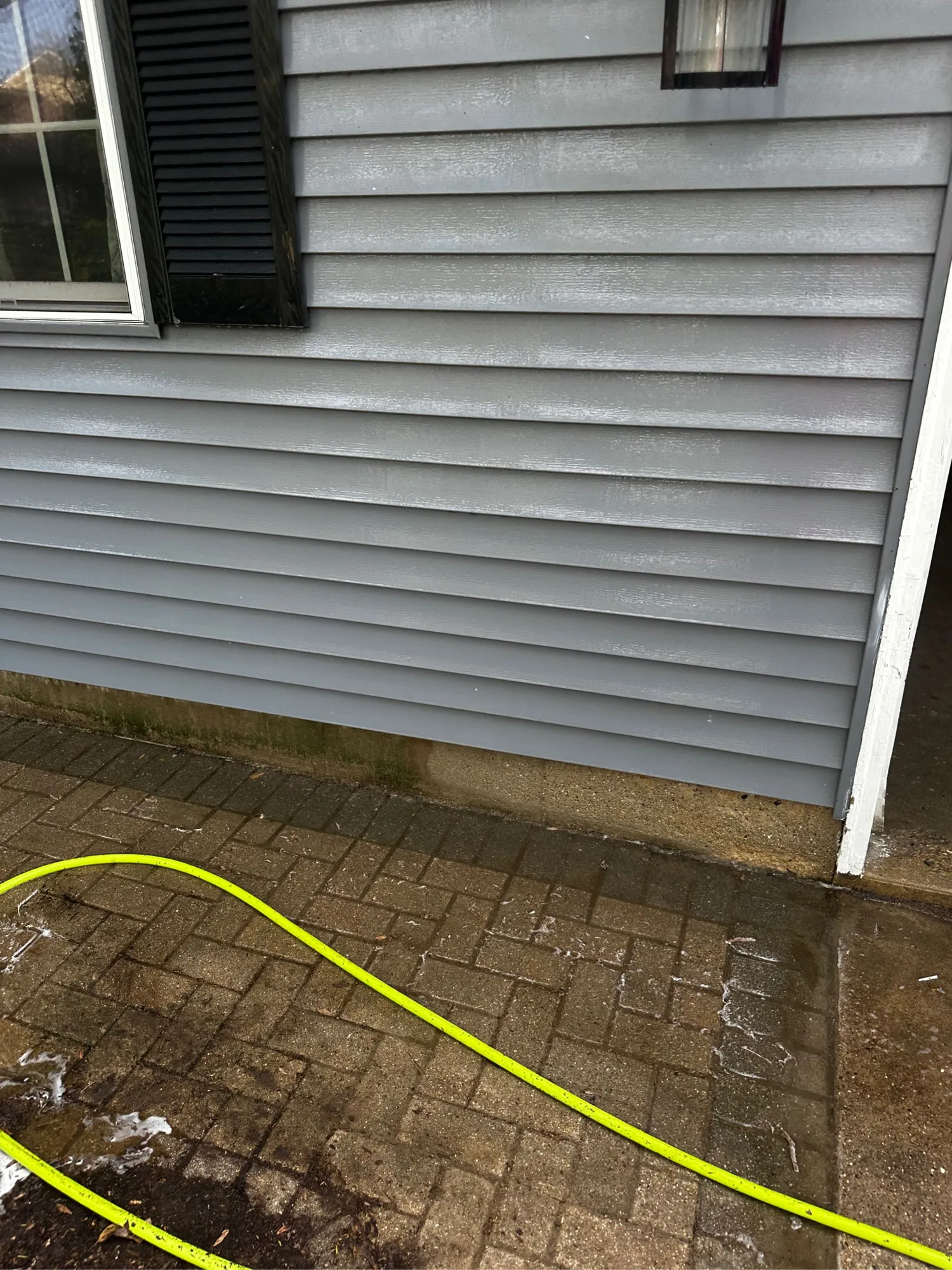
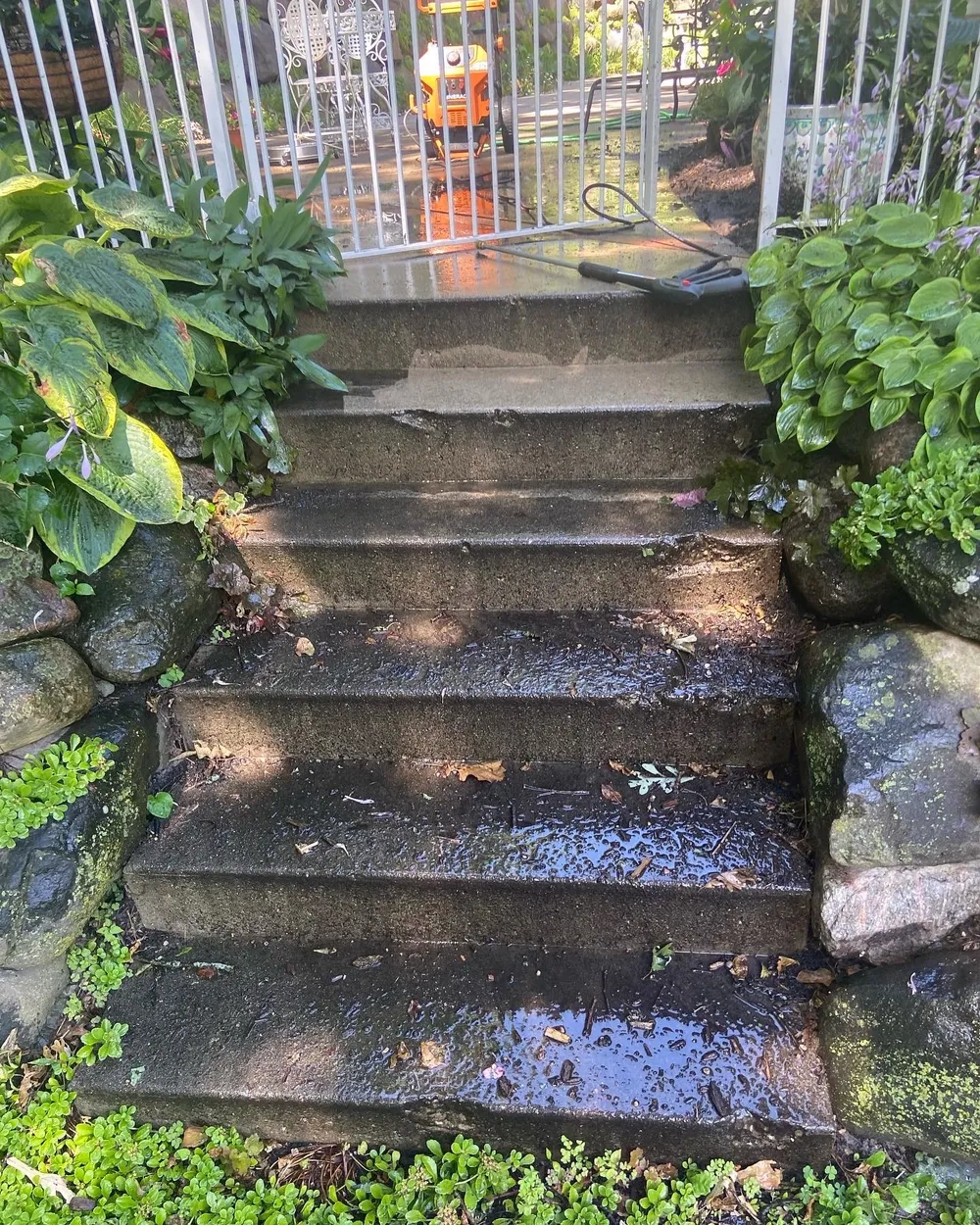
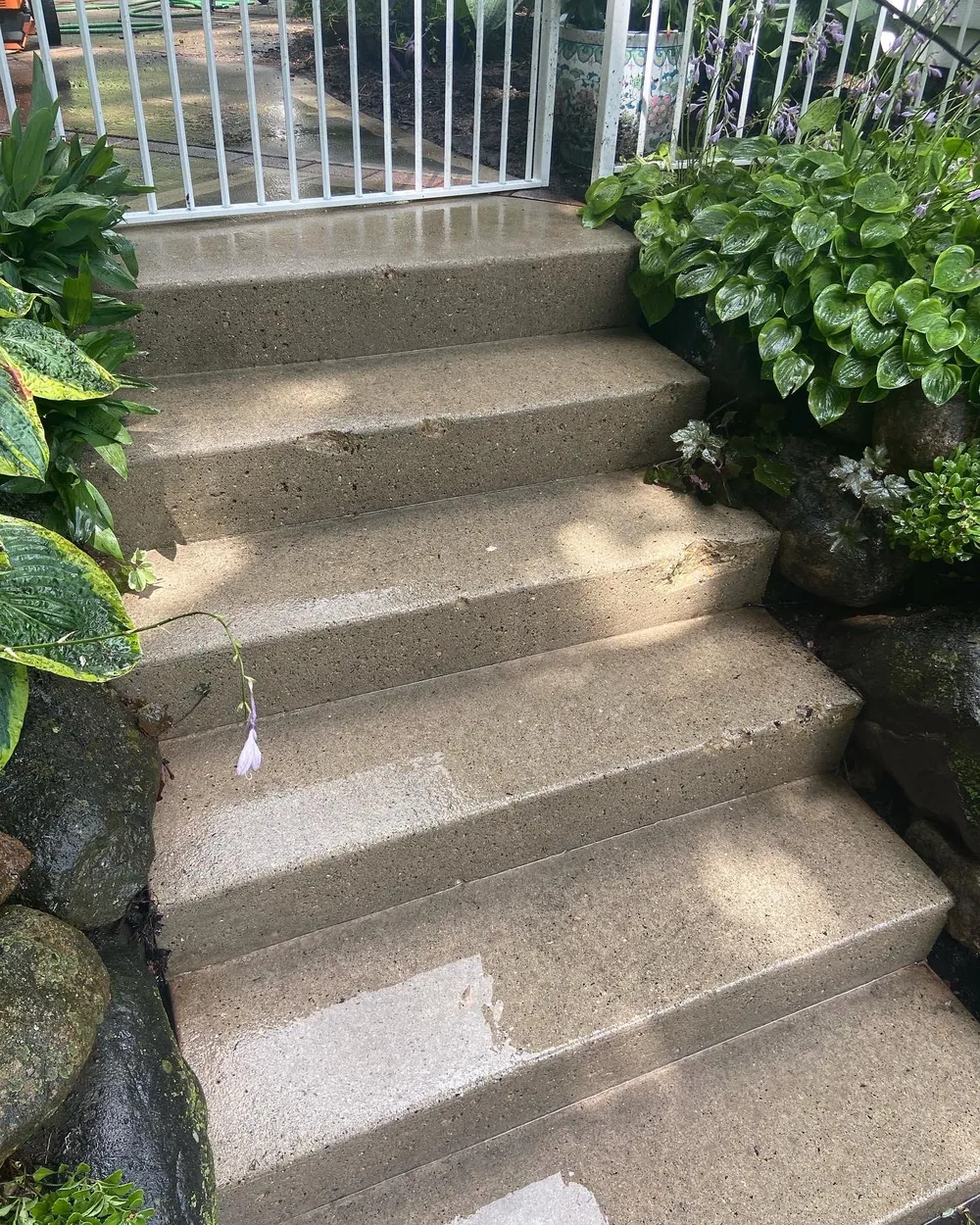
Real Results — Green Algae on Concrete in Madison, WI
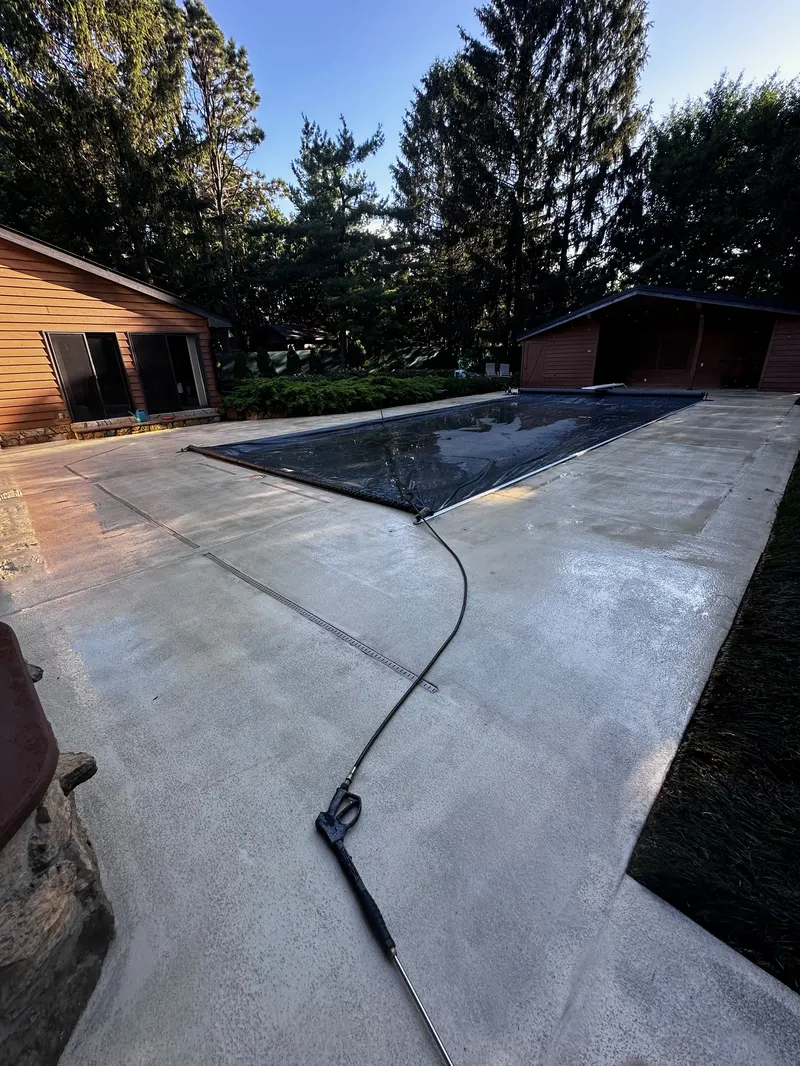
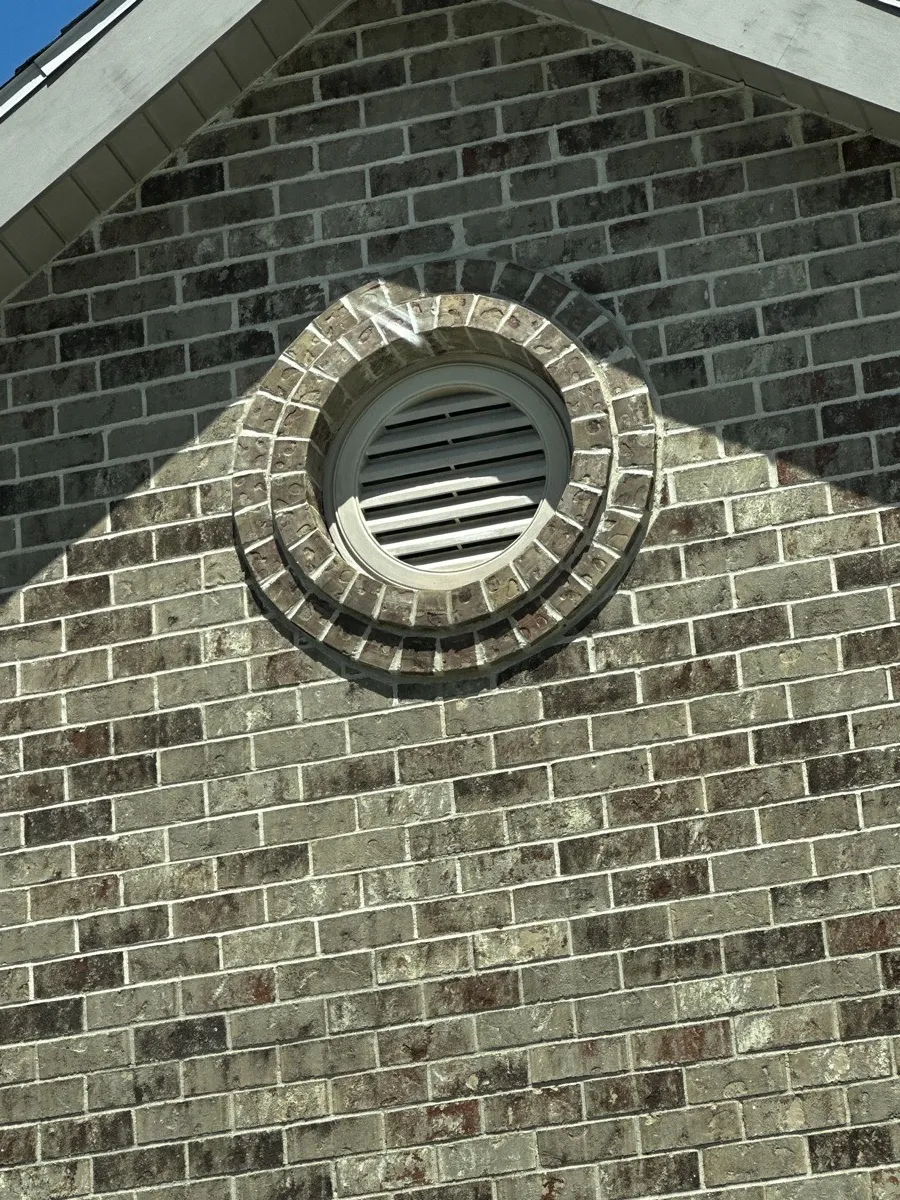
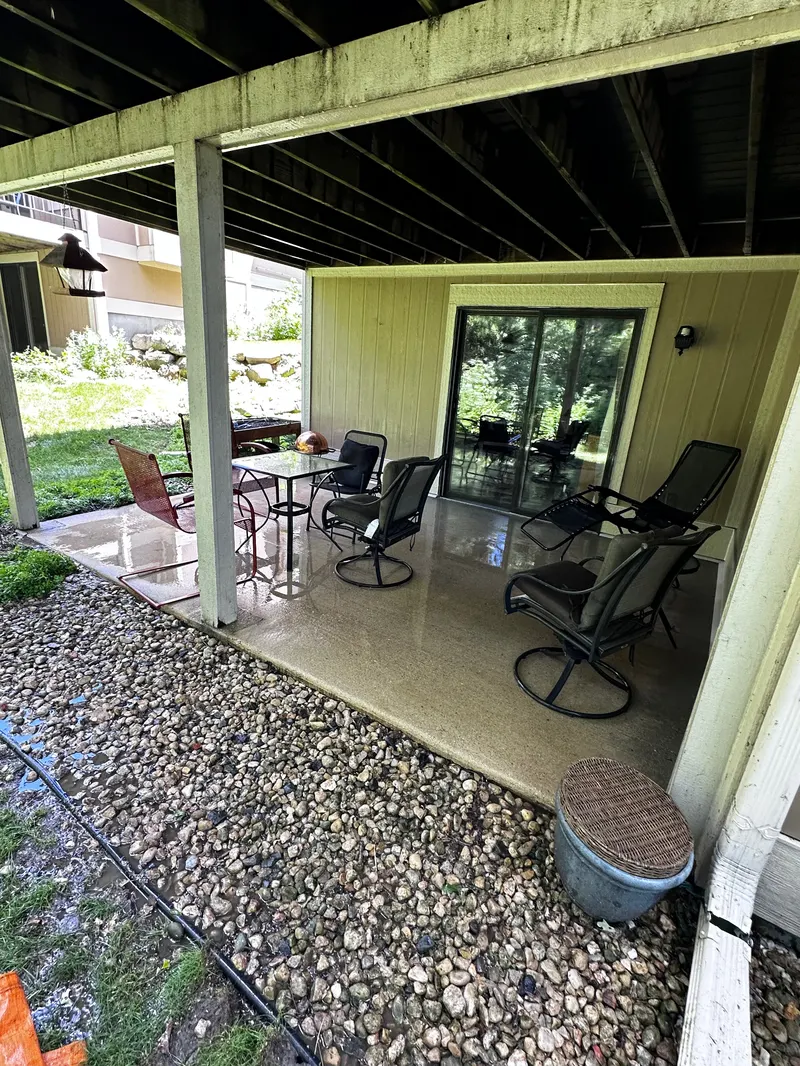
Actual job photos from The Total Wash Co. — not stock photography
More Results
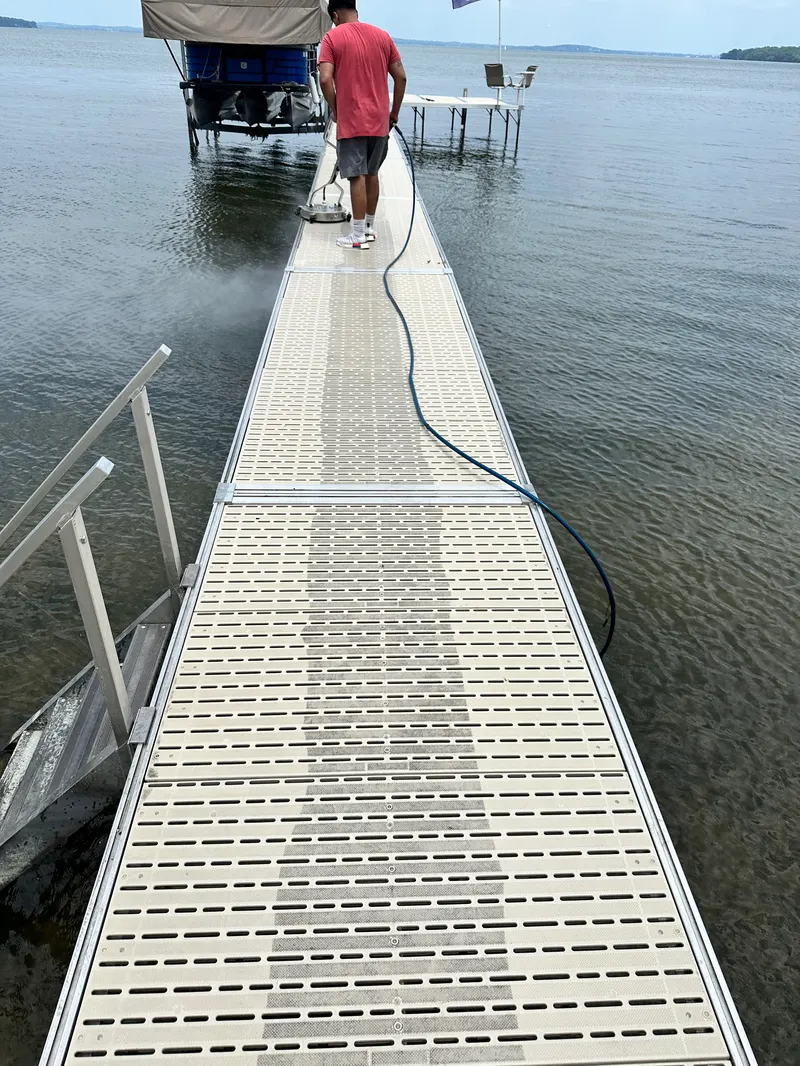
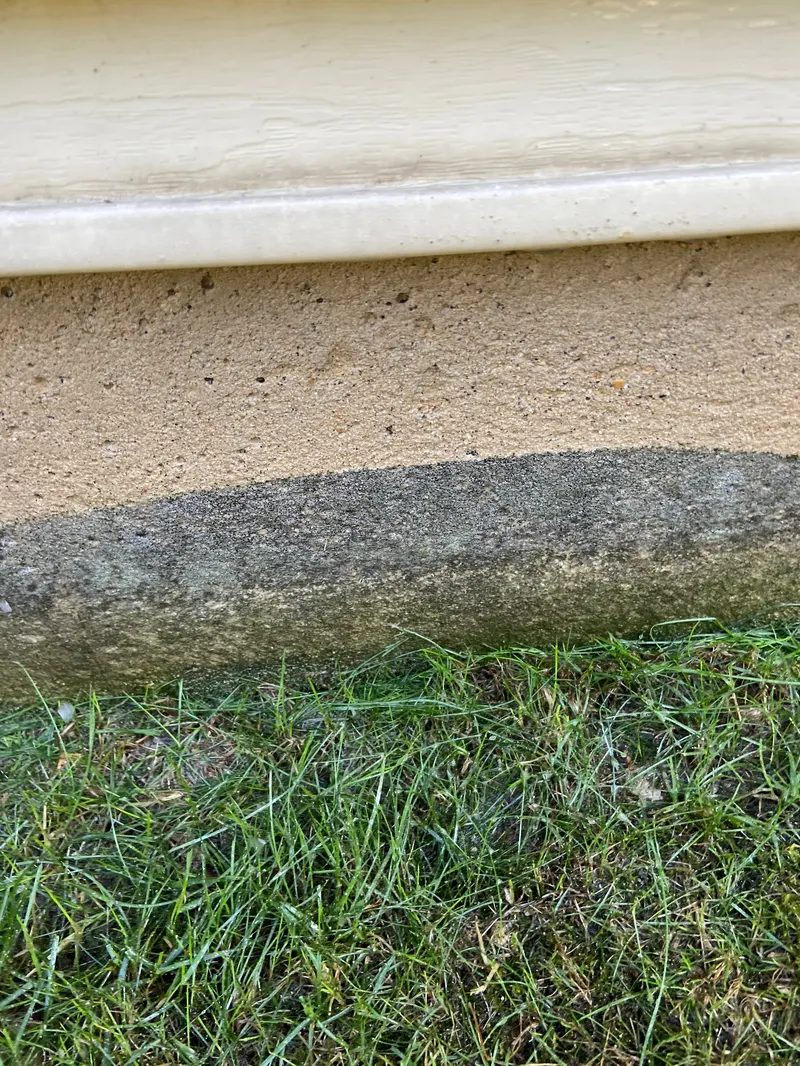
Frequently Asked Questions
"Our driveway hadn't been cleaned in years and looked terrible. The Total Wash Co. made it look brand new in a couple hours. Incredible difference."
"Had black streaks all over our roof for years. The Total Wash Co. soft washed it and it looks incredible — like a brand new roof. Highly recommend."
Serving Your Neighborhood
Written by
Ashton Ferry
Founder & Owner · The Total Wash Co. · Madison, WI
Ashton founded The Total Wash Co. in 2021 and the company has completed 1,500+ jobs across Dane County. Every article is grounded in real field experience — not generic content.