Gutter Apron
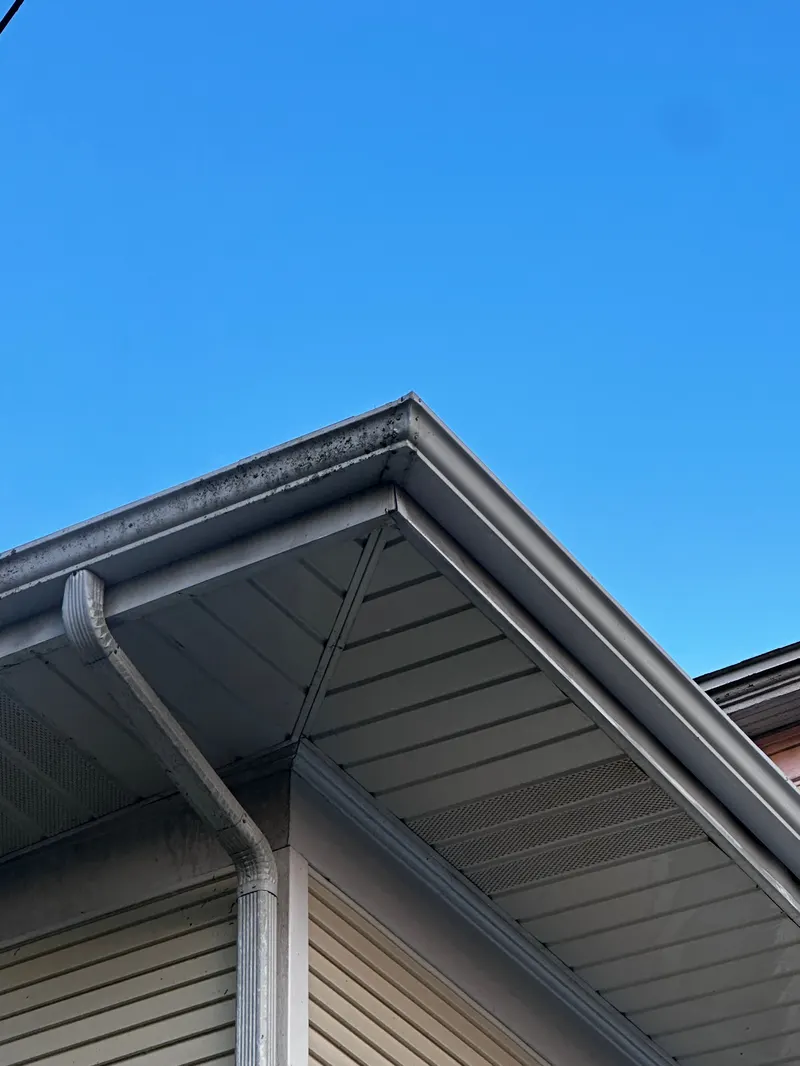
A gutter apron is a flat metal flashing — typically galvanized steel or aluminum — installed under the first course of shingles at the roof edge and bent down into the back of the gutter. It creates a continuous, watertight transition from the roof deck to the gutter trough, preventing water from running behind the gutter and down the fascia board where it causes rot. Without a gutter apron, the slight gap between the shingle edge and the gutter lip allows wind-driven rain and ice melt to work behind the gutter and saturate the fascia.
In depth
In Madison's freeze-thaw climate, missing gutter aprons are a leading cause of fascia rot and ice-dam water intrusion. We flag gutter aprons that are missing, buckled, or pulled away from the shingle course in every photo report. Gutter apron installation is typically done by a roofer or gutter contractor — not something we install, but absolutely something we document and refer when we see the failure condition.
How this shows up on our jobs
We note gutter-apron condition on every gutter cleaning in Madison. A missing apron in front of a downspout is almost always the source of the water stain the homeowner has been wondering about.
Services where this matters
Need gutter cleaning in Madison?
Free quotes — most estimates back within a few hours. Prefer to talk? Call us anytime.
Related terms
Drip Edge
Drip edge is an L-shaped or J-shaped metal flashing installed along the eaves and rakes of a roof to direct water off the roof edge cleanly and away from the fascia board and underlying structural components. At the eave, it sits under the first course of shingles and over the top of the gutter, channeling water directly into the gutter rather than letting it wick back under the shingle onto the roof deck. At the rake (the sloping edge of a gabled roof), it sits over the underlayment and under the shingles to shed water sideways off the edge.
Fascia Board
The fascia board is the horizontal board running along the lower edge of the roof, to which gutters are typically fastened. It covers the ends of the roof rafters and gives the roofline a finished appearance. In wood construction, fascia is typically 1x6 or 1x8 pressure-treated or painted pine; in newer construction, it is often PVC or fiber cement. Because it is exposed to constant moisture from gutters, drip, and snow melt, the fascia is one of the most rot-prone boards on a home.
Weep Hole
A weep hole is a small, deliberately-placed opening at the bottom of a brick-veneer wall, window frame, or storefront glazing that lets trapped water drain out. On brick homes, weeps are typically vertical gaps in the mortar every four to six bricks along the bottom course; on vinyl and aluminum windows, they are the small slots in the bottom of the exterior frame. Without weep holes, water that gets behind the brick veneer or inside the window frame has no escape path and causes efflorescence, mold, rot, and interior leaks.
Ice Dam
An ice dam is a ridge of ice that forms at the edge of a roof when heat escaping through the attic melts snow on the upper roof, the meltwater flows down toward the cold eave overhang, and refreezes against the cold roofline. As more water flows down and freezes behind the dam, the pool of water behind the ice ridge backs up under the shingles, seeps through the roof deck, and enters the attic and wall cavities below. Water damage from a single significant ice dam event can reach thousands of dollars in insulation replacement, drywall repair, and mold remediation.