Downspout Extension
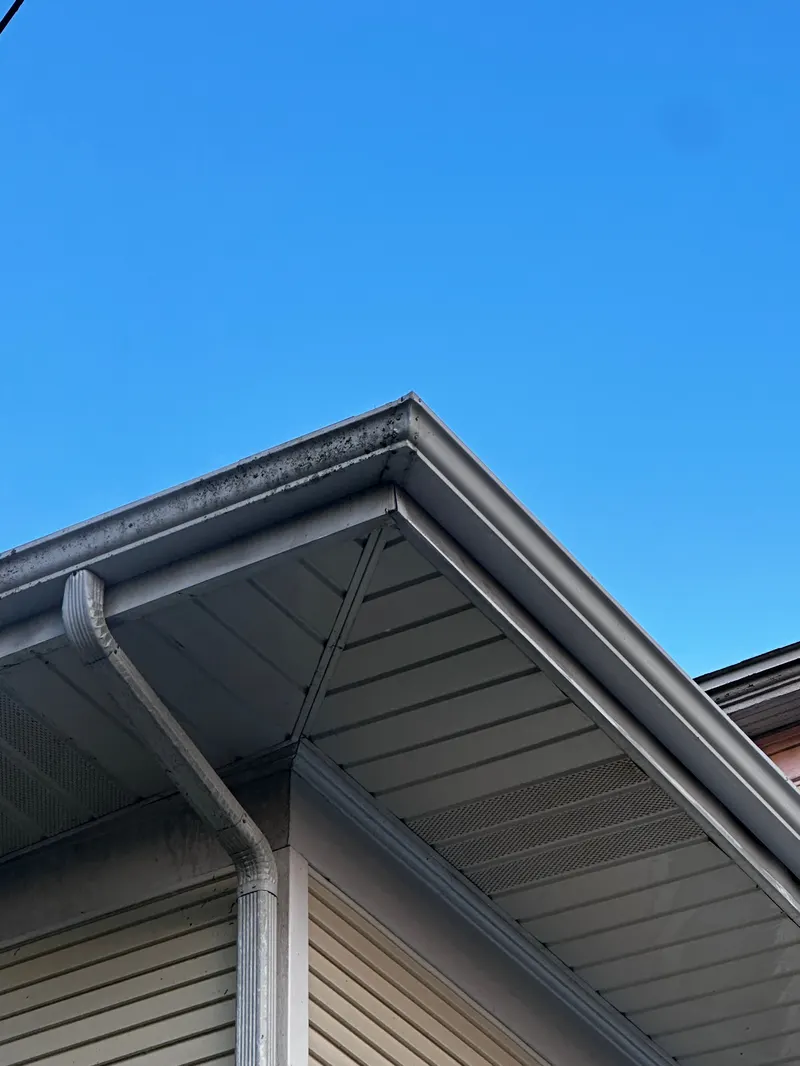
A downspout extension is a length of corrugated plastic pipe or aluminum channel attached to the bottom of a downspout outlet to direct water away from the foundation of the house. Standard downspout outlets terminate 6-12 inches above grade, which deposits water immediately against the foundation — exactly where it enters basements and crawl spaces. An extension routes that discharge 4-10 feet away from the house to a splash block, a dry well, or a buried drain tile.
In depth
In Madison, downspout extensions are one of the most cost-effective moisture-management improvements a homeowner can make on older homes with basement water issues. We flag missing or disconnected extensions in every gutter cleaning report and install them as a low-cost add-on service. Flexible roll-out extensions are an inexpensive alternative that lie flat in summer and retract when mowing, though they are less durable than aluminum elbows and solid pipe.
How this shows up on our jobs
Missing downspout extensions are on nearly every gutter report we write in Madison's older neighborhoods. A $20 fix prevents a $5,000 basement water event. We install them same-day on most jobs.
Services where this matters
Frequently asked
- What is Downspout Extension?
- A downspout extension is a length of corrugated plastic pipe or aluminum channel attached to the bottom of a downspout outlet to direct water away from the foundation of the house. Standard downspout outlets terminate 6-12 inches above grade, which deposits water immediately against the foundation — exactly where it enters basements and crawl spaces. An extension routes that discharge 4-10 feet away from the house to a splash block, a dry well, or a buried drain tile.
- How does Downspout Extension show up on our jobs?
- Missing downspout extensions are on nearly every gutter report we write in Madison's older neighborhoods. A $20 fix prevents a $5,000 basement water event. We install them same-day on most jobs.
Need gutter cleaning in Madison?
Free quotes — most estimates back within a few hours. Prefer to talk? Call us anytime.
Related terms
Fascia Board
The fascia board is the horizontal board running along the lower edge of the roof, to which gutters are typically fastened. It covers the ends of the roof rafters and gives the roofline a finished appearance. In wood construction, fascia is typically 1x6 or 1x8 pressure-treated or painted pine; in newer construction, it is often PVC or fiber cement. Because it is exposed to constant moisture from gutters, drip, and snow melt, the fascia is one of the most rot-prone boards on a home.
Gutter Apron
A gutter apron is a flat metal flashing — typically galvanized steel or aluminum — installed under the first course of shingles at the roof edge and bent down into the back of the gutter. It creates a continuous, watertight transition from the roof deck to the gutter trough, preventing water from running behind the gutter and down the fascia board where it causes rot. Without a gutter apron, the slight gap between the shingle edge and the gutter lip allows wind-driven rain and ice melt to work behind the gutter and saturate the fascia.
Drip Edge
Drip edge is an L-shaped or J-shaped metal flashing installed along the eaves and rakes of a roof to direct water off the roof edge cleanly and away from the fascia board and underlying structural components. At the eave, it sits under the first course of shingles and over the top of the gutter, channeling water directly into the gutter rather than letting it wick back under the shingle onto the roof deck. At the rake (the sloping edge of a gabled roof), it sits over the underlayment and under the shingles to shed water sideways off the edge.
Damp Proofing
Damp proofing is the application of a moisture-resistant coating or membrane to a masonry surface — most commonly foundation walls, brick veneer, and chimneys — to slow water absorption and reduce efflorescence, spalling, and interior moisture problems. It is less robust than true waterproofing (which forms a continuous, pressure-rated barrier) but more cost-effective and better-matched to surfaces that need to breathe.