Table of Contents
- 1Moss & Algae Roof Treatment in Madison, WI: Why April–May Is the Optimal Window
- 2Why Madison Roofs Accumulate Moss and Algae Faster Than National Averages
- 3Soft Washing: The Only Safe Method for Asphalt Shingles
- 4Spring Timing: Why the April–May Window Matters for Madison Homeowners
- 5What Roof Treatment Costs in Madison, WI
- 6DIY Roof Cleaning in Madison: Why Most Attempts Cause More Damage
- 7How to Prepare for Your Roof Treatment Appointment
- 8Book Your Spring Roof Treatment in Madison, WI
- 9FAQ: Moss & Algae Roof Treatment in Madison, WI
- 10Related Posts
Quick Answer
TL;DR: Spring (April through mid-May) is the single best time to soft-wash moss and algae off a Madison asphalt-shingle roof — growth organisms are actively dividing so the chemistry kills more completely, humidity is moderate so dwell times stay predictable, and treating now clears the winter
Moss & Algae Roof Treatment in Madison, WI: Why April–May Is the Optimal Window
TL;DR: Spring (April through mid-May) is the single best time to soft-wash moss and algae off a Madison asphalt-shingle roof — growth organisms are actively dividing so the chemistry kills more completely, humidity is moderate so dwell times stay predictable, and treating now clears the winter spore load before summer heat accelerates regrowth. The Total Wash Co. uses ARMA-approved soft washing (under 500 PSI) — the only method that won’t void your shingle warranty. Most Madison homes run $350–$1,200. Book by the second week of April to secure a May slot. Free instant quote or call (608) 360-5818.
By mid-April in Madison, the north and east faces of residential asphalt shingle roofs reveal exactly what winter did: green moss mats crowding shaded corners, black streaks running from the ridge down to the gutter line, and occasional lichen patches where a falling branch or ice load has already scraped granules from the shingles. If you’re a Madison homeowner, this is not a cosmetic problem you can defer. Moss and algae on an asphalt shingle roof actively shorten its lifespan and can void most manufacturer warranties — meaning the next full replacement lands on your shoulders years sooner than it should.
Spring is the single best treatment window for three clear reasons: growth organisms are actively dividing (making soft wash chemistry work faster), humidity is still moderate (dwell times are predictable), and treating in spring kills the winter spore load before summer heat accelerates regrowth. The Total Wash Co. — owned by Madison’s Ashton Ferry — has soft-washed hundreds of Madison-area roofs using ARMA-approved protocols, the only method endorsed by the Asphalt Roofing Manufacturers Association for cleaning asphalt shingles without voiding manufacturer warranties. This guide walks you through why Madison roofs accumulate moss faster than national averages, how soft washing works, why DIY pressure washing is the leading cause of premature roof failure we observe, and what you should book — and when — to protect your roof this spring.
Why Madison Roofs Accumulate Moss and Algae Faster Than National Averages
Three compounding local conditions make Madison, WI residential roofs unusually susceptible to moss and algae growth.
- Mature tree canopy. Established oak, maple, and linden trees in north and west Madison neighborhoods drop organic debris year-round. Decomposing leaf litter on shingles provides exactly the nitrogen-rich, moisture-retaining substrate moss needs to colonize. In neighborhoods like Maple Bluff, Nakoma, and the Near West Side, canopy coverage is dense enough that some roof faces almost never dry completely between October and April.
- Lake Mendota and Lake Monona humidity. Madison’s isthmus geography puts most of the city within a few miles of open water. Elevated humidity — particularly on still summer mornings — keeps shingles wet hours longer than comparable inland sites, and that extended moisture window is one of the most important factors in moss colonization speed.
- North-facing roof face exposure. At Madison’s latitude, north-facing shingles receive under two hours of direct sunlight per day from November through February. Without UV and heat to dry the surface, moss-friendly moisture sits on the shingles for months. A south face on the same house may be perfectly clean while the north face is heavily colonized — a pattern we see constantly across Dane County.
What is actually growing on your roof? The organism responsible for those familiar black streaks is almost always Gloeocapsa magma, a cyanobacterium (commonly called “roof algae,” though it’s technically a bacterium). It digests the limestone filler in asphalt shingles, which is why black streaks correlate with progressive granule loss. On north-facing faces, Gloeocapsa colonies host moss as a secondary organism — and moss is the more structurally damaging of the two. Moss roots work under shingle tabs and lift them, breaking the asphalt seal bond and creating entry points for ice and water during Wisconsin’s freeze-thaw cycles. Left untreated for several seasons, moss-under-tab damage on a Madison roof can require partial shingle replacement well before the roof’s expected service life.
Soft Washing: The Only Safe Method for Asphalt Shingles
ARMA’s technical guidance specifies soft washing — low-pressure application (under 500 PSI) of a sodium-hypochlorite-based solution, an appropriate dwell period, and a gentle rinse — as the only approved cleaning method for asphalt shingles. Every major shingle manufacturer, including GAF, Owens Corning, CertainTeed, Malarkey, and IKO, includes warranty language that voids coverage if high-pressure washing is used. This is not fine print. It is the direct reason “just rent a pressure washer” is the single fastest way to destroy both your roof and your warranty coverage simultaneously.
Here is how our soft wash protocol works at The Total Wash Co.:
- Pre-wet landscaping. All plantings, beds, and grass around the home’s perimeter are thoroughly saturated with water before any chemistry is applied. This dilution buffer protects rhododendrons, boxwoods, arborvitae, and other acid-sensitive plantings from runoff exposure.
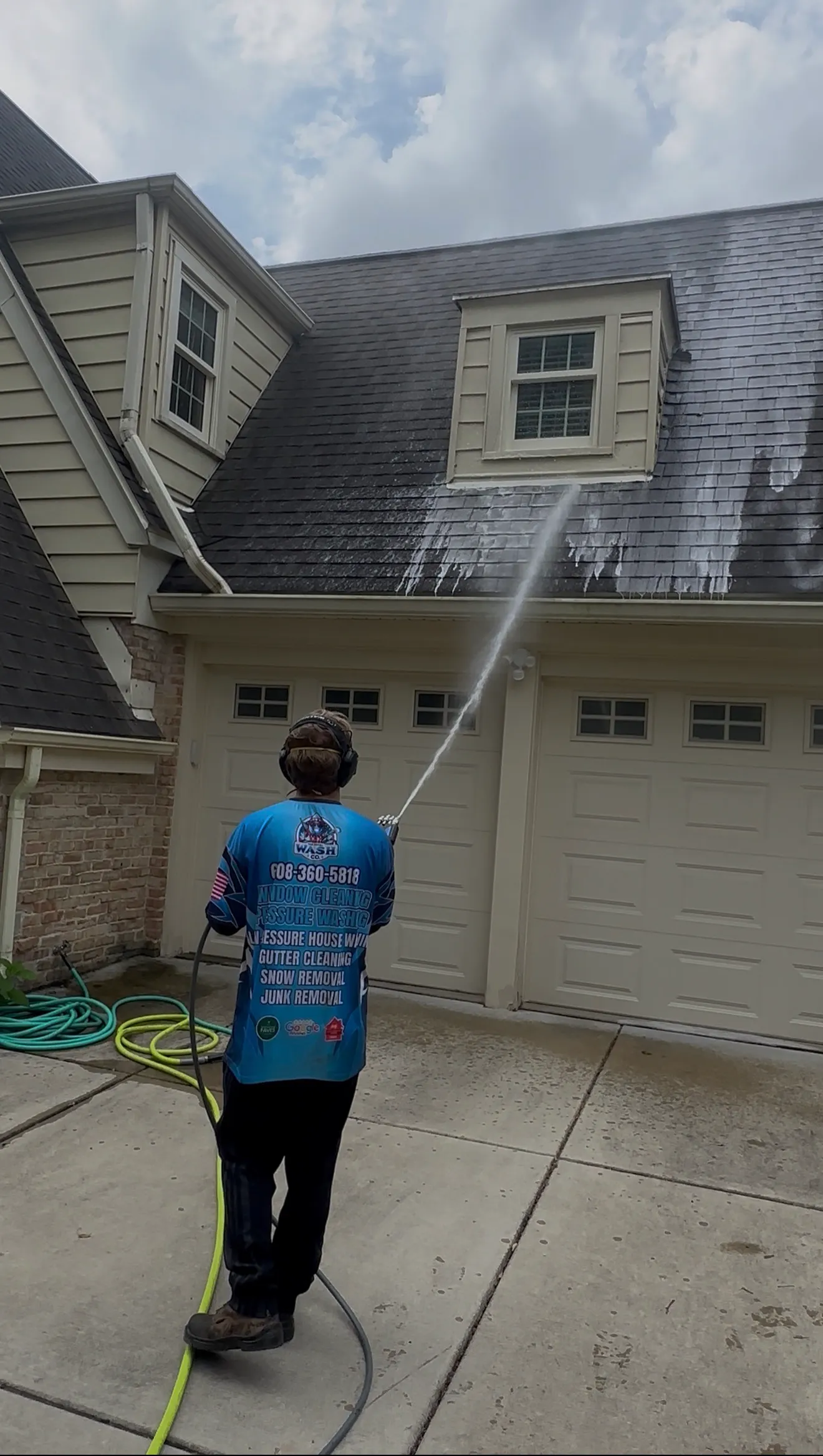
- Surfactant and sodium hypochlorite application. Our solution is applied at low pressure using a water-fed delivery system that keeps the operator safely positioned. Concentration is calibrated to roof condition and moss density — not a one-size setting.
- Dwell period. Chemistry sits on the roof surface for 15–20 minutes. During this window, sodium hypochlorite penetrates the Gloeocapsa cell walls and kills moss at the root level.
- Low-pressure rinse. We rinse with a specialty roof rinse tip at under 500 PSI — firm enough to flush dead material and excess chemistry, gentle enough to leave granules fully intact.
- Neutralization and post-rinse of landscaping. Runoff is neutralized and all landscape areas are flushed a second time.
Results are visible quickly. Black streaks typically turn gray within 24 hours and fade to clean within 24–72 hours as UV completes the oxidation process. For roofs with heavy moss accumulation, we schedule a follow-up visit at approximately 30 days for spot scraping and a targeted re-treatment — included in the base project price. Want the full method comparison? See our deep dive on soft wash vs pressure washing.
Spring Timing: Why the April–May Window Matters for Madison Homeowners
April through mid-May is the optimal treatment window for Madison residential roofs, and the reasoning is specific rather than arbitrary.
- Active growth phase improves chemistry effectiveness. Moss and Gloeocapsa algae are actively dividing in early spring, which makes soft wash chemistry measurably more effective than dormant-season application. Actively metabolizing cells absorb and are killed by sodium hypochlorite more readily than dormant ones, so spring treatment means a more complete kill of the existing colony before summer growth conditions arrive.
- Moderate humidity keeps dwell times predictable. Madison spring afternoons typically run 50–65% relative humidity, allowing consistent, predictable dwell behavior. By July and August, humidity climbs to 75–80%, which changes how quickly chemistry dries and makes optimal dwell windows harder to hit reliably.
- Trees haven’t fully leafed out. Before full canopy leafout — which typically completes in Madison between late April and mid-May depending on species — ladder access around the roof perimeter is easier and overhead obstructions are minimal. That reduces setup time and improves crew safety.
- Book early to secure a May slot. Spring is the busiest season for roof treatment in Madison. Scheduling windows typically open 2–3 weeks out in early April and extend to 4+ weeks by Memorial Day. If your roof is 10 years old or older and has never been treated, don’t wait until June.
Our technicians also flag early granule loss, moss-under-tab damage, and compromised valley flashing during the treatment process — intelligence that’s most useful while you still have pre-summer lead time to address it. For a full look at everything we clean, visit our residential exterior cleaning services page.
What Roof Treatment Costs in Madison, WI
Professional soft wash roof treatment in Madison typically runs in the following ranges — with most homes starting from $199 for the smallest/simplest jobs and climbing with size and complexity:
| Home Type | Typical Range |
|---|---|
| Single-story home | $350–$800 |
| Two-story colonial | $550–$1,200 |
| Large or complex roofline | $900–$2,400 |
Pricing is driven by four main variables: roof pitch (steeper pitches require longer setup and additional safety equipment), accessibility (some rooflines allow walkable access; others require ladder-only positioning at multiple points), moss density (heavy accumulation may require mechanical pre-scraping before chemistry application), and valley linear footage (valleys concentrate debris and are the most labor-intensive areas to treat properly).
These figures are ranges, not fixed quotes. We always recommend a site walk-through before finalizing pricing, because two homes with identical square footage can differ significantly in pitch, accessibility, and moss load. For context on return: deferred roof replacement on a typical Madison home is a major future expense, and treating moss and algae promptly extends serviceable roof life while keeping manufacturer warranties intact. Roofs over 15 years old show the highest urgency — remaining shingle life is most at risk from ongoing algae digestion — while roofs under 5 years old benefit from preventive treatment to maintain warranty protection from the start. See our full roof cleaning cost guide for Madison for a deeper pricing breakdown.
DIY Roof Cleaning in Madison: Why Most Attempts Cause More Damage
The “pressure wash the green off” approach is the single most common way Madison homeowners accidentally accelerate roof failure. The damage from high-pressure washing is not always immediately obvious — shingles look clean for a week or two, then granule loss accelerates over 3–12 months as the damaged asphalt surface oxidizes under UV. By year three, bald patches are visible, the warranty is already voided, and the homeowner is looking at an early replacement that could have been avoided entirely.
High-pressure washing is not the only DIY failure mode. Soft wash chemistry itself is easy to mis-apply:
- Wrong bleach concentration — too high and runoff burns plants; too low and the algae colony survives.
- No landscape pre-wetting — sodium hypochlorite runoff without dilution protection kills rhododendrons, boxwoods, and arborvitae quickly.
- Wrong dwell time — too short and the kill is incomplete; too long in hot conditions and runoff damage increases.
- Wrong rinse pressure — even a “low” setting on a consumer pressure washer can exceed 1,000 PSI at the nozzle, stripping granules.
Professional soft wash crews carry liability insurance specifically because bleach chemistry is straightforward to get wrong, and homeowner insurance policies typically exclude chemical damage to landscaping. The cost differential between professional treatment ($350–$1,200 for most Madison homes) and a premature roof replacement is substantial — this is one of the clearest cases where professional service protects the asset.
How to Prepare for Your Roof Treatment Appointment
Preparation on your end is minimal — our crews handle landscape pre-wetting, downspout management, and setup. A few things help the job go smoothly:
- Keep pets and children indoors during the chemistry application and the 15–20 minute dwell window.
- Flag any skylights or solar panels in advance so we can cover them during treatment.
- Confirm vehicle access to the roof perimeter. If your property has an electric gate, please ensure crew entry before our arrival time.
After treatment, expect the full visual change to complete within 24–72 hours as UV finishes the oxidation. Rain during or shortly after the dwell period is actually beneficial — it helps carry chemistry into shingle edges and can extend treatment longevity. A typical Madison home shows a clean-striping gradient for 3–7 days post-treatment, then a fully clean appearance by day 14. For heavy-moss roofs, we schedule a 30-day follow-up for spot scraping and targeted re-treatment, included in the original project price.
Book Your Spring Roof Treatment in Madison, WI
Spring roof treatment appointments in the Madison metro fill quickly. If you want a May appointment, booking by the second week of April gives you the best availability. The Total Wash Co. services all of Madison and the surrounding Dane County suburbs — Middleton, Verona, Fitchburg, Waunakee, Sun Prairie, Monona, McFarland, Oregon, and Stoughton.
Get a fast estimate through our instant quote tool, or call us at (608) 360-5818 and ask about our spring roof and gutter inspection bundle. Don’t let another Madison summer run on an untreated roof.
FAQ: Moss & Algae Roof Treatment in Madison, WI
When is the best time for roof moss and algae treatment in Madison, WI?
April through mid-May is the optimal window. Moss and algae are actively dividing during this period, which makes soft wash chemistry more effective than dormant-season application. Madison’s spring humidity is moderate (50–65% afternoon), keeping dwell times predictable — by July and August humidity climbs to 75–80% and chemistry behavior changes. Trees also haven’t fully leafed out yet, making access around the roof perimeter easier. Avoid scheduling in July–August heat, which can also accelerate regrowth after treatment.
Will soft washing damage my asphalt shingles?
No — soft washing at under 500 PSI is the only method approved by the Asphalt Roofing Manufacturers Association (ARMA) for cleaning asphalt shingles. High-pressure washing above 1,000 PSI strips granules and voids manufacturer warranties from GAF, Owens Corning, CertainTeed, Malarkey, IKO, and others. Our soft wash protocol uses a sodium hypochlorite solution, a calibrated dwell period, and a low-pressure rinse tip — leaving granules fully intact and warranties in force.
How much does professional roof treatment cost in Madison, WI?
Typical ranges are $350–$800 for single-story homes, $550–$1,200 for two-story colonials, and $900–$2,400 for large or complex rooflines with multiple valleys and dormers. Pricing depends on roof pitch, accessibility, moss density, and valley linear footage. We recommend a site walk-through before finalizing any quote, as two homes with identical square footage can differ significantly in these variables.
How often should I treat my Madison roof for moss and algae?
Every 2–5 years, depending on tree cover and roof orientation. North-facing Madison roofs with heavy tree canopy — common in Nakoma, Maple Bluff, and the Near West Side — typically benefit from treatment every 2–3 years. South-facing or open-exposure roofs can often go 4–5 years. We recommend an annual visual inspection starting at 10 years of roof age so moss-under-tab damage and early granule loss can be caught before they become structural issues.
Can I DIY roof cleaning in Madison?
We strongly recommend against it. Pressure washing destroys shingle granules, voids manufacturer warranties, and creates a “clean today, bald in 3 years” failure pattern. Soft wash chemistry is also easy to mis-apply — wrong bleach concentration, skipped landscape pre-wetting, or incorrect dwell time can damage plantings or leave the algae colony alive. Professional treatment for most Madison homes runs $350–$1,200 and protects both your roof warranty and your landscaping.
Ready for a spotless exterior? Get a free instant quote in about 60 seconds, or call (608) 360-5818.
Related Posts
Free — No Obligation
Get a Quote for This Service
Madison's most-reviewed exterior cleaning company. Same-week availability.
Real Results — Moss & Algae Roof Treatment in Madison, WI
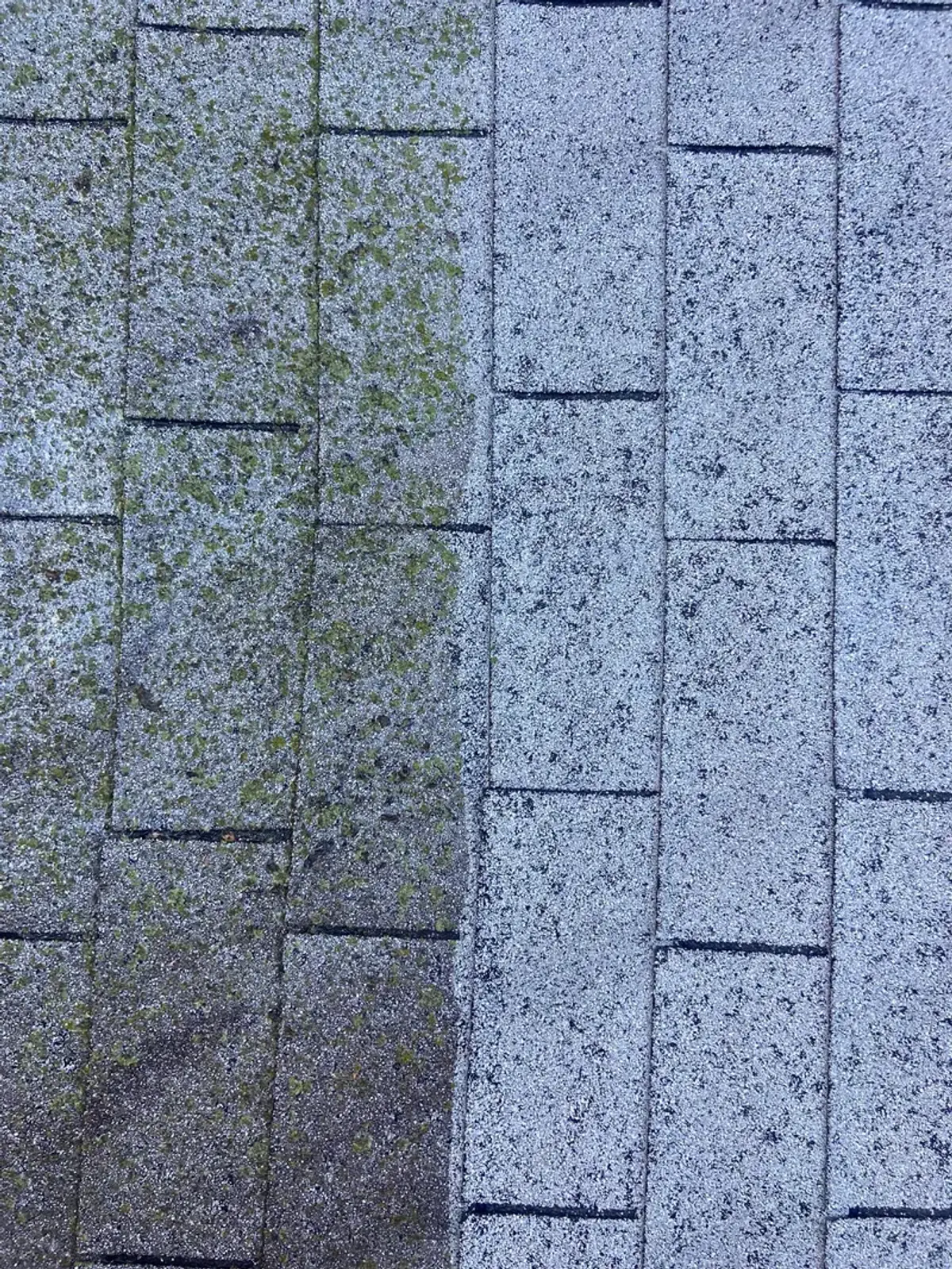
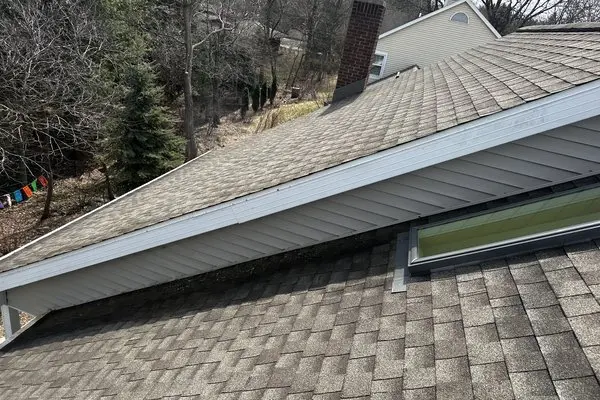
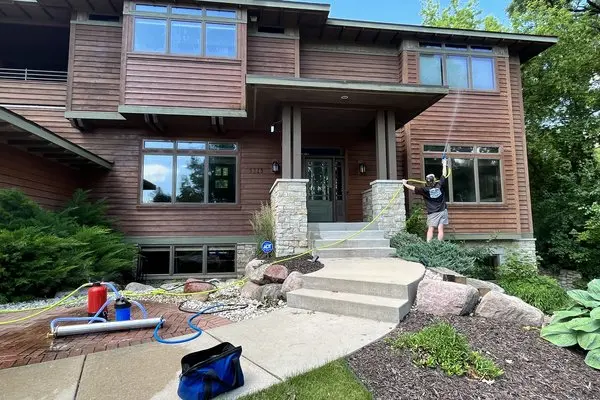
Actual job photos from The Total Wash Co. — not stock photography
More Results
Frequently Asked Questions
"Ashton and his crew did a fantastic job soft washing our home. The green mildew and stains are completely gone. House looks like it was just painted!"
"Had black streaks all over our roof for years. The Total Wash Co. soft washed it and it looks incredible — like a brand new roof. Highly recommend."
Serving Your Neighborhood
Written by
The Total Wash Co. Team
Window cleaning, pressure washing and exterior cleaning · Madison, WI
The Total Wash Co. has served Madison and Dane County since 2021. More about us