Table of Contents
- 1The Short Answer: Book Roof Cleaning Before Your Renewal Notice Arrives
- 2Why Sun Prairie Roofs Get Black Streaks and Moss Faster Than You'd Expect
- 3The Insurance Problem: What Carriers Actually Look For
- 4Soft Wash vs. Pressure Washing: Why It Matters for Your Shingles
- 5When Is the Best Time to Schedule Roof Cleaning in Sun Prairie?
- 6What Does Roof Cleaning Cost in Sun Prairie, WI?
- 7Frequently Asked Questions: Roof Cleaning in Sun Prairie, WI
Quick Answer
If you're a Sun Prairie homeowner asking whether your roof needs cleaning, the honest answer is: if you can see black streaks, green patches, or any moss from the ground, you're already overdue. Roof [cleaning in](/blog/complete-guide-exterior-cleaning-madison-wi) Sun Prairie, WI typically runs betw
The Short Answer: Book Roof Cleaning Before Your Renewal Notice Arrives
If you're a Sun Prairie homeowner asking whether your roof needs cleaning, the honest answer is: if you can see black streaks, green patches, or any moss from the ground, you're already overdue. Roof [cleaning in](/blog/complete-guide-exterior-cleaning-madison-wi) Sun Prairie, WI typically runs between $350 and $800 for a professional soft wash — a fraction of what a neglected roof can cost you in insurance headaches or early replacement. Sun Prairie's humid continental climate, with 42–50 inches of annual snowfall and repeated freeze-thaw cycles every winter, makes biological roof growth one of the fastest-moving problems I see on homes out here. As one of Wisconsin's fastest-growing communities with roughly 35,900 residents, Sun Prairie has a lot of relatively new housing stock — but "newer" doesn't mean immune to algae, and insurance carriers don't make exceptions for age.
Why Sun Prairie Roofs Get Black Streaks and Moss Faster Than You'd Expect
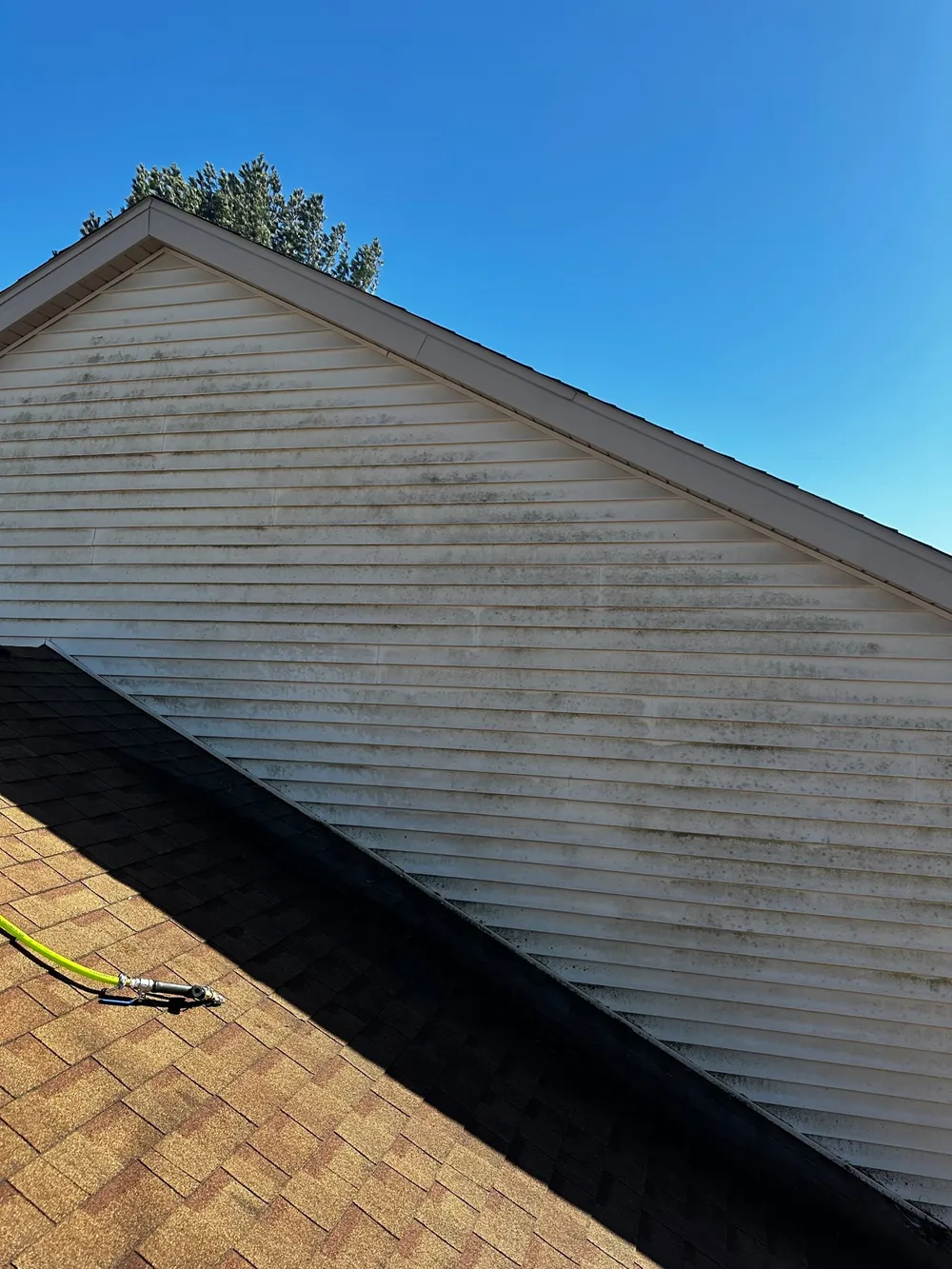
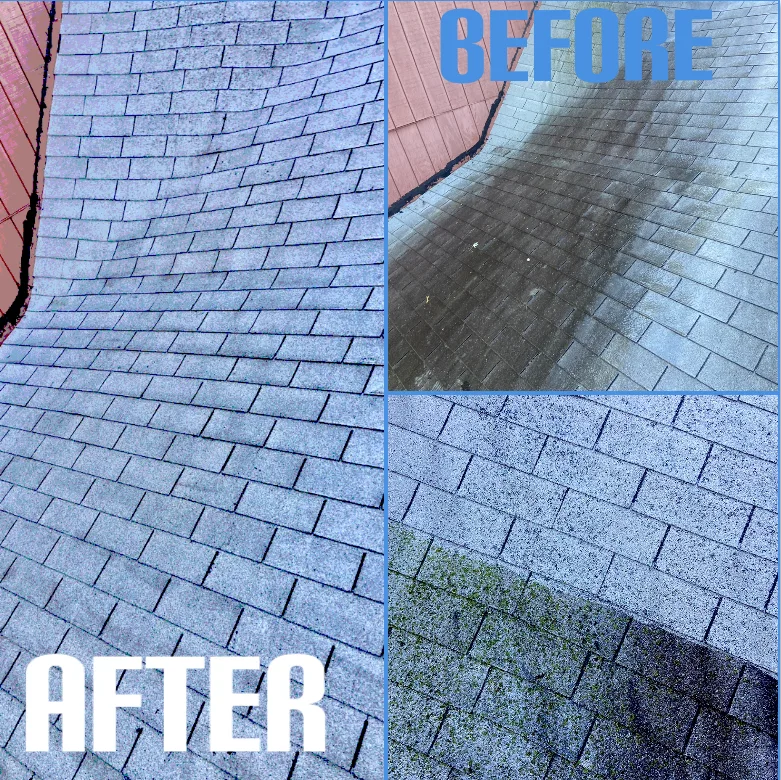
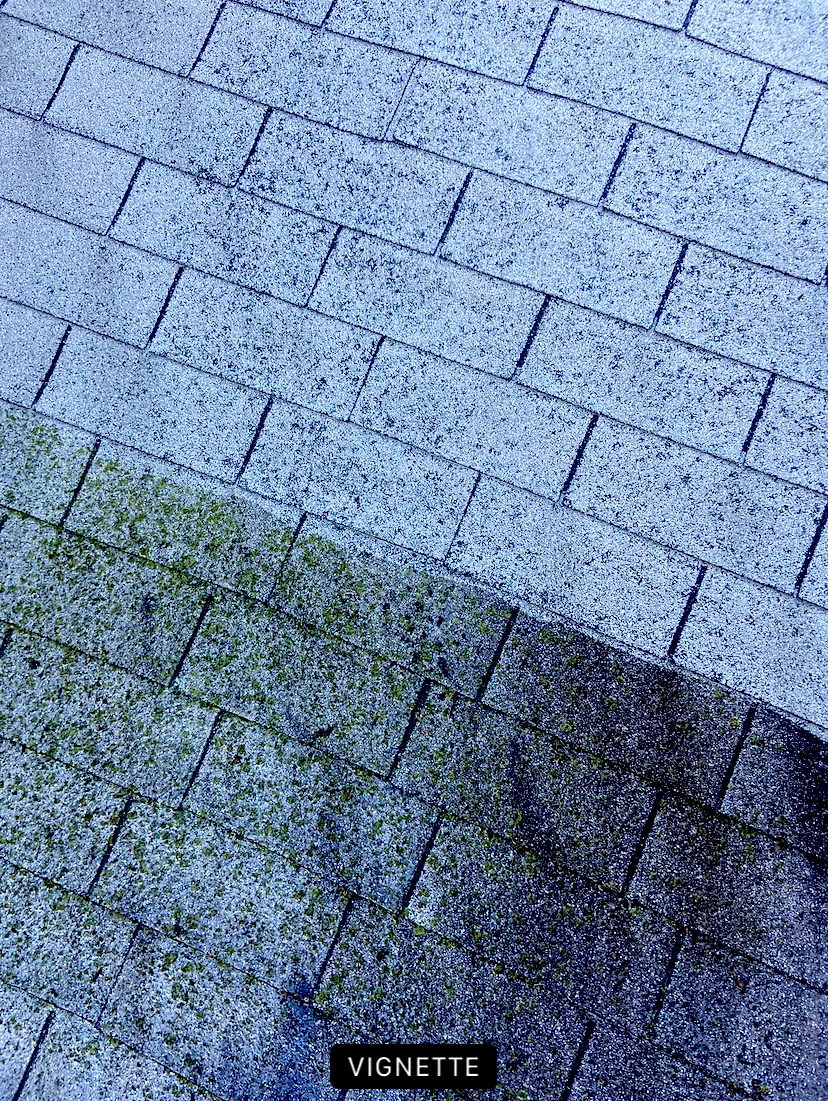
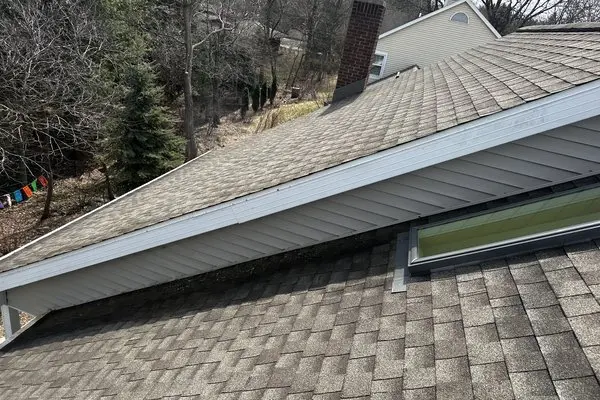
I've cleaned roofs across the Madison area — from Maple Bluff to Nakoma to homes right here in Sun Prairie — and the biology is consistent. Those ugly black streaks aren't dirt or soot. They're Gloeocapsa magma, a type of algae that the Asphalt Roofing Manufacturers Association (ARMA) has identified as the primary culprit behind dark roof staining on asphalt shingles. This stuff spreads via airborne spores, thrives in moisture, and once it's established, it retains water against your shingles like a sponge.
Here's where Wisconsin's climate makes it worse. Sun Prairie sits in southern Dane County, where summer humidity is high enough that shaded roof sections can stay damp for 24–48 hours or more after a rain — exactly the window UW-Extension moisture research identifies as the threshold for algae and mold colonization on building surfaces. Add in the dense deciduous tree cover that's common in Sun Prairie neighborhoods, and north-facing or shaded roof sections dry even slower. I've pulled back moss mats on roofs in this area and found shingles that looked like they'd been underwater.
Then winter hits. And this is the part people don't think about until it's too late. Moss and lichen physically lift shingle edges. When water gets under those lifted shingles and freezes during one of our classic Wisconsin freeze-thaw cycles, it expands and levers the shingle up further. By spring snowmelt, you've got shingles that are curled, cracked, or missing granules — and that's when insurance inspectors start paying attention.
The practical takeaway: on a shaded or north-facing Sun Prairie roof, biological growth can establish and cause measurable damage in as little as one or two seasons if left untreated. Industry guidance — aligned with ARMA's recommendations — calls for cleaning every 1–3 years on shaded or moist roofs, and up to every 5 years on open, sunny roofs with minimal growth. Know which category your roof falls into.
The Insurance Problem: What Carriers Actually Look For
This is the question I get most from Reddit threads and customer calls alike: "Will my insurance company actually drop me over a dirty roof?" The honest answer is — it depends on the carrier and how bad it looks, but it happens more often than people expect.
Most homeowner's insurance policies in the U.S. require the roof to be in "good repair" and free of evidence of "neglect." When a carrier sends out an aerial inspection or a field adjuster — which commonly happens at renewal for roofs estimated to be 15–20 years old — visible moss, heavy algae staining, or lifted shingles can trigger a "repair or non-renew" notice. I've had Sun Prairie customers call me in a panic after getting exactly that letter, needing the roof cleaned and documented before a reinspection deadline.
The key word in those policy clauses is "neglect." A stained roof looks neglected even if the shingles are structurally sound. Insurance underwriters look at photos — they're not climbing up there to feel how solid the granules are. If your roof looks like it hasn't been touched in a decade, that's a liability to them regardless of actual structural integrity.
What I tell every Sun Prairie homeowner: don't wait for the letter. If your roof is visibly stained or showing any moss, schedule a soft wash before your next renewal cycle. Keep the invoice. That paper trail showing proactive maintenance matters if an insurer ever questions whether you've been caring for the property. It's a small, inexpensive step that protects a much larger asset.
Soft Wash vs. Pressure Washing: Why It Matters for Your Shingles
One of the most common DIY mistakes I see — and a concern I hear from homeowners who've had bad experiences with other contractors — is using a standard pressure washer on asphalt shingles. Don't do it. ARMA explicitly warns against pressure washing asphalt roofs because the high-pressure stream dislodges the protective granules embedded in the shingles. Those granules are what protect the asphalt layer from UV degradation. Blast them off and you've just accelerated your roof's aging by years.
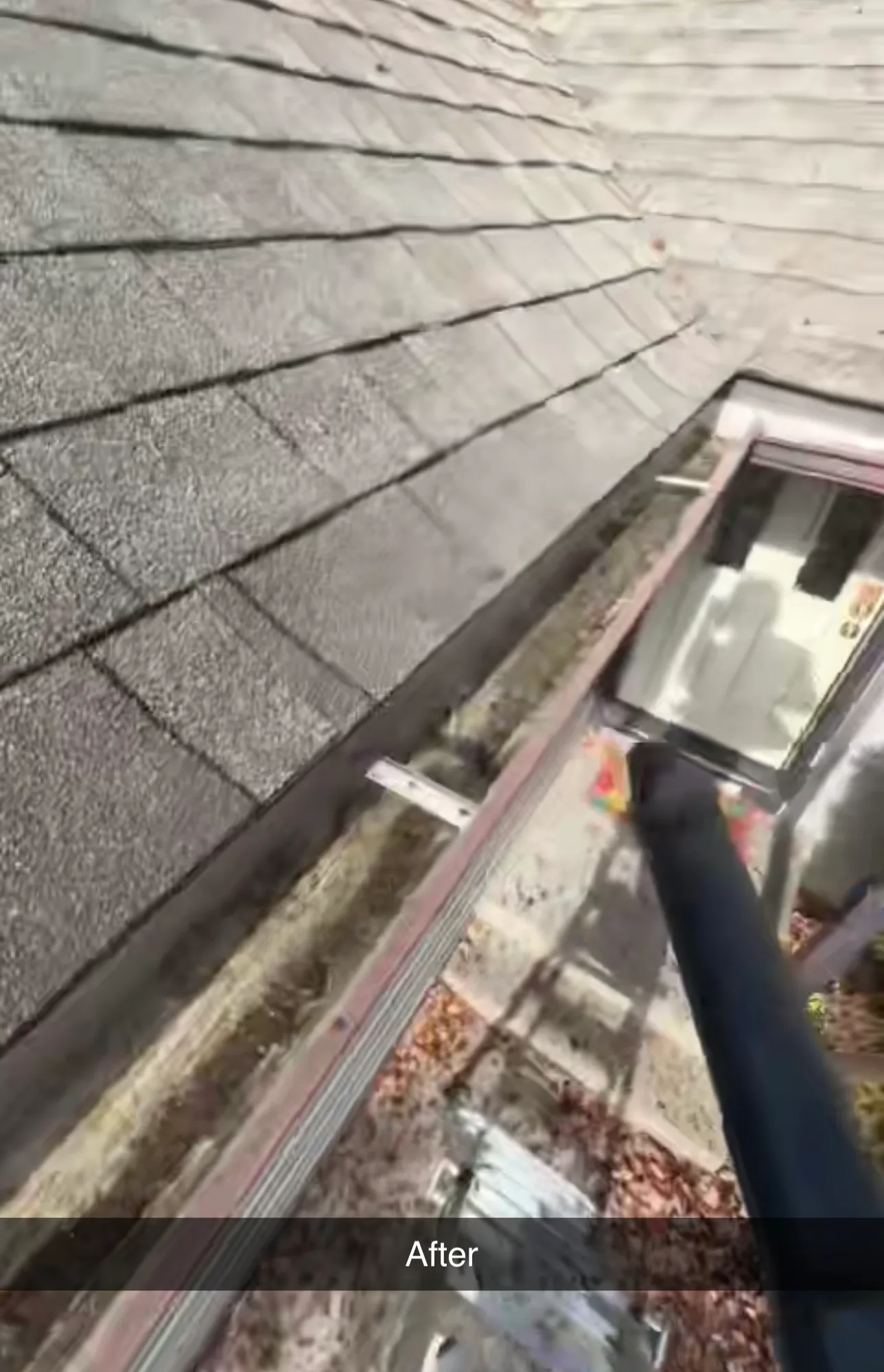
The right method is soft washing: a low-pressure application (we're talking under 100 psi at the surface) of a sodium hypochlorite solution with surfactants, allowed to dwell and kill the biological growth at the root, then rinsed gently. ARMA's own technical guidance recommends a bleach-and-water solution — roughly a 50:50 dilution of household bleach — applied carefully to the shingle surface. At the concentrations we use on the roof surface (typically in the 1–3% active chlorine range after dilution), the solution kills algae and moss without damaging properly applied shingles.
There are a few things worth being upfront about. First, the runoff from a roof soft wash contains chlorine, and the EPA is clear that bleach-containing wash water should not be discharged directly into storm drains or surface water — chlorine is toxic to aquatic life even at low concentrations. We always pre-wet surrounding landscaping, use surfactants to break surface tension and reduce runoff velocity, and work consciously around Lake Waubesa-area drainage wherever we're operating in the Sun Prairie or McFarland corridor. Second, if your roof has significant lichen — not just algae or moss — one treatment may not fully clear it. Lichen roots penetrate the shingle surface and may require a second application or a longer dwell time. I'll tell you that upfront at the quote stage rather than after the fact.
When Is the Best Time to Schedule Roof Cleaning in Sun Prairie?
Timing matters more than most people realize, and this is another area where Wisconsin's seasons drive the decision.
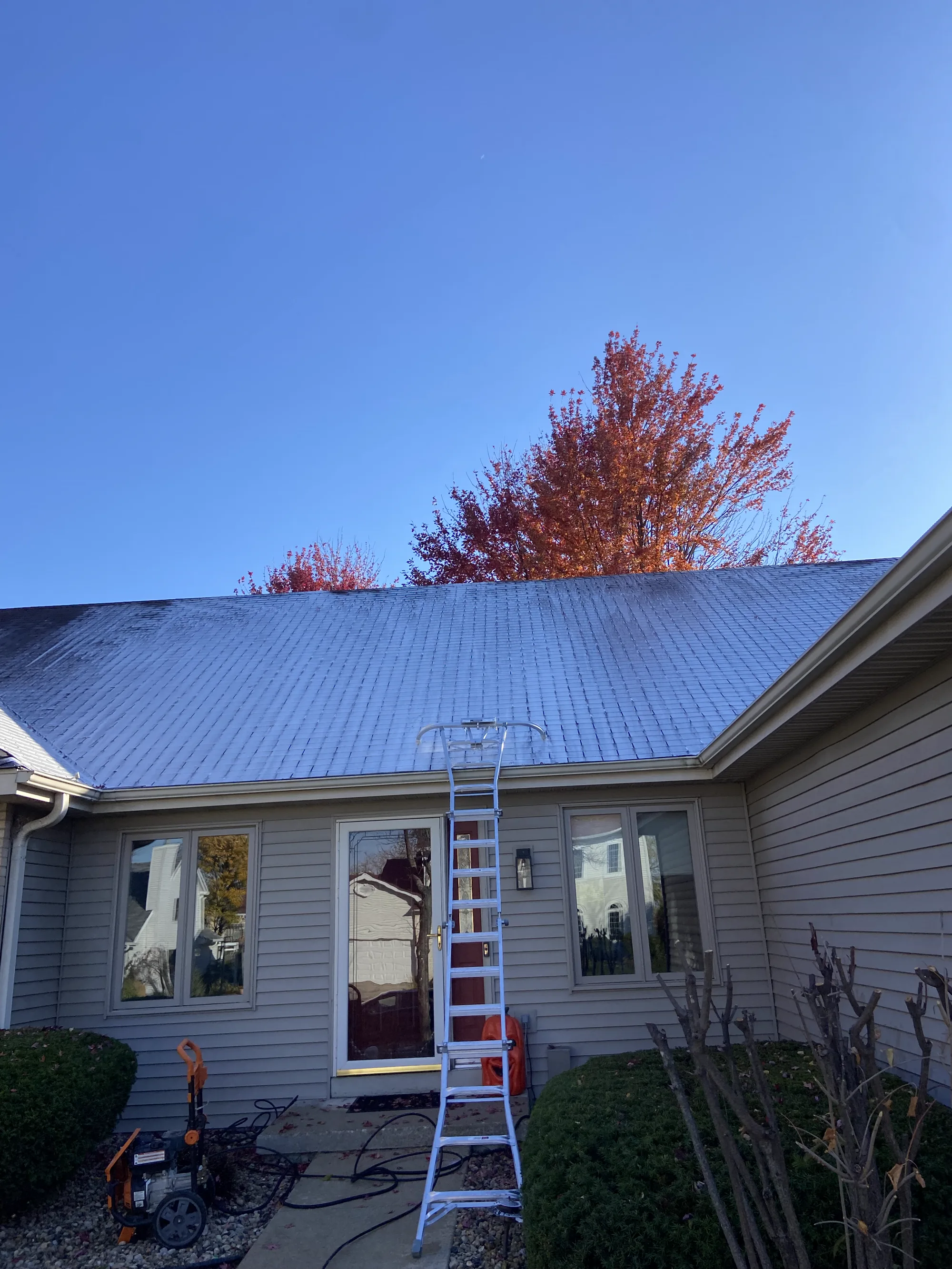
Late spring (May–June) is our most popular window for roof cleaning in Sun Prairie. The snow is gone, temperatures are consistently above 50°F (which matters for the sodium hypochlorite solution to work effectively), and you catch the roof before summer humidity gives algae another full season to spread. This is also ahead of most insurance renewal cycles that fall in the summer months.
Late summer to early fall (August–September) is the second-best window. Growth has peaked for the season, and cleaning in September gives you clean shingles heading into the freeze-thaw winter — meaning no moss mats holding moisture against your shingles when the temperature starts cycling around 32°F. If your insurer does an aerial inspection in fall, you want clean shingles in the frame.
What I'd avoid: scheduling a soft wash when temperatures are expected to drop below 40°F within 24 hours. The SH solution needs dwell time in reasonable temperatures to be effective, and rinsing a roof right before a hard freeze creates its own problems. We stop booking roof washes in Sun Prairie once we're consistently in late October — at that point, we're focused on gutter cleaning and house washing before the ground freezes.
One more timing note for Sun Prairie specifically: if you're in a newer neighborhood with homes built in the 2010s or early 2020s, don't assume you have years before you need to think about this. Shaded lots with significant tree cover can see algae establish within 3–5 years of construction. I've cleaned roofs in Sun Prairie subdivisions on homes that were less than 7 years old.
What Does Roof Cleaning Cost in Sun Prairie, WI?
I want to be straight with you on pricing because I think a lot of homeowners find wildly different numbers online and don't know what to trust. Some cost aggregator sites report average roof cleaning costs in the Sun Prairie area ranging from roughly $1,243 to $1,665, with a wider range of $1,032–$1,876 depending on size, pitch, and condition. I'll be honest — those numbers reflect certain market segments and larger or steeper roofs, and they don't represent what most Sun Prairie homeowners with a standard ranch or two-story will pay.
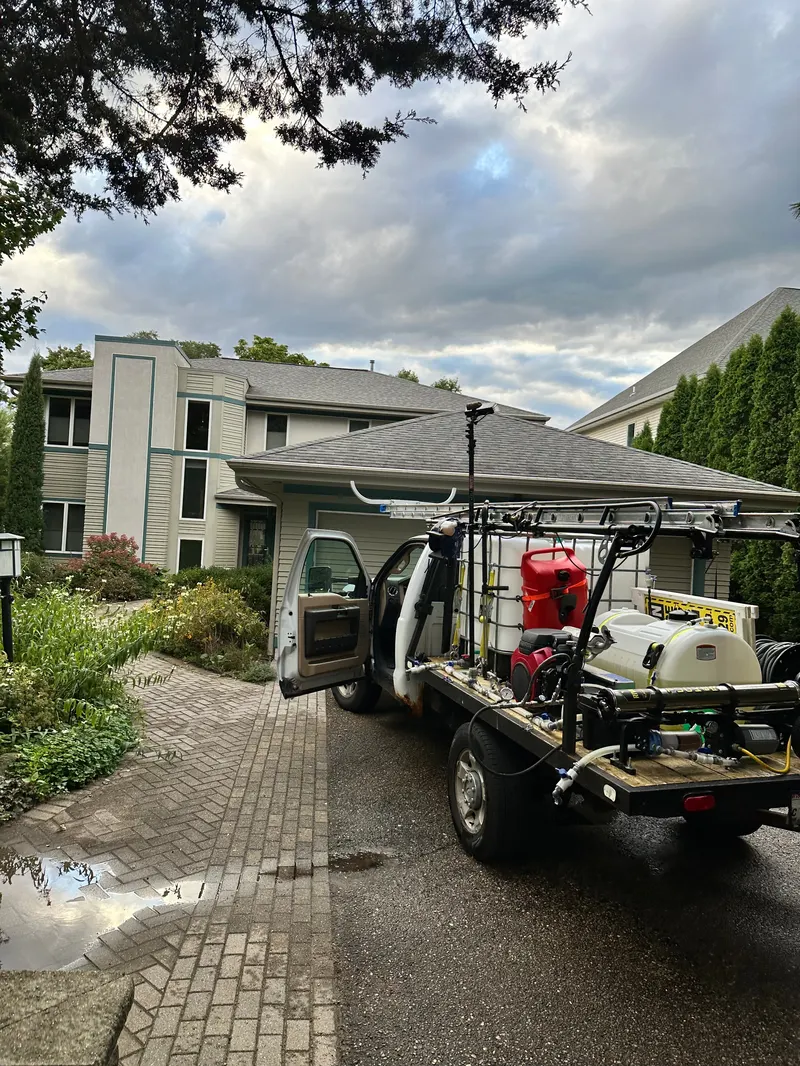
At The Total Wash Co., our roof soft wash pricing in Sun Prairie runs $350–$800 for the majority of residential jobs. Where you land in that range depends on:
- Roof size and pitch. A steeper roof takes longer to work safely and requires more solution.
- Severity of growth. Heavy moss or lichen requires more product and dwell time than light algae staining.
- Accessibility. Roofs with multiple valleys, dormers, or complex geometry take longer.
- Add-on services. Many customers combine roof cleaning with gutter cleaning ($150–$250) or a full house wash ($250–$600) for a better overall value per visit.
We've been doing this [in Madison](/blog/moss-algae-roof-treatment-madison-spring-timing) and the surrounding Dane County area since 2021, and we've built up 200+ five-star Google reviews from homeowners who appreciated straight answers on pricing. I'll give you a real number on a quote call, not a range so wide it's useless.
Frequently Asked Questions: Roof Cleaning in Sun Prairie, WI
Q: How often should I have my roof cleaned in Sun Prairie?
A: For most Sun Prairie homes with average shade and tree cover, every 2–3 years is the right cadence. If your roof is heavily shaded — north-facing, under mature oaks or maples — plan for every 1–2 years. Open, south-facing roofs with minimal biological growth can often go 4–5 years between cleanings. After your first soft wash with us, I'll give you a specific recommendation based on what I see.
Q: Will my insurance company actually drop me if my roof is stained?
A: It depends on the carrier and the severity of what they see in an inspection. Carriers commonly flag roofs that show visible moss, significant algae staining, or lifted shingles — especially on roofs 15 years or older. The practical risk isn't always immediate cancellation; it's a "repair or non-renew" notice that gives you 30–60 days to address the issue under pressure. Cleaning proactively and keeping the invoice on file is the smarter move.
Q: Is soft washing safe for my asphalt shingles and landscaping?
A: Yes, when done correctly. We use low pressure (under 100 psi at the surface) and a sodium hypochlorite solution in the 1–3% active concentration range — aligned with ARMA's recommended approach. We pre-wet all surrounding landscaping before applying solution and manage runoff carefully to avoid discharge into storm drains or surface water. High-pressure washing is what damages shingles; soft washing does not.
Q: Can I just clean my own roof with a garden hose and bleach?
A: You can, with caveats. A 50:50 bleach-and-water solution applied with a pump sprayer and rinsed gently is essentially what ARMA recommends for DIY algae removal. The real risks are: working on a wet, sloped surface without safety equipment; applying too high a concentration and damaging landscaping; and not fully treating the root system of established moss. DIY is reasonable for light algae on a low-pitch roof with easy access. For any significant moss, steep pitch, or two-story home, hire a pro — the fall risk isn't worth it.
Q: How long does a roof soft wash take, and how soon can I see results?
A: Most Sun Prairie residential roofs take 2–4 hours from setup to rinse. Algae staining typically looks dramatically better same-day. Moss may take a few weeks of rain cycles to fully rinse away as the dead material loosens — this is normal and expected. Lichen can take longer and may require a follow-up treatment. I'll set accurate expectations at the quote stage.
Ready to schedule? Get a free quote → or call us at (608) 393-7899. We serve Sun Prairie, Madison, Middleton, Fitchburg, Verona, Monona, McFarland, Cottage Grove, Stoughton, DeForest, Waunakee, and the surrounding Dane County area.
      ## Related Reading - [Vinyl Siding Washing in Madison: The Safe Way to Clean Your Home](/blog/vinyl-siding-washing-madison) ## Related Posts - [Window Cleaning Methods Compared (2026) | Total Wash Co](/blog/window-cleaning-methods-compared-2026-total-wash-co) - [Green Algae on Concrete: DIY vs Pro Removal | Total Wash Co](/blog/green-algae-on-concrete-diy-vs-pro-removal-total-wash-co)Free — No Obligation
Get a Quote for This Service
Madison's most-reviewed exterior cleaning company. Same-week availability.
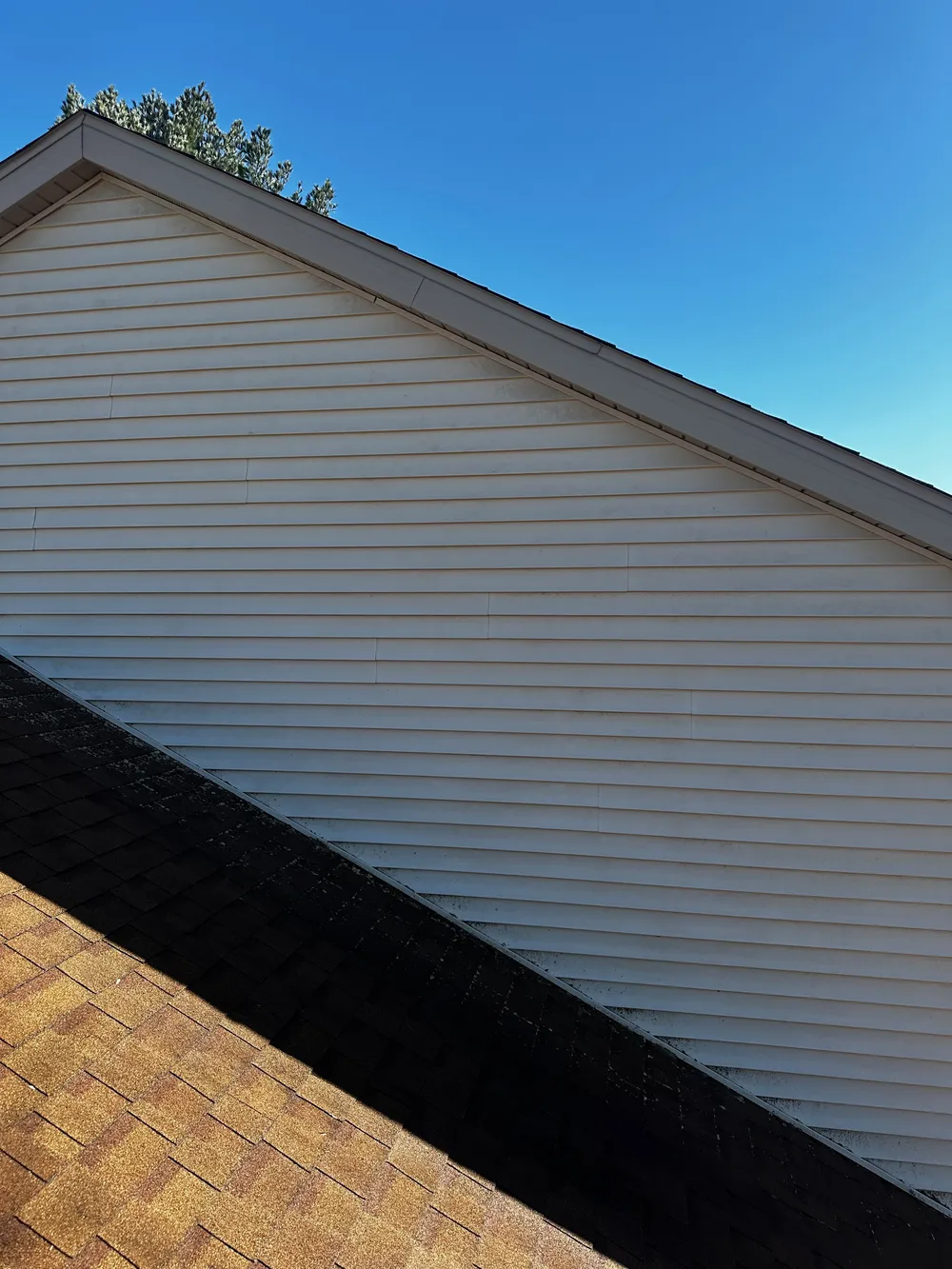
Real Results — Roof Cleaning Sun Prairie WI | The Total Wash Co. in Madison, WI
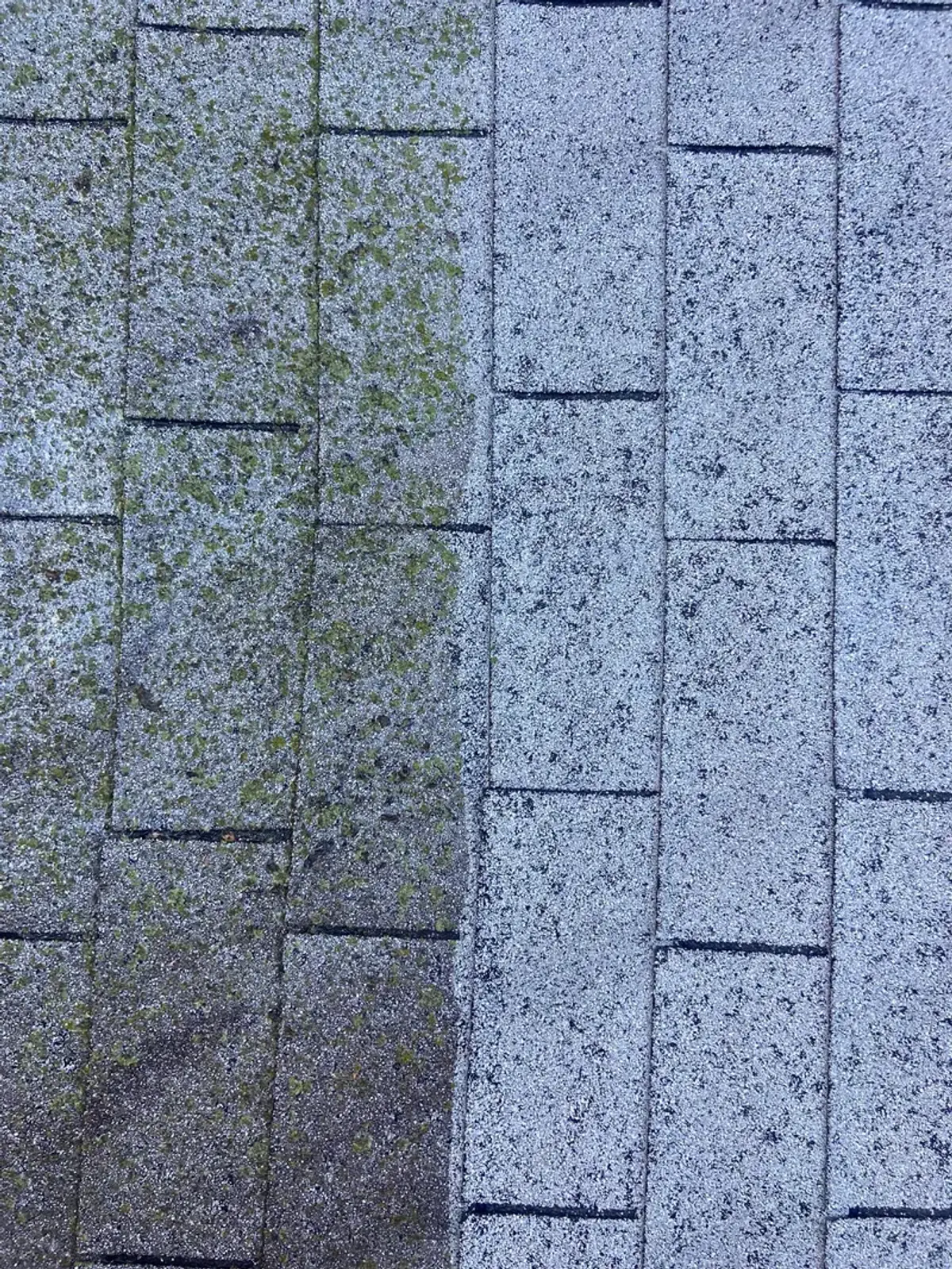
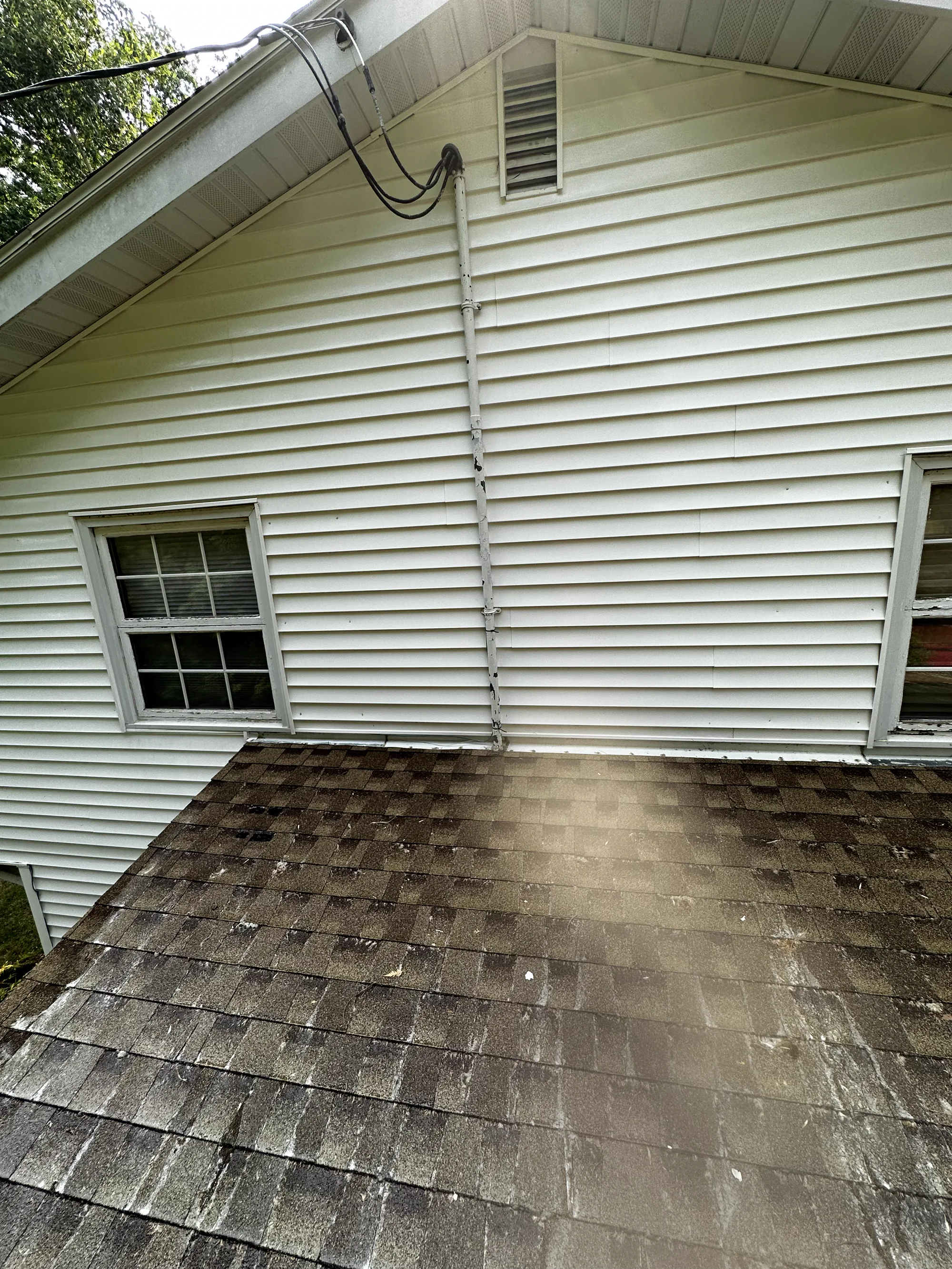
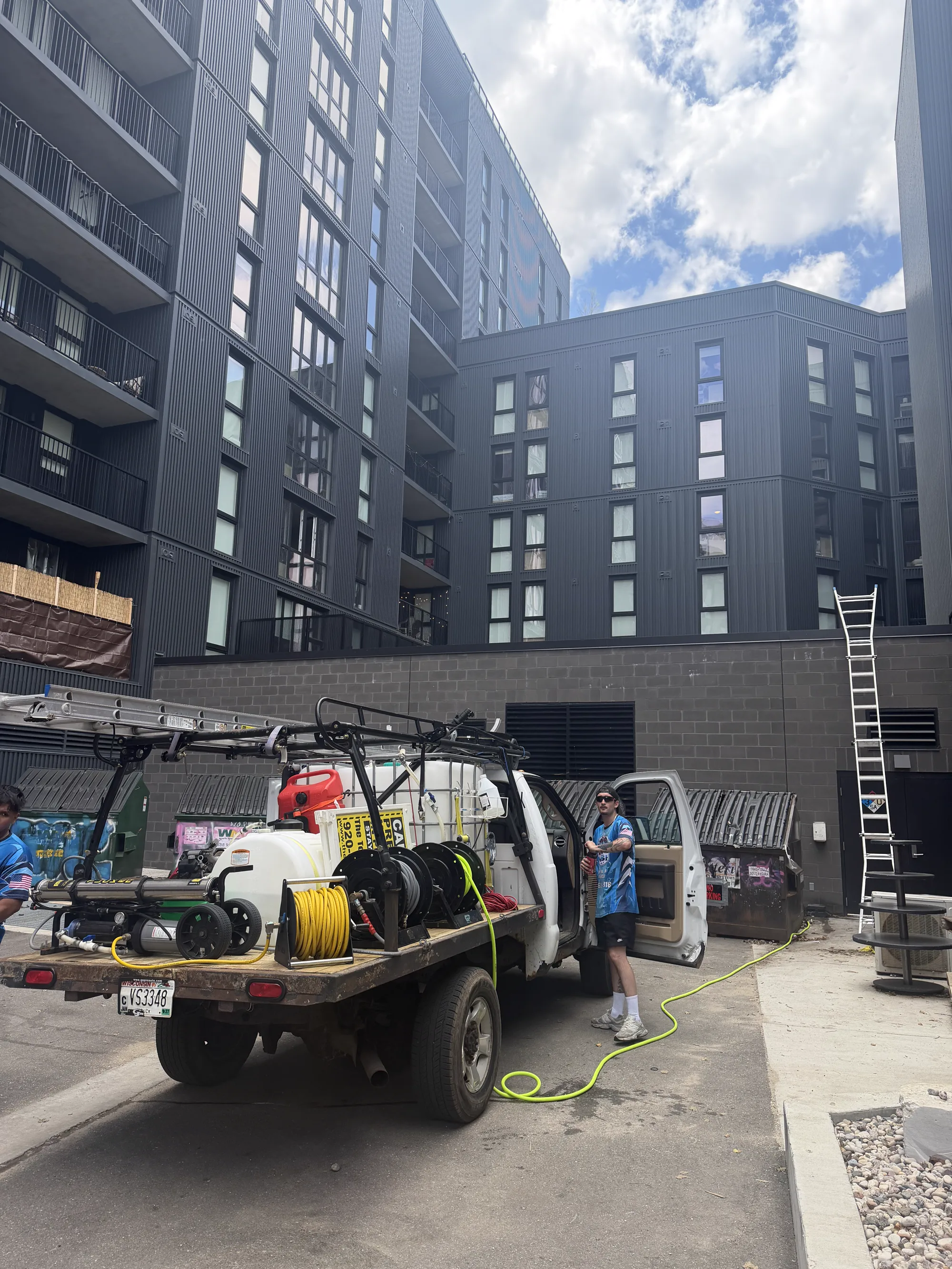
Actual job photos from The Total Wash Co. — not stock photography
More Results
Frequently Asked Questions
"Had black streaks all over our roof for years. The Total Wash Co. soft washed it and it looks incredible — like a brand new roof. Highly recommend."
Serving Your Neighborhood
Written by
Ashton Ferry
Founder & Owner · The Total Wash Co. · Madison, WI
Ashton founded The Total Wash Co. in 2021 and the company has completed 1,500+ jobs across Dane County. Every article is grounded in real field experience — not generic content.