How we do it
How we wash a house without pressure-washing it
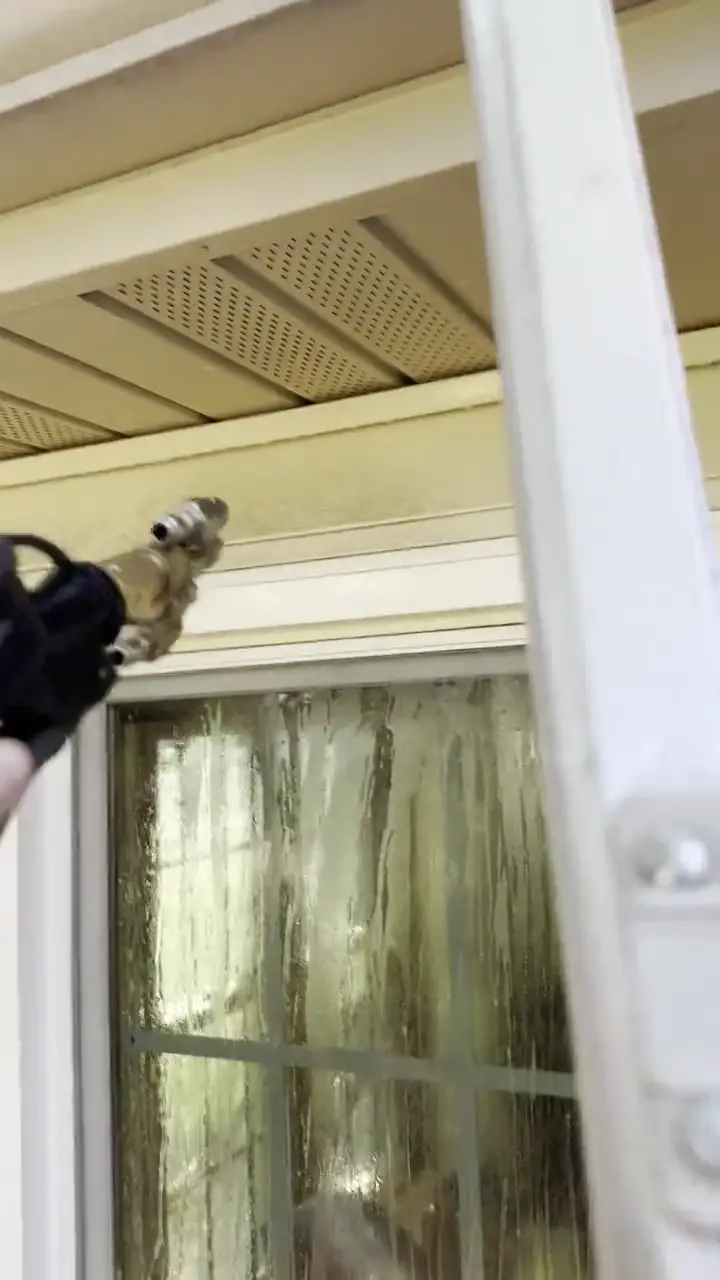
Shot on a Dane County job: a wand soft washing a soffit and eave, with the clean line between the washed and unwashed sections one pass apart.
 20s
20sHow does soft washing work?
Soft washing cleans siding with chemistry, not pressure. We pre-wet plants and cover the HVAC, apply sodium hypochlorite diluted to about 0.75–1% with a surfactant from the bottom up, let it work 5–10 minutes until the algae turns gray, rinse top-down at low pressure, then rinse the plants again and neutralize.
Step by step, the way we actually do it
- 1
Walk the house with you
We walk every wall together and photograph anything that's already there — a loose panel, a chalky patch, a cracked pane — so nobody has to guess later. This is also where we spot the things that change the mix: painted wood, stucco, a cedar accent. If a wall needs a test patch, it gets one now.
- 2
Close it up
Every window and door gets closed and checked, because a mist of sodium hypochlorite through an open window is a bad afternoon. Outlets, the doorbell and any cameras get taped. If you have pets, this is when they come inside.
- 3
Soak the plants, cover the HVAC
Every plant and bed within about 15 feet of the wall gets soaked with plain water from a separate hose, so the leaves are already wet and the soil is already full when chemistry shows up. Hydrangeas, hostas, roses and anything planted this year get a tarp. The outdoor condenser gets a cover — sodium hypochlorite corrodes aluminum fins.
- 4
Draw test
Before the first wall, the injector's draw line goes into a marked bucket and the rig runs for a set time, so we can see exactly how much chemical it pulls. That's how "about 1% on the siding" stays a measurement and not a hope. The remote bypass gets checked at the same time.
Gear: Super Suds Sucker stainless downstream injectorGear: Water Dragon remote downstream bypass (stainless)Chemistry: Sodium hypochlorite 12%Chemistry: Elemonator surfactant - 5
Apply from the bottom up
The soap tip lays the mix on at low pressure in a wide fan, starting at the bottom of the wall and working up. Bottom-up matters: chemistry running down a dry wall leaves clean streaks that never blend, and a wet wall underneath means no streaks at all. One wall at a time, never the whole house.
Gear: 8 GPM pressure-washing rigGear: MTM Hydro SGS28 trigger gun, J-rod wand and 8.0-orifice tipsGear: Buffer tanks — 225 gal (2012 truck) / 250 gal (2020 truck)Chemistry: Sodium hypochlorite at about 0.75–1%Chemistry: Elemonator surfactant - 6
Let it dwell — and keep everything wet
The mix sits 5 to 10 minutes on a timer while the algae goes from green to gray. The wall is kept damp so nothing dries on the siding, and the plants below get re-wet during the wait. Dwell is where the work happens; pressure is not a substitute for it.
- 7
Rinse from the top down
The remote flips the line to plain water and the 40° tip rinses top-down, held a couple of feet off the wall, until the runoff is clear. It's volume doing the work — 8 gallons a minute — not force. Vinyl, brick, fiber cement: the tip never gets close enough to lift a panel or blow out mortar.
- 8
Flood the beds, then neutralize
Every bed we worked above gets flooded with plain water, then the neutralizer goes on. What's left after sodium hypochlorite has done its job is mostly salt water, and salt in the root zone is what actually hurts plants — so the flush comes first, and the neutralizer finishes it.
Gear: Plant hose, tarps and HVAC coversChemistry: Neutralizer for the plant re-rinse - 9
Walk the walls with you
We walk the house again together and take the after photos from the same spots as the before photos. If a wall has oxidation — the chalky haze on old vinyl or paint that a wash reveals rather than causes — we point it out and explain it, because it's the one thing a soft wash can't fix.
- 10
Flush the rig
Back at the truck the injector and pump get two minutes of clean water. Sodium hypochlorite left in a pump eats the seals, and a rig that's flushed after every job is a rig that runs the same on your house as on the last one.
What we never do
- Never high pressure on siding.
- Never top-down application — chemistry on a dry wall streaks.
- Never chemical near an uncovered HVAC unit.
- Never skip the plant rinse or the neutralizer.
- Never SH mixed with anything but water and Elemonator.
- Never SH left in the pump.
The gear this takes
What we spray, and how we keep it off your plants
- Sodium hypochlorite 12%, diluted to about 0.75–1% on the siding
- Elemonator surfactant (the only thing we add to SH)
- Neutralizer for the plant re-rinse
- F9 BARC for rust or hard-water stains — a separate step, never with SH
Safety on your property
- Windows and doors closed and checked before the first spray; pets inside for the wash.
- Plants within about 15 feet pre-wet, re-wet during the dwell, flooded after, then neutralized.
- HVAC condenser covered; outlets, doorbell and cameras taped.
- Techs in P100/OV respirators, Z87.1 glasses and nitrile gloves; the SDS binder is in the cab.
- Sodium hypochlorite is mixed with water and Elemonator only — never with an acid or a degreaser.
- A pool smell for an hour or so is normal; keep off wet beds until we've rinsed them.
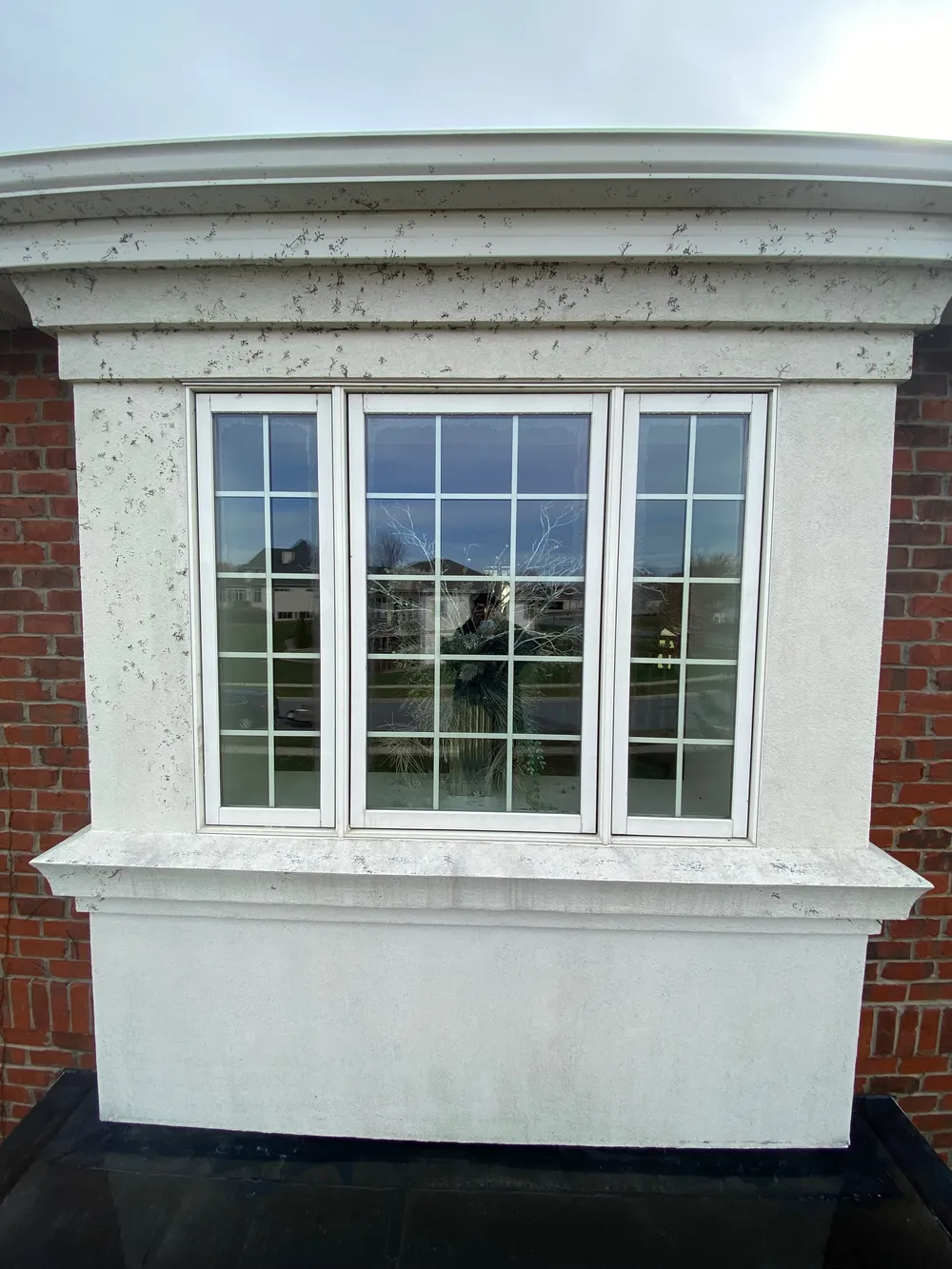
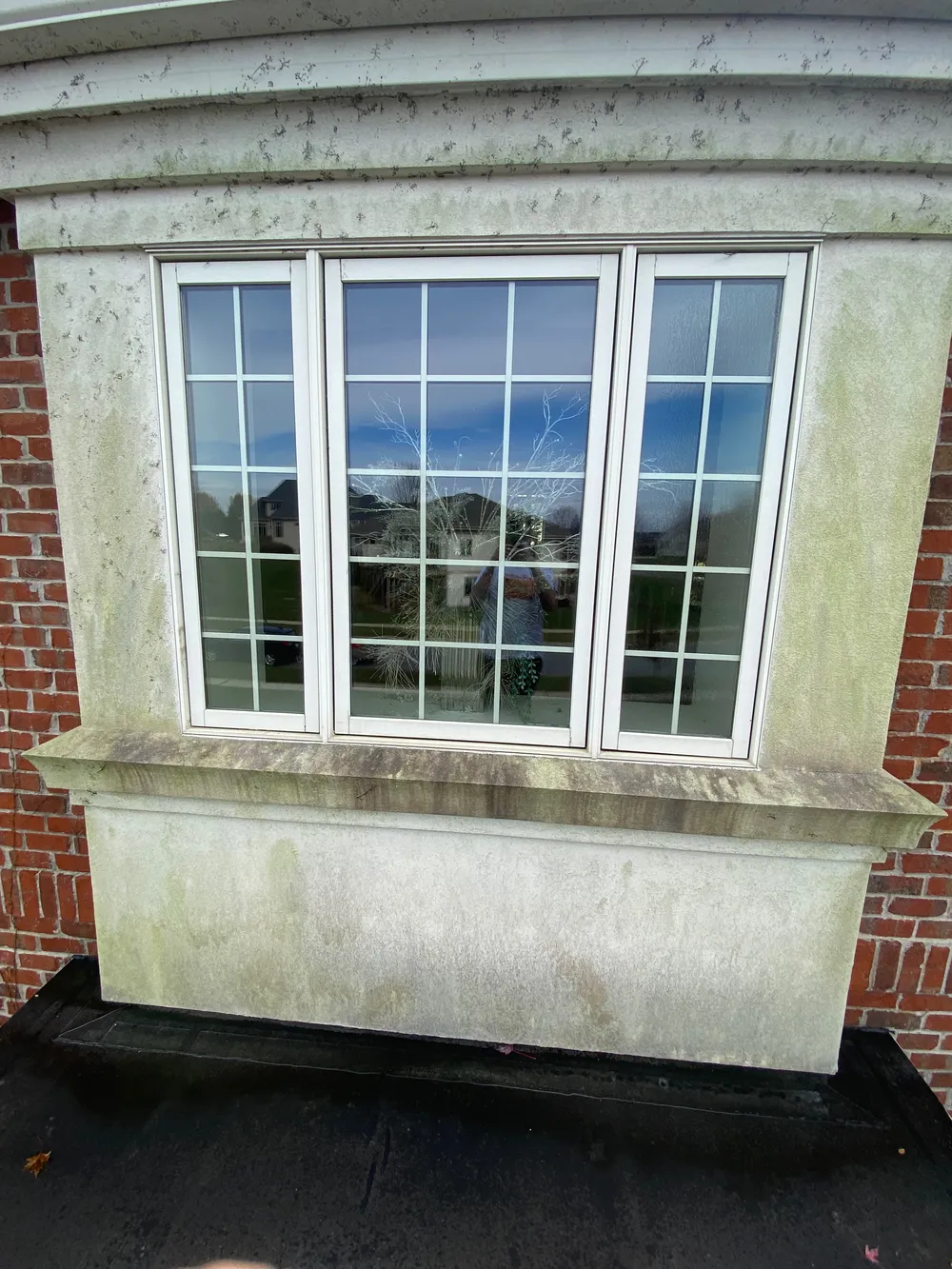
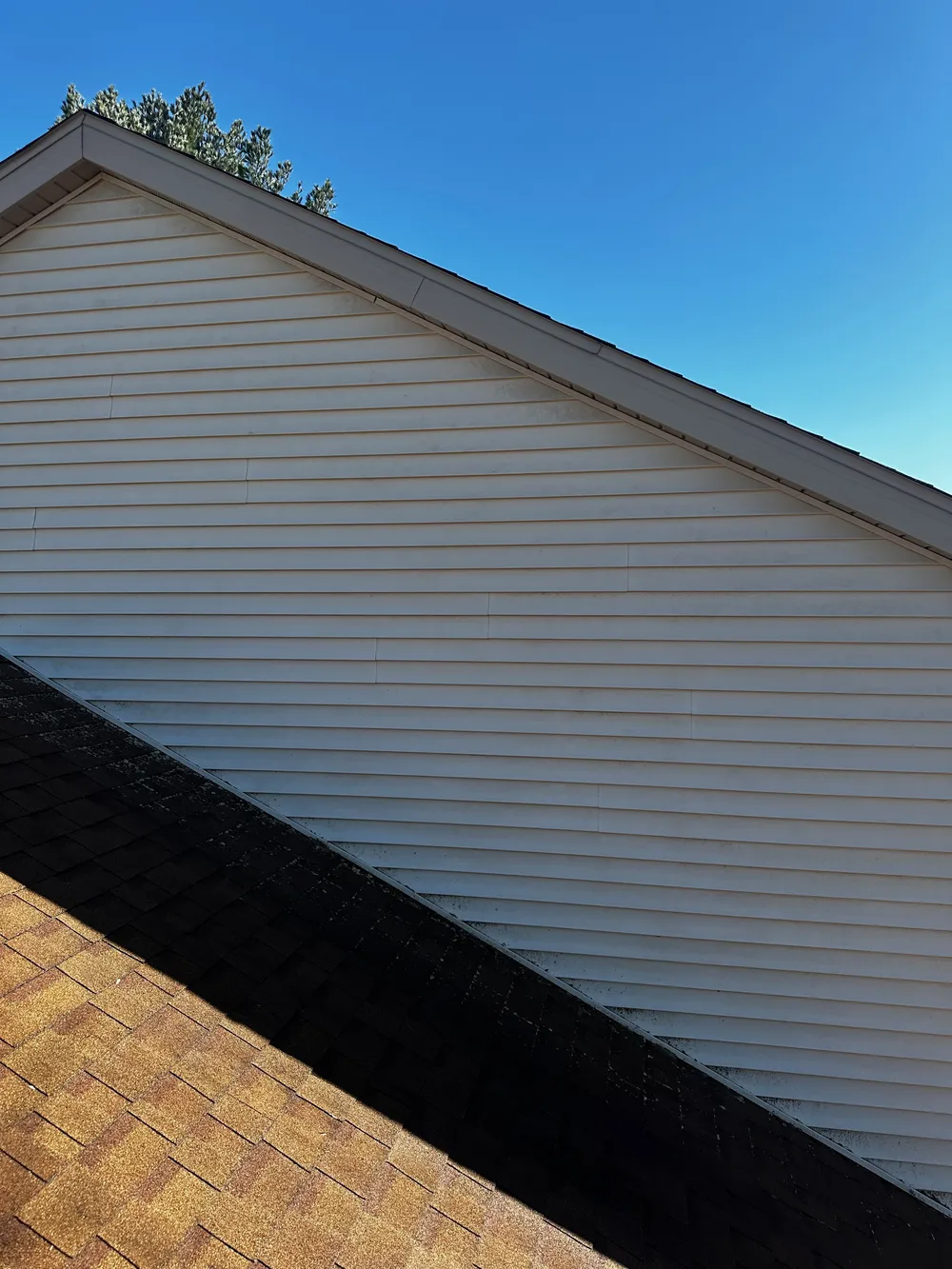
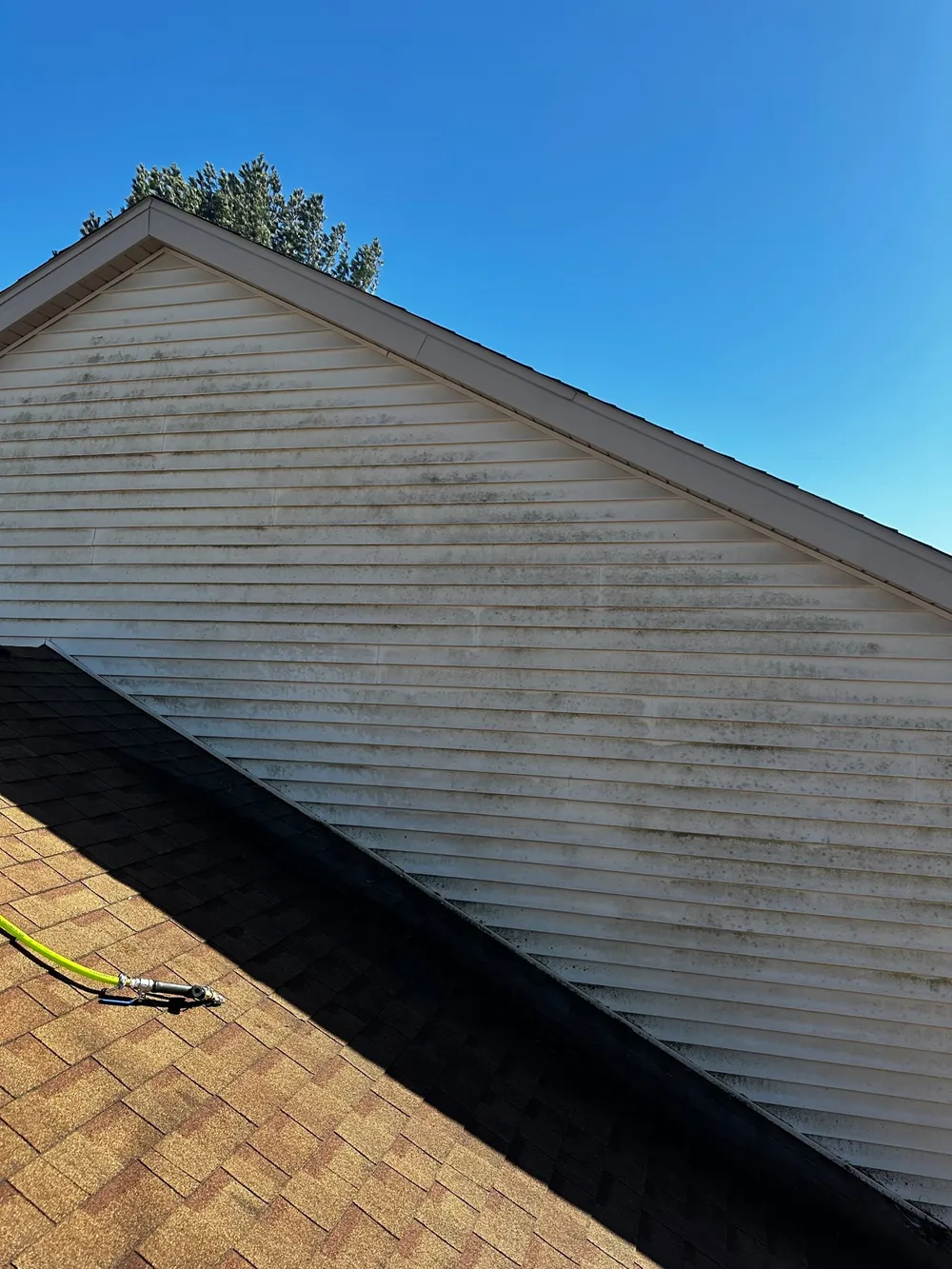
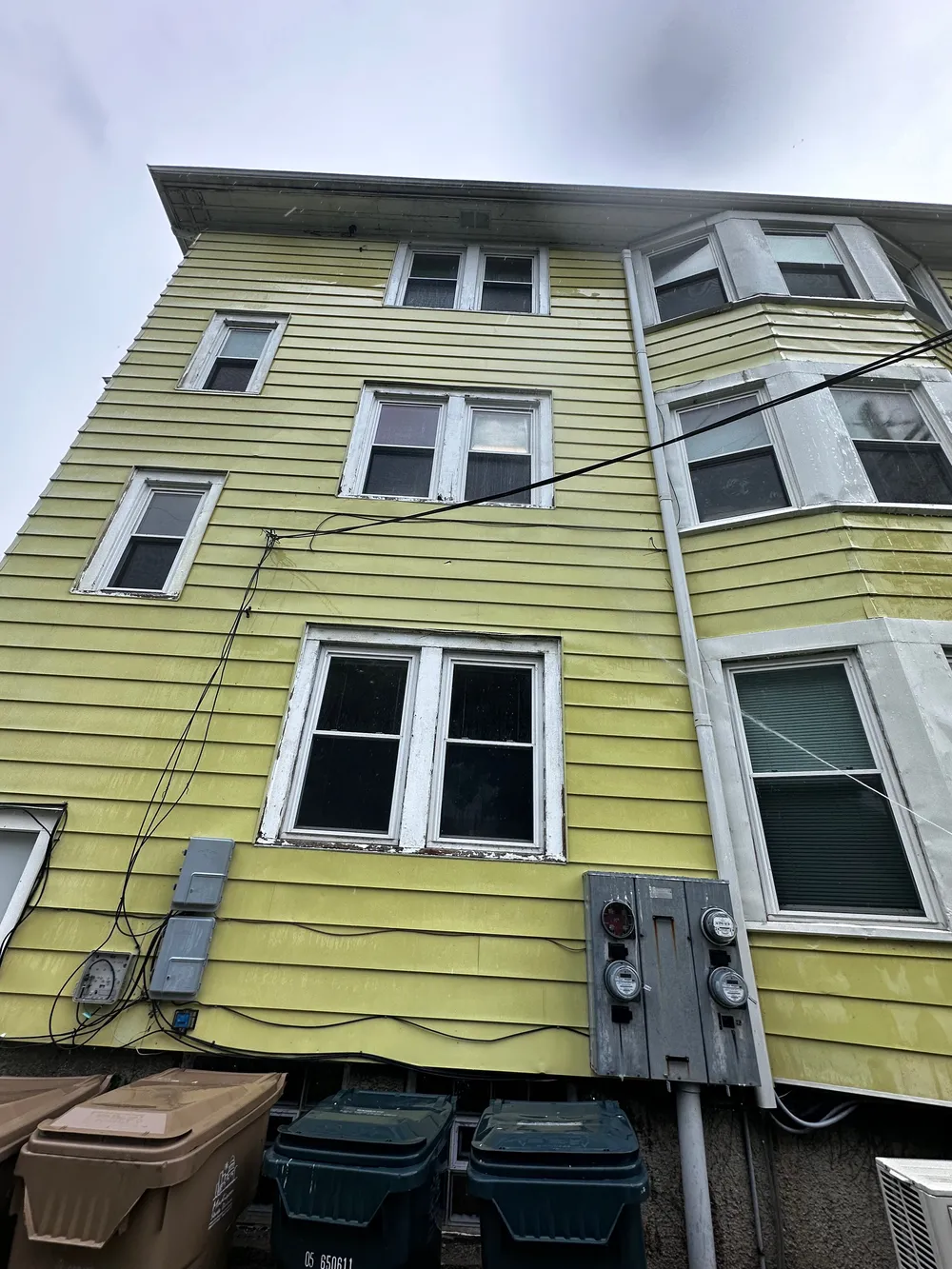
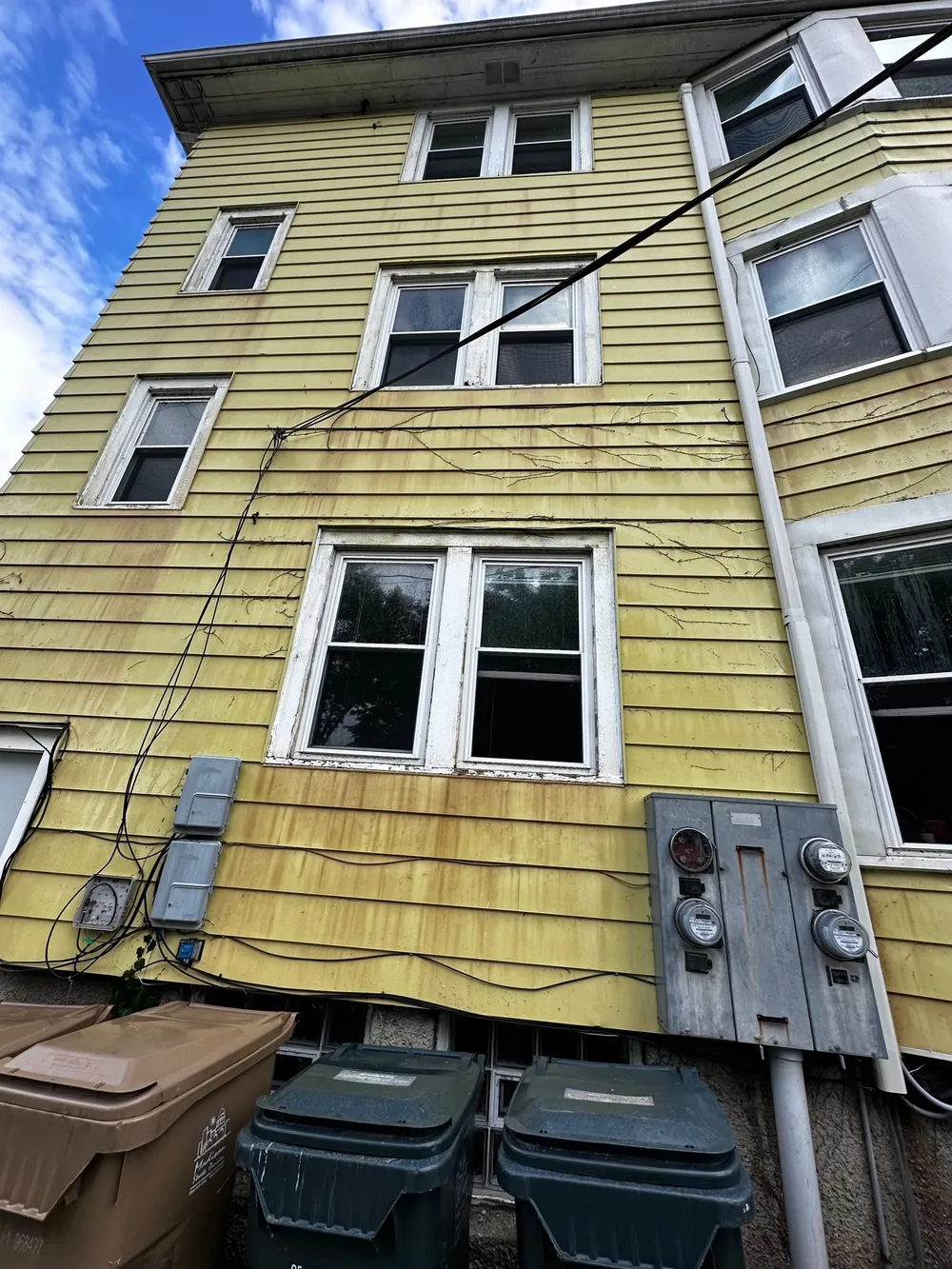
Before and after, same spot
Want this done on your place?
Every price is built from your actual property. Most estimates come back within a few hours.