Dwell Time
Dwell time is the interval between applying a cleaning chemistry to a surface and rinsing it off. It is the single most misunderstood variable in exterior cleaning. Chemistry does not clean instantly; it needs time to break chemical bonds, kill organisms, or dissolve minerals. Too little dwell and the chemistry is wasted. Too much dwell — especially in direct sun — and the chemistry can damage the surface, bleach landscaping, or drive the stain deeper.
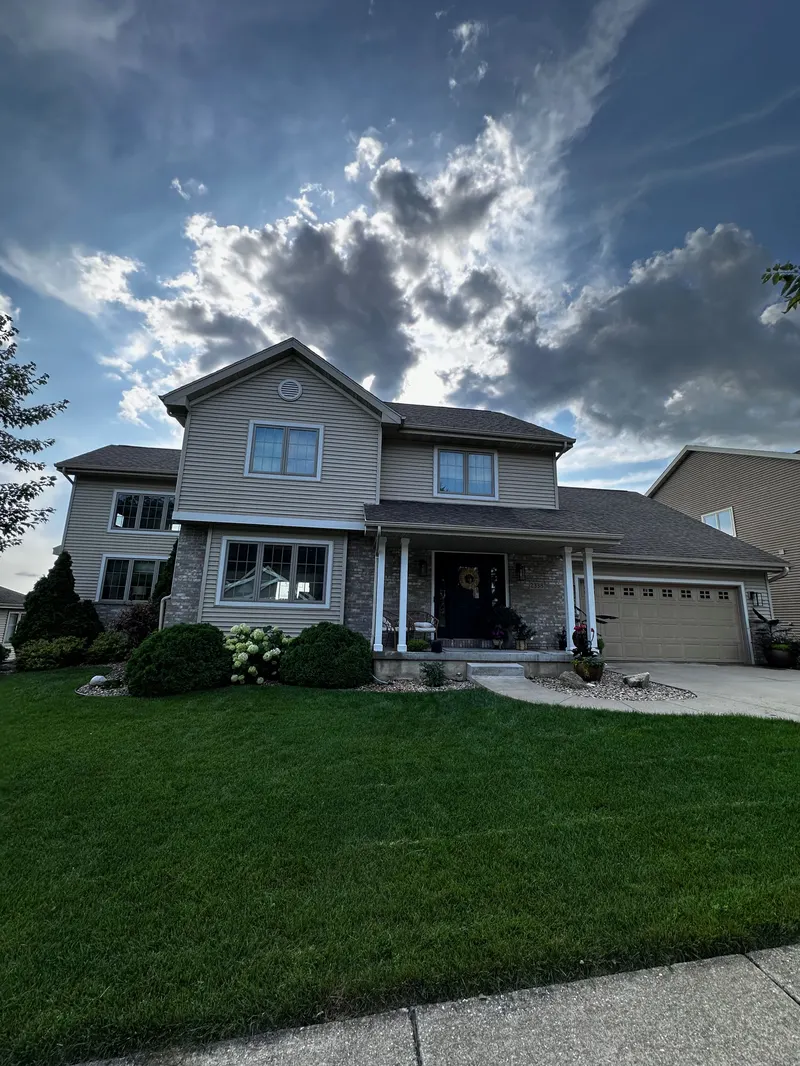
In depth
Ideal dwell varies by chemistry and substrate: soft-wash soap on siding wants 5-15 minutes; percarbonate on wood wants 15-20 minutes; rust treatment with oxalic acid wants 2-5 minutes; poultice on stone wants 24-48 hours. Pros manage dwell actively — wetting the surface ahead of the sun, re-applying if it dries, timing the rinse sequence to match dwell windows across multiple sides of the house, and pre-soaking landscaping so runoff during rinse doesn't cause plant damage. Dwell discipline separates a clean house from a bleached house.
How this shows up on our jobs
Dwell management is why we start on the shaded side of a house in the morning, rotate around as the sun moves, and never let a section dry before rinsing.
Services where this matters
Frequently asked
- What is Dwell Time?
- Dwell time is the interval between applying a cleaning chemistry to a surface and rinsing it off. It is the single most misunderstood variable in exterior cleaning. Chemistry does not clean instantly; it needs time to break chemical bonds, kill organisms, or dissolve minerals. Too little dwell and the chemistry is wasted. Too much dwell — especially in direct sun — and the chemistry can damage the surface, bleach landscaping, or drive the stain deeper.
- How does Dwell Time show up on our jobs?
- Dwell management is why we start on the shaded side of a house in the morning, rotate around as the sun moves, and never let a section dry before rinsing.
Need house washing in Madison?
Free quotes — most estimates back within a few hours. Prefer to talk? Call us anytime.
Related terms
Soft Wash
Soft washing is a low-pressure exterior cleaning method that uses biodegradable detergents and a controlled bleach solution to kill the algae, mold, mildew, and bacteria that cause staining — rather than scouring them off with brute force. A soft wash rig delivers cleaning fluid at roughly 60-200 PSI, comparable to a strong garden hose, which is safe on siding, shingles, painted surfaces, screens, and caulking. The chemistry does the work: the solution dwells on the surface, breaks down the organic growth at the cell level, and is then rinsed clean with fresh water.
Biocide
A biocide is any chemical agent that kills living organisms — bacteria, fungi, algae, mold, mildew, lichen. In exterior cleaning, the most common biocides are sodium hypochlorite (bleach), quaternary ammonium compounds ("quats"), and hydrogen peroxide. Each has a place: sodium hypochlorite is the fastest and most cost-effective broad-spectrum kill; quats provide residual antimicrobial action that slows regrowth on treated surfaces; peroxide is the mildest and is used where chlorine would damage the substrate.
Sodium Hypochlorite
Sodium hypochlorite (NaOCl) is the active ingredient in household bleach and the primary disinfectant used in professional soft washing. It is sold to exterior cleaners in 12.5% concentration (commonly called "SH" or "pool shock"), roughly twice the strength of consumer bleach. When applied in a properly mixed soft-wash solution, it kills algae, mold, mildew, lichen, and bacteria at the cellular level within minutes and breaks down into salt water and oxygen.
Chem Ratio
Chem ratio refers to the final dilution of cleaning chemistry at the surface — the percentage of active ingredient after the downstream injector, surfactant, and rinse water have all combined. For soft-wash work, the target ratio at the surface is typically 1-2% sodium hypochlorite for siding and 2-4% for roofs, down from a 12.5% concentrate in the bucket. Achieving the right ratio depends on injector flow rate, hose length, nozzle size, and pump pressure — and it is rarely a fixed number across all rigs.
Poultice
A poultice is a paste-like cleaning compound applied to a porous surface — natural stone, unsealed concrete, brick, limestone — to draw a stain out of the pores through capillary action. The paste is spread roughly a quarter-inch thick over the stain, covered with plastic, and left to dwell for 24-48 hours. As the poultice slowly dries, it pulls the dissolved stain out of the substrate into itself, where it can be scraped off and discarded.