Tiger Striping
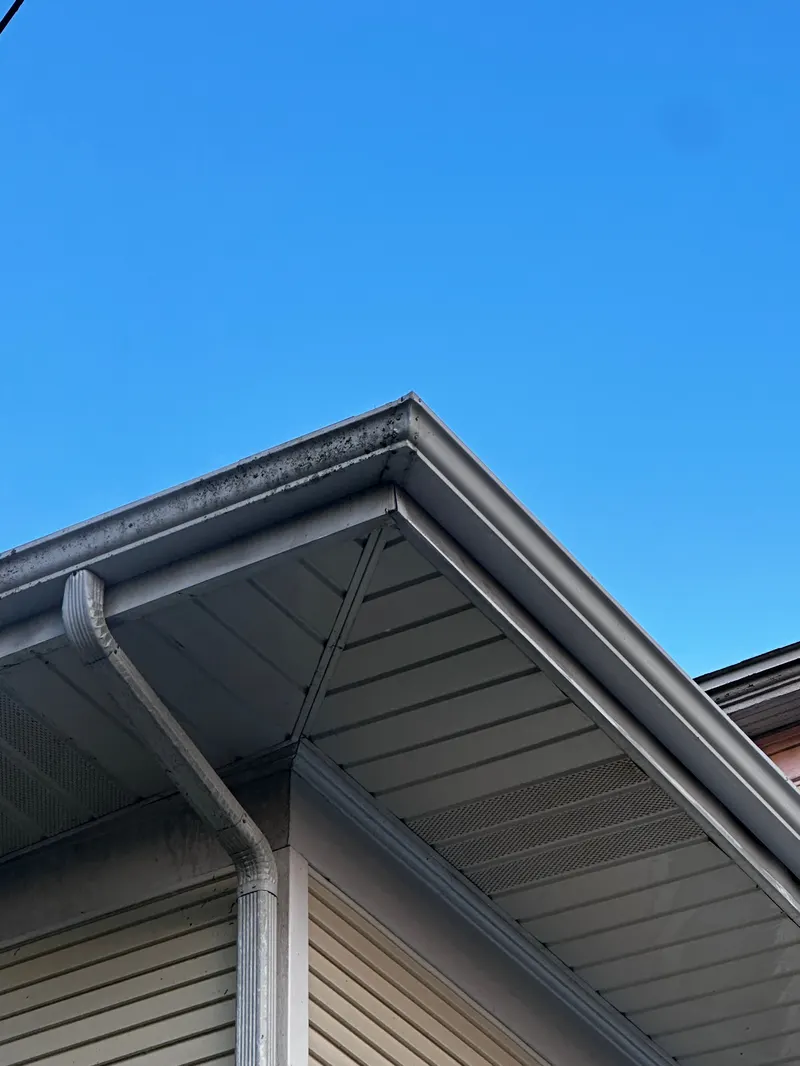
Tiger striping is the pattern of dark vertical streaks that appear on the exterior face of aluminum and painted gutters, running from the gutter lip down toward the ground. The stripes are caused by electrostatic attraction between negatively charged dirt particles (pollen, dust, algae spores, atmospheric fallout) and the positively charged painted or anodized aluminum surface. Over years, these particles bond into a film that ordinary rinsing and even pressure washing will not remove without chemistry.
In depth
Removing tiger stripes requires a specialty gutter-brightener — typically a mild hydrofluoric or phosphoric acid blend buffered for metal safety — applied with a sponge or soft brush, allowed a short dwell (1-3 minutes), then rinsed. The chemistry dissolves the ionic bond between the particle layer and the aluminum oxide surface. Tiger striping is purely cosmetic but dramatically ages the appearance of an otherwise well-maintained home. We offer it as an add-on at gutter cleaning visits for homes with heavy staining.
How this shows up on our jobs
Tiger striping on aluminum gutters is one of the most visible cosmetic issues on Madison homes and one of the easiest to fix with the right product. We offer gutter brightening as an add-on to every gutter cleaning.
Services where this matters
Frequently asked
- What is Tiger Striping?
- Tiger striping is the pattern of dark vertical streaks that appear on the exterior face of aluminum and painted gutters, running from the gutter lip down toward the ground. The stripes are caused by electrostatic attraction between negatively charged dirt particles (pollen, dust, algae spores, atmospheric fallout) and the positively charged painted or anodized aluminum surface. Over years, these particles bond into a film that ordinary rinsing and even pressure washing will not remove without chemistry.
- How does Tiger Striping show up on our jobs?
- Tiger striping on aluminum gutters is one of the most visible cosmetic issues on Madison homes and one of the easiest to fix with the right product. We offer gutter brightening as an add-on to every gutter cleaning.
Need gutter cleaning in Madison?
Free quotes — most estimates back within a few hours. Prefer to talk? Call us anytime.
Related terms
Oxidation
Oxidation is the chemical reaction between a surface and oxygen (plus UV light, moisture, and time) that produces a chalky, faded, or dulled appearance. On vinyl siding, oxidation shows up as a powdery white residue that rubs off on your hand. On fiberglass doors and garage doors, it is a milky film that makes the surface look faded. On aluminum gutters, it appears as a crusty, chalk-like coating called "tiger striping" when rain streaks it. On painted metal, oxidation is the precursor to true rust.
Atmospheric Fallout
Atmospheric fallout is the general term for the mix of airborne particles that settle on your home over time: diesel soot from trucks and buses, combustion residue from industrial areas, pollen, road dust, wildfire smoke particles, brake dust, and sap aerosols. Individually invisible, cumulatively they build up as a gray or brown haze on siding, windows, and hard surfaces — especially on the sides of the home facing prevailing winds and nearby roads.
Acid Wash
An acid wash in exterior cleaning is the application of a dilute acidic solution — most commonly muriatic (hydrochloric), phosphoric, oxalic, or a proprietary masonry blend — to dissolve mineral-based staining that bleach and surfactants cannot touch. Typical targets include efflorescence on brick, heavy rust from fertilizer or irrigation, mortar haze on new brickwork, mineral deposits on glass, and battery acid on concrete. Acid wash is not a general cleaning method — it is a targeted chemistry tool for specific stains on specific substrates.
Alkaline Cleaner
An alkaline cleaner is a high-pH detergent (typically pH 10-14) that dissolves oil, grease, fats, protein stains, and atmospheric grime by saponifying fatty acids and emulsifying petrochemical contaminants. The most common alkaline ingredients in exterior cleaning are sodium hydroxide (caustic soda), sodium metasilicate, and potassium hydroxide, often combined with surfactants, chelators, and dye. Alkaline cleaners are the counterpart to acid cleaners — pros reach for alkaline chemistry when the stain is organic or petrochemical, and acid when the stain is mineral.
Organic vs. Inorganic Stain
Organic stains are caused by living or once-living things: algae, mold, mildew, lichen, tannins from leaves, berry drip, insect excretion, pet urine, and so on. They contain carbon and respond to oxidizing chemistry — sodium hypochlorite or hydrogen peroxide (percarbonate) — which breaks the carbon bonds and destroys the stain at the molecular level. Inorganic stains are mineral-based: rust, hard-water deposits, efflorescence, metallic irrigation over-spray, fertilizer streaks, and the like. They contain no carbon and will not respond to bleach at all — you need an acid or a chelating agent to dissolve the metal or mineral and carry it away.