Atmospheric Fallout
Atmospheric fallout is the general term for the mix of airborne particles that settle on your home over time: diesel soot from trucks and buses, combustion residue from industrial areas, pollen, road dust, wildfire smoke particles, brake dust, and sap aerosols. Individually invisible, cumulatively they build up as a gray or brown haze on siding, windows, and hard surfaces — especially on the sides of the home facing prevailing winds and nearby roads.
In depth
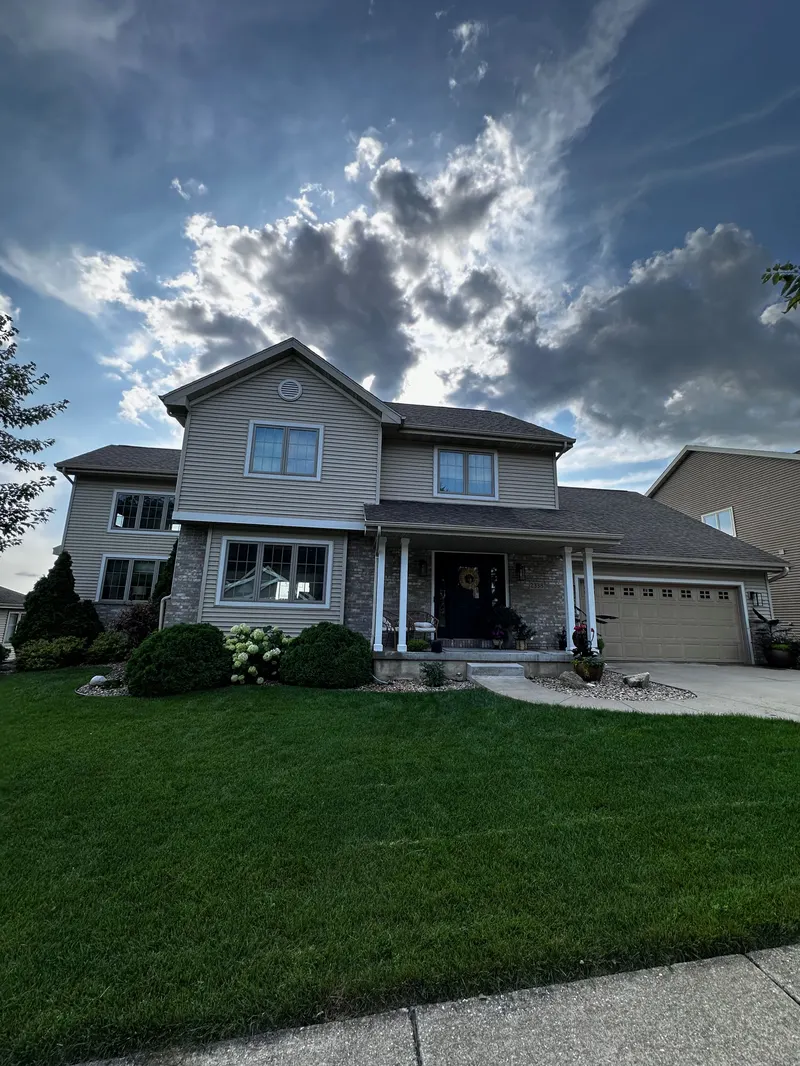
Atmospheric fallout is the primary reason a home that "doesn't look dirty" still comes out dramatically brighter after a house wash. The contrast is often most visible around window trim, in soffit corners, and on the downstream faces of gables. In Madison, homes near the Beltline, East Washington Avenue, and rail corridors tend to accumulate more than those in quieter interior neighborhoods. A proper soft wash with a surfactant package lifts fallout reliably in a single pass — it is one of the most satisfying before/after reveals in the business.
How this shows up on our jobs
Homes along high-traffic Madison corridors — Beltline, East Wash, University Avenue — accumulate noticeable atmospheric fallout even when they don't look "dirty." The reveal is always dramatic.
Services where this matters
Frequently asked
- What is Atmospheric Fallout?
- Atmospheric fallout is the general term for the mix of airborne particles that settle on your home over time: diesel soot from trucks and buses, combustion residue from industrial areas, pollen, road dust, wildfire smoke particles, brake dust, and sap aerosols. Individually invisible, cumulatively they build up as a gray or brown haze on siding, windows, and hard surfaces — especially on the sides of the home facing prevailing winds and nearby roads.
- How does Atmospheric Fallout show up on our jobs?
- Homes along high-traffic Madison corridors — Beltline, East Wash, University Avenue — accumulate noticeable atmospheric fallout even when they don't look "dirty." The reveal is always dramatic.
Need house washing in Madison?
Free quotes — most estimates back within a few hours. Prefer to talk? Call us anytime.
Related terms
Oxidation
Oxidation is the chemical reaction between a surface and oxygen (plus UV light, moisture, and time) that produces a chalky, faded, or dulled appearance. On vinyl siding, oxidation shows up as a powdery white residue that rubs off on your hand. On fiberglass doors and garage doors, it is a milky film that makes the surface look faded. On aluminum gutters, it appears as a crusty, chalk-like coating called "tiger striping" when rain streaks it. On painted metal, oxidation is the precursor to true rust.
Organic vs. Inorganic Stain
Organic stains are caused by living or once-living things: algae, mold, mildew, lichen, tannins from leaves, berry drip, insect excretion, pet urine, and so on. They contain carbon and respond to oxidizing chemistry — sodium hypochlorite or hydrogen peroxide (percarbonate) — which breaks the carbon bonds and destroys the stain at the molecular level. Inorganic stains are mineral-based: rust, hard-water deposits, efflorescence, metallic irrigation over-spray, fertilizer streaks, and the like. They contain no carbon and will not respond to bleach at all — you need an acid or a chelating agent to dissolve the metal or mineral and carry it away.
Pollen & Honeydew
Pollen and honeydew are two separate sticky contaminants that are constantly blamed on each other. Pollen is the yellow dust that coats Wisconsin cars, siding, and windows every spring from late April to early June — primarily oak, maple, birch, and grass pollens. Honeydew is the clear, sticky, sugary fluid excreted by aphids and scale insects that feed in the canopies of maples, lindens, and elms during summer. Honeydew dries into a lacquer-like film that attracts sooty mold and quickly turns black.
Soft Wash
Soft washing is a low-pressure exterior cleaning method that uses biodegradable detergents and a controlled bleach solution to kill the algae, mold, mildew, and bacteria that cause staining — rather than scouring them off with brute force. A soft wash rig delivers cleaning fluid at roughly 60-200 PSI, comparable to a strong garden hose, which is safe on siding, shingles, painted surfaces, screens, and caulking. The chemistry does the work: the solution dwells on the surface, breaks down the organic growth at the cell level, and is then rinsed clean with fresh water.