Pre-Treatment
Pre-treatment is the application of a cleaning chemistry to a surface before the primary wash — typically to break down, dissolve, or kill a specific stain or organism before pressure or soft-wash techniques complete the removal. On oil-stained concrete, an alkaline degreaser is the pre-treatment; on algae-covered siding, a diluted soft-wash solution applied 10-15 minutes before the final rinse is the pre-treatment; on rust-stained stone, an oxalic acid application pre-treats the iron deposits that pressure alone won't lift.
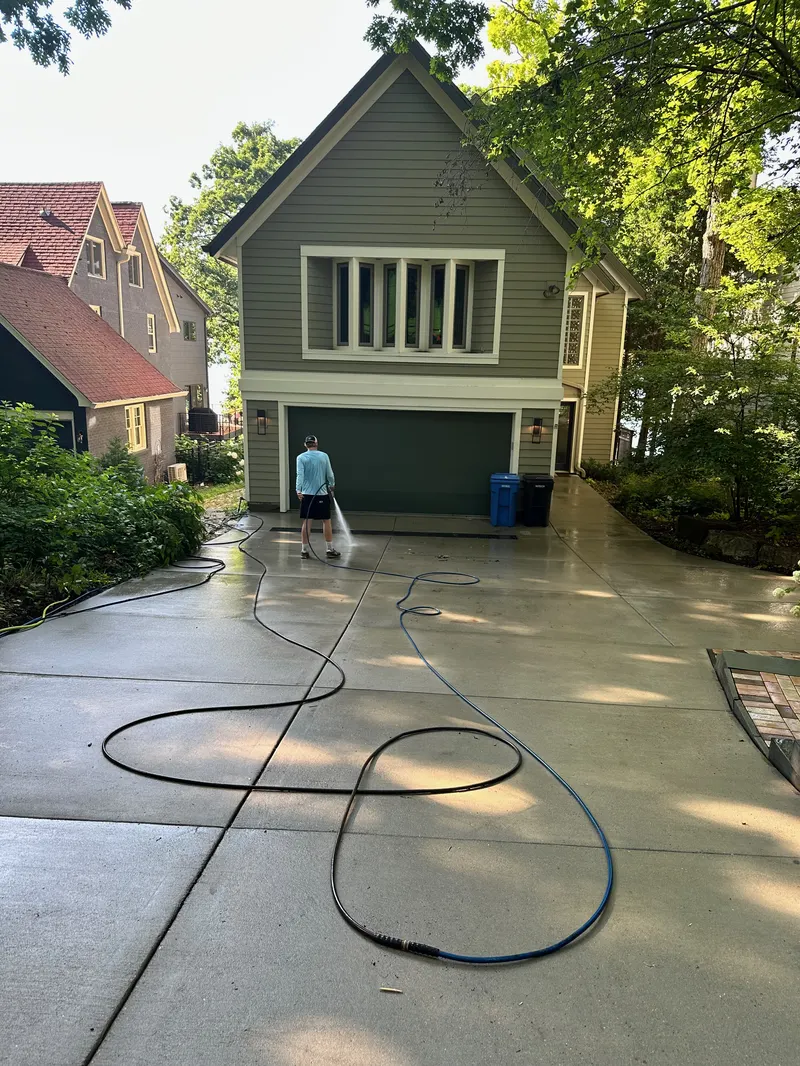
In depth
Pre-treatment is what separates a one-pass professional clean from multiple repeat visits. It is also the step most often skipped by quick-turnaround operations who skip chemistry entirely. In Madison, where a typical driveway has accumulated 12 months of oil, road salt, algae, and pollen, skipping pre-treatment means a pressure wash that cleans the surface visually but leaves staining molecules in the concrete pores — which re-darken within weeks after drying.
How this shows up on our jobs
We pre-treat every job we do — concrete gets degreaser or salt neutralizer, siding gets a soft-wash dwell, windows get a spot pre-treat on hard-water deposits. Pre-treatment is not optional.
Services where this matters
Frequently asked
- What is Pre-Treatment?
- Pre-treatment is the application of a cleaning chemistry to a surface before the primary wash — typically to break down, dissolve, or kill a specific stain or organism before pressure or soft-wash techniques complete the removal. On oil-stained concrete, an alkaline degreaser is the pre-treatment; on algae-covered siding, a diluted soft-wash solution applied 10-15 minutes before the final rinse is the pre-treatment; on rust-stained stone, an oxalic acid application pre-treats the iron deposits that pressure alone won't lift.
- How does Pre-Treatment show up on our jobs?
- We pre-treat every job we do — concrete gets degreaser or salt neutralizer, siding gets a soft-wash dwell, windows get a spot pre-treat on hard-water deposits. Pre-treatment is not optional.
Need surface cleaning in Madison?
Free quotes — most estimates back within a few hours. Prefer to talk? Call us anytime.
Related terms
Dwell Time
Dwell time is the interval between applying a cleaning chemistry to a surface and rinsing it off. It is the single most misunderstood variable in exterior cleaning. Chemistry does not clean instantly; it needs time to break chemical bonds, kill organisms, or dissolve minerals. Too little dwell and the chemistry is wasted. Too much dwell — especially in direct sun — and the chemistry can damage the surface, bleach landscaping, or drive the stain deeper.
Alkaline Cleaner
An alkaline cleaner is a high-pH detergent (typically pH 10-14) that dissolves oil, grease, fats, protein stains, and atmospheric grime by saponifying fatty acids and emulsifying petrochemical contaminants. The most common alkaline ingredients in exterior cleaning are sodium hydroxide (caustic soda), sodium metasilicate, and potassium hydroxide, often combined with surfactants, chelators, and dye. Alkaline cleaners are the counterpart to acid cleaners — pros reach for alkaline chemistry when the stain is organic or petrochemical, and acid when the stain is mineral.
Acid Wash
An acid wash in exterior cleaning is the application of a dilute acidic solution — most commonly muriatic (hydrochloric), phosphoric, oxalic, or a proprietary masonry blend — to dissolve mineral-based staining that bleach and surfactants cannot touch. Typical targets include efflorescence on brick, heavy rust from fertilizer or irrigation, mortar haze on new brickwork, mineral deposits on glass, and battery acid on concrete. Acid wash is not a general cleaning method — it is a targeted chemistry tool for specific stains on specific substrates.
Soft Wash
Soft washing is a low-pressure exterior cleaning method that uses biodegradable detergents and a controlled bleach solution to kill the algae, mold, mildew, and bacteria that cause staining — rather than scouring them off with brute force. A soft wash rig delivers cleaning fluid at roughly 60-200 PSI, comparable to a strong garden hose, which is safe on siding, shingles, painted surfaces, screens, and caulking. The chemistry does the work: the solution dwells on the surface, breaks down the organic growth at the cell level, and is then rinsed clean with fresh water.
Post-Treatment
Post-treatment is any chemistry or protective step applied after the primary cleaning to neutralize residual cleaning agents, extend the result, or seal the surface against future staining. On wood decks cleaned with percarbonate (alkaline), a dilute oxalic-acid brightener is the post-treatment — it neutralizes the cleaner and restores the wood's natural pH and color. On concrete cleaned with an acid wash, a baking-soda or alkaline rinse post-treats the surface to stop the acid reaction. After soft washing siding, a thorough fresh-water rinse is the post-treatment to remove bleach residue before it contacts plants or metals.