Pre-Wetting Plants
Pre-wetting plants means soaking shrubs, lawn, and flower beds with clean water before a house wash so the foliage is already saturated and cannot absorb cleaning solution. A plant full of water takes up far less of any chemical that drips or splashes onto it, which makes pre-wetting the main way professionals protect landscaping.
Need this done on your property? See our house washing in Madison page.
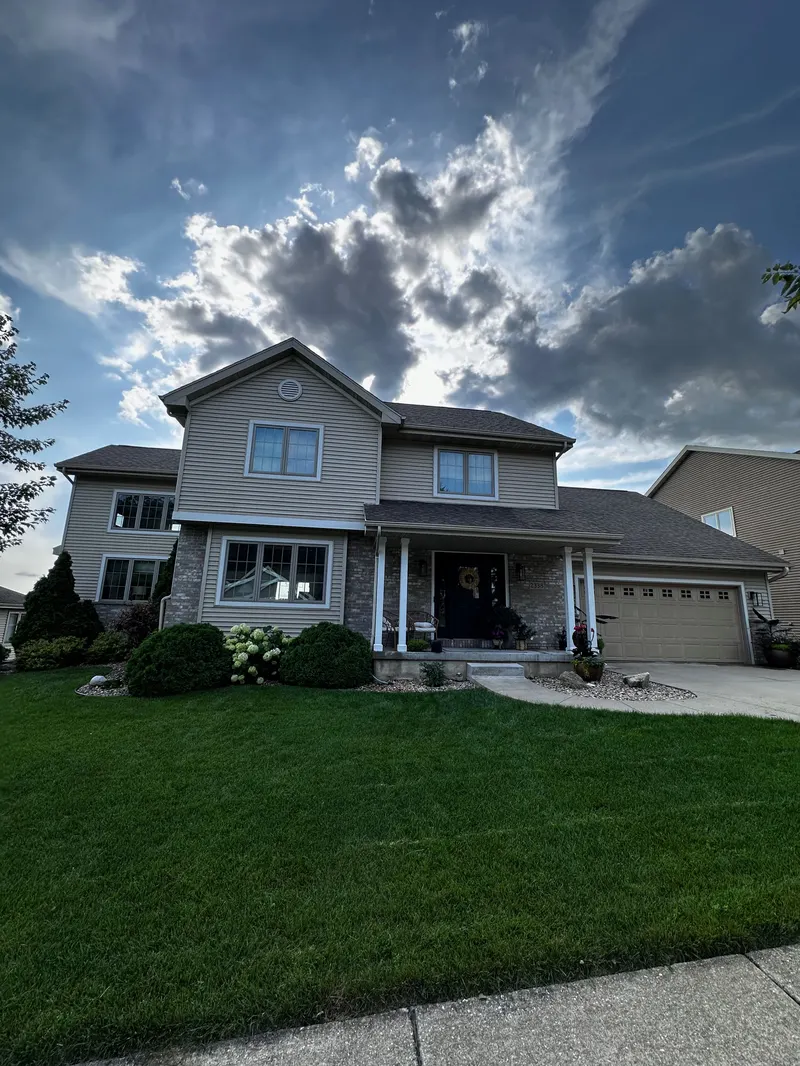
In depth
Pre-wetting is paired with rinsing the plants again afterward, covering delicate specimens when needed, and applying solution from the top of the wall downward so runoff stays predictable. Hostas, annuals, and young shrubs are the plants to watch most closely. It is not a guarantee, but it is the cheapest and most effective layer of protection. A bleach neutralizer adds another layer where runoff is heavy.
How this shows up on our jobs
Spring is when Madison beds are freshly planted and most vulnerable, so it is also when pre-wetting matters most. Ask any exterior cleaner how they protect your landscaping; a vague answer is a warning sign.
Services where this matters
Frequently asked
- What is Pre-Wetting Plants?
- Pre-wetting plants means soaking shrubs, lawn, and flower beds with clean water before a house wash so the foliage is already saturated and cannot absorb cleaning solution. A plant full of water takes up far less of any chemical that drips or splashes onto it, which makes pre-wetting the main way professionals protect landscaping.
- How does Pre-Wetting Plants show up on our jobs?
- Spring is when Madison beds are freshly planted and most vulnerable, so it is also when pre-wetting matters most. Ask any exterior cleaner how they protect your landscaping; a vague answer is a warning sign.
Need house washing in Madison?
Free quotes — most estimates back within a few hours. Prefer to talk? Call us anytime.
Related terms
Bleach Neutralizer
A bleach neutralizer is a chemical, most often sodium thiosulfate, that stops chlorine bleach from working by converting it into harmless salts. Exterior cleaners apply it to plants, grass, and metal after a house wash or roof cleaning that used sodium hypochlorite, so leftover bleach cannot keep burning leaves or corroding fittings.
Sodium Hypochlorite
Sodium hypochlorite (NaOCl) is the active ingredient in household bleach and the primary disinfectant used in professional soft washing. It is sold to exterior cleaners in 12.5% concentration (commonly called "SH" or "pool shock"), roughly twice the strength of consumer bleach. When applied in a properly mixed soft-wash solution, it kills algae, mold, mildew, lichen, and bacteria at the cellular level within minutes and breaks down into salt water and oxygen.
Soft Wash
Soft washing is a low-pressure exterior cleaning method that uses biodegradable detergents and a controlled bleach solution to kill the algae, mold, mildew, and bacteria that cause staining — rather than scouring them off with brute force. A soft wash rig delivers cleaning fluid at roughly 60-200 PSI, comparable to a strong garden hose, which is safe on siding, shingles, painted surfaces, screens, and caulking. The chemistry does the work: the solution dwells on the surface, breaks down the organic growth at the cell level, and is then rinsed clean with fresh water.
Rinse Water Management
Rinse water management refers to the planning and technique used to control where cleaning solution runoff goes during a wash job — protecting landscaping, drainage systems, neighboring properties, and storm drains from concentrated cleaning chemistry. In exterior cleaning, the primary concerns are: bleach runoff from soft washing contacting plants and grass (pre-soaking and rinsing minimizes damage); alkaline degreaser runoff entering storm drains (requires containment in commercial settings); and acid runoff from masonry work contacting metals and live plants.
Pre-Treatment
Pre-treatment is the application of a cleaning chemistry to a surface before the primary wash — typically to break down, dissolve, or kill a specific stain or organism before pressure or soft-wash techniques complete the removal. On oil-stained concrete, an alkaline degreaser is the pre-treatment; on algae-covered siding, a diluted soft-wash solution applied 10-15 minutes before the final rinse is the pre-treatment; on rust-stained stone, an oxalic acid application pre-treats the iron deposits that pressure alone won't lift.