X-Jet
An X-Jet (or chemical injector wand) is a high-reach spray attachment that uses the venturi effect at the pressure washer nozzle to pull undiluted cleaning solution from a separate bucket and mix it with the pressurized water stream at the tip of the wand — without ever pumping the chemical through the machine itself. The operator works from the ground with a 15-25 foot extension wand, applying soft-wash chemistry to second- and third-story siding, soffits, and fascia without a ladder.
In depth
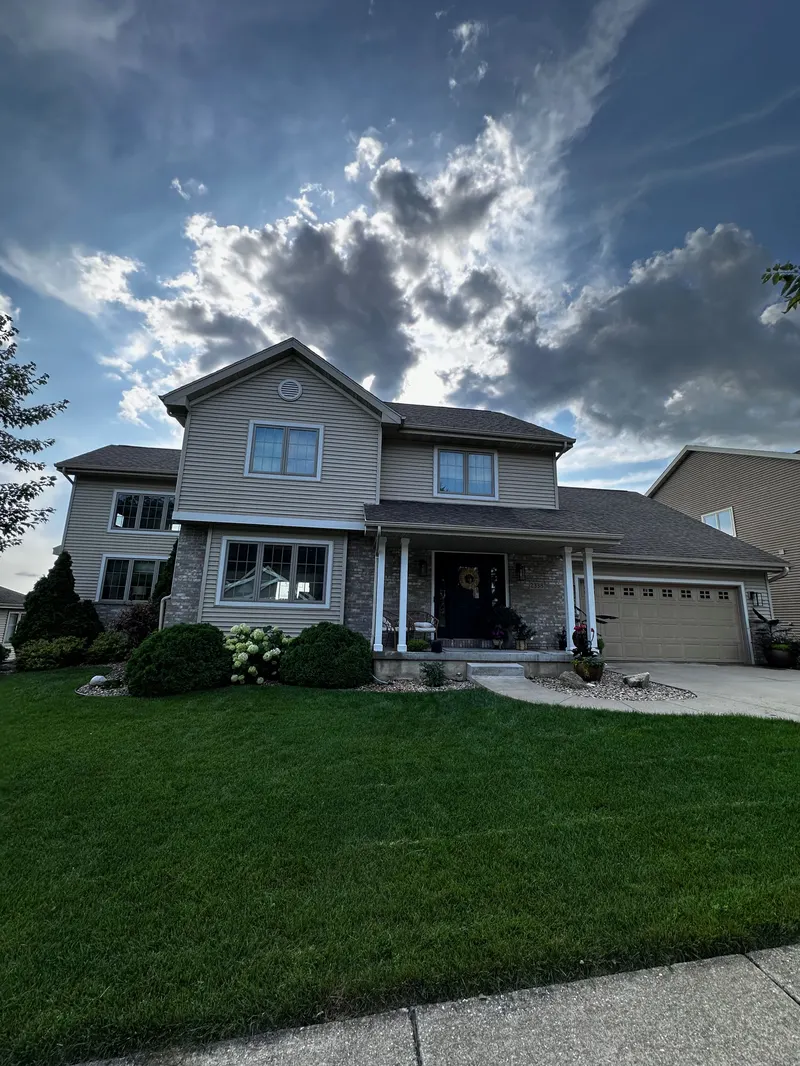
The X-Jet's main advantage over downstreaming is dilution control: different nozzle sizes create different draw ratios, so a technician can apply a stronger mix on stubborn north-side algae and a lighter mix on delicate painted surfaces without adjusting the chemical bucket. For Madison homes with tall peak gables, dormers, and wrap-around porch soffits that are hard to reach by ladder, the X-Jet is the safest and most efficient delivery method.
How this shows up on our jobs
We use an X-Jet for applying soft-wash chemistry to two- and three-story sections on Madison homes, keeping ladders off the siding and reducing time on tall elevations significantly.
Services where this matters
Frequently asked
- What is X-Jet?
- An X-Jet (or chemical injector wand) is a high-reach spray attachment that uses the venturi effect at the pressure washer nozzle to pull undiluted cleaning solution from a separate bucket and mix it with the pressurized water stream at the tip of the wand — without ever pumping the chemical through the machine itself. The operator works from the ground with a 15-25 foot extension wand, applying soft-wash chemistry to second- and third-story siding, soffits, and fascia without a ladder.
- How does X-Jet show up on our jobs?
- We use an X-Jet for applying soft-wash chemistry to two- and three-story sections on Madison homes, keeping ladders off the siding and reducing time on tall elevations significantly.
Need house washing in Madison?
Free quotes — most estimates back within a few hours. Prefer to talk? Call us anytime.
Related terms
Downstreaming
Downstreaming is the technique of injecting soap or cleaning solution into the pressure washer's water line on the low-pressure side of the pump — downstream from the pump, hence the name. A chemical injector pulls detergent from a bucket through a siphon hose whenever a low-pressure (soap) nozzle is attached. When the technician swaps to a high-pressure nozzle, the injector automatically stops drawing chemical, allowing for a clean rinse without switching lines.
Soft Wash
Soft washing is a low-pressure exterior cleaning method that uses biodegradable detergents and a controlled bleach solution to kill the algae, mold, mildew, and bacteria that cause staining — rather than scouring them off with brute force. A soft wash rig delivers cleaning fluid at roughly 60-200 PSI, comparable to a strong garden hose, which is safe on siding, shingles, painted surfaces, screens, and caulking. The chemistry does the work: the solution dwells on the surface, breaks down the organic growth at the cell level, and is then rinsed clean with fresh water.
Surfactant
A surfactant (short for "surface-active agent") is a chemical compound that lowers the surface tension of water so it can wet, spread, penetrate, and cling to a dirty surface instead of beading up and running off. In exterior cleaning, surfactants are blended with sodium hypochlorite and water to let the mix "stick" to vertical surfaces long enough for the bleach to kill organic growth at depth.
Sodium Hypochlorite
Sodium hypochlorite (NaOCl) is the active ingredient in household bleach and the primary disinfectant used in professional soft washing. It is sold to exterior cleaners in 12.5% concentration (commonly called "SH" or "pool shock"), roughly twice the strength of consumer bleach. When applied in a properly mixed soft-wash solution, it kills algae, mold, mildew, lichen, and bacteria at the cellular level within minutes and breaks down into salt water and oxygen.
Chem Ratio
Chem ratio refers to the final dilution of cleaning chemistry at the surface — the percentage of active ingredient after the downstream injector, surfactant, and rinse water have all combined. For soft-wash work, the target ratio at the surface is typically 1-2% sodium hypochlorite for siding and 2-4% for roofs, down from a 12.5% concentrate in the bucket. Achieving the right ratio depends on injector flow rate, hose length, nozzle size, and pump pressure — and it is rarely a fixed number across all rigs.