Soap Distance
Soap distance is the maximum height or horizontal reach at which a pressure-washer rig can project cleaning solution through a low-pressure soap nozzle. It is a direct function of GPM, pump pressure, hose diameter, and nozzle orifice size — and it is the single best real-world benchmark for whether a rig can wash a two- or three-story home from the ground without ladders. A consumer pressure washer can project soap maybe 8-10 feet. A professional 5.5 GPM rig projects 20-25 feet. An 8 GPM commercial rig projects 35-40 feet with the right wand and tip.
In depth
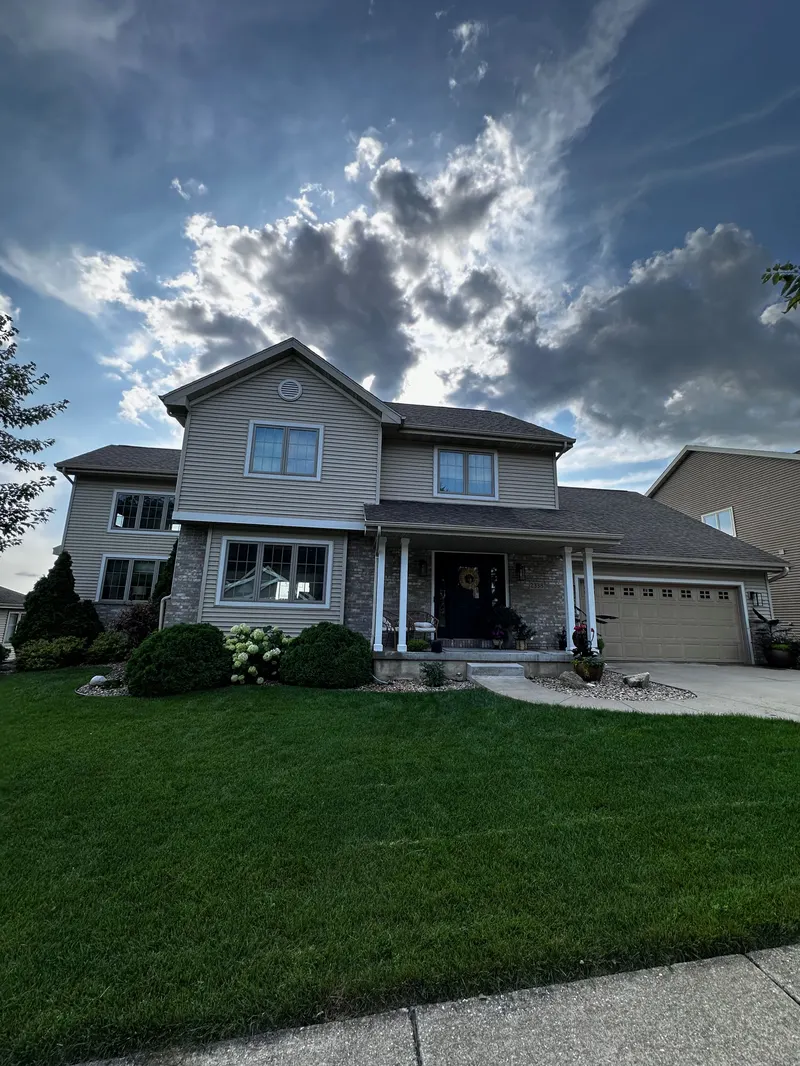
High soap distance is transformative. It means a technician can stay off ladders, avoid leaning against siding, cover more surface per minute, and reach soffit, gable peaks, and third-story dormers safely from a stable ground position. When combined with a telescoping pole for the highest touches, a high-soap-distance rig replaces nearly all ladder work on a residential house wash. Budget rigs quote soap distance at best-case specs; real-world distances are usually 60-70% of spec.
How this shows up on our jobs
Our primary soft-wash rig has 35+ foot soap distance, which means we clean 95% of Madison-area homes from the ground. Ladders come out only for the tricky last 5%.
Services where this matters
Frequently asked
- What is Soap Distance?
- Soap distance is the maximum height or horizontal reach at which a pressure-washer rig can project cleaning solution through a low-pressure soap nozzle. It is a direct function of GPM, pump pressure, hose diameter, and nozzle orifice size — and it is the single best real-world benchmark for whether a rig can wash a two- or three-story home from the ground without ladders. A consumer pressure washer can project soap maybe 8-10 feet. A professional 5.5 GPM rig projects 20-25 feet. An 8 GPM commercial rig projects 35-40 feet with the right wand and tip.
- How does Soap Distance show up on our jobs?
- Our primary soft-wash rig has 35+ foot soap distance, which means we clean 95% of Madison-area homes from the ground. Ladders come out only for the tricky last 5%.
Need house washing in Madison?
Free quotes — most estimates back within a few hours. Prefer to talk? Call us anytime.
Related terms
GPM (Gallons per Minute)
GPM stands for Gallons Per Minute — the volume of water a pressure washer delivers per minute of operation. While PSI gets the headlines, GPM is what actually does the cleaning. Think of it this way: PSI is the hammer's strength; GPM is how many hammers you're swinging. Higher GPM means more water flowing across the surface, which means faster dirt removal, better rinsing of detergents, and shorter job times.
PSI (Pounds per Square Inch)
PSI is the unit of pressure used to rate pressure washers, measuring the force of water exiting the pump per square inch of surface area. Consumer pressure washers run 1,500-2,500 PSI; professional rigs typically produce 3,500-5,000 PSI; and specialty surface cleaners can spike above 8,000 PSI. Higher PSI is not always better — in fact, for most home exterior surfaces, high PSI is destructive. Vinyl siding, wood shingles, soft mortar, roof granules, and painted surfaces all fail under excessive pressure.
Downstreaming
Downstreaming is the technique of injecting soap or cleaning solution into the pressure washer's water line on the low-pressure side of the pump — downstream from the pump, hence the name. A chemical injector pulls detergent from a bucket through a siphon hose whenever a low-pressure (soap) nozzle is attached. When the technician swaps to a high-pressure nozzle, the injector automatically stops drawing chemical, allowing for a clean rinse without switching lines.
Soft Wash
Soft washing is a low-pressure exterior cleaning method that uses biodegradable detergents and a controlled bleach solution to kill the algae, mold, mildew, and bacteria that cause staining — rather than scouring them off with brute force. A soft wash rig delivers cleaning fluid at roughly 60-200 PSI, comparable to a strong garden hose, which is safe on siding, shingles, painted surfaces, screens, and caulking. The chemistry does the work: the solution dwells on the surface, breaks down the organic growth at the cell level, and is then rinsed clean with fresh water.
Ladder Stabilizer
A ladder stabilizer (sometimes called a standoff or wall extension) is a steel or aluminum arm that bolts to the top rails of an extension ladder, extending the contact points out past the gutters and spreading the load across a wider wall area. Without one, a ladder rests directly on the gutter — which bends the gutter, damages the drip edge, pinches the roof line, and creates a narrow two-point contact that can slide sideways. A stabilizer keeps the ladder off the gutter, distributes weight across a 48-inch span, and dramatically improves both safety and the homeowner's gutter.