Ladder Stabilizer
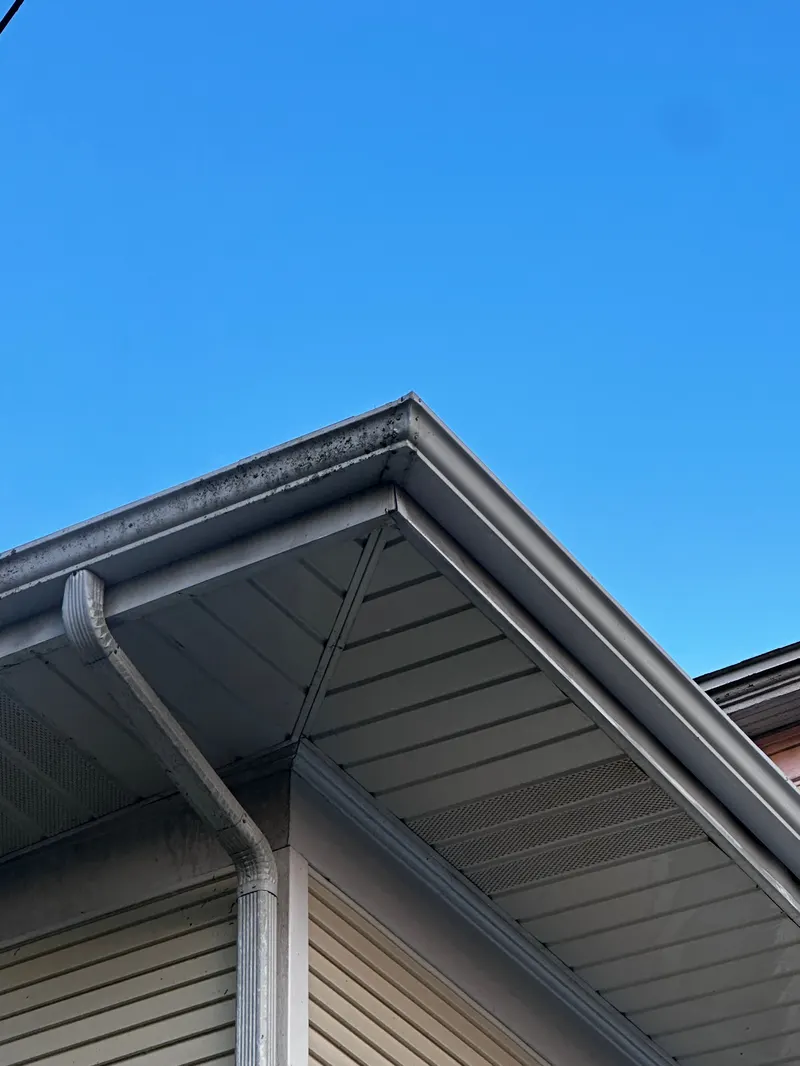
A ladder stabilizer (sometimes called a standoff or wall extension) is a steel or aluminum arm that bolts to the top rails of an extension ladder, extending the contact points out past the gutters and spreading the load across a wider wall area. Without one, a ladder rests directly on the gutter — which bends the gutter, damages the drip edge, pinches the roof line, and creates a narrow two-point contact that can slide sideways. A stabilizer keeps the ladder off the gutter, distributes weight across a 48-inch span, and dramatically improves both safety and the homeowner's gutter.
In depth
OSHA best practice calls for stabilizers on any ladder work near gutters, and any pro with insurance under a commercial-ladder program is required to use one. In residential exterior cleaning, stabilizers also prevent the most common cause of gutter damage during a service — a 250-pound ladder compressing a soft aluminum gutter until the seam fails. Our ladders are stabilizer-equipped as a standing rule, and any technician who removes one needs a documented reason.
How this shows up on our jobs
Every ladder our crew sets against a home has a stabilizer. No exceptions. It protects the gutters we're about to clean and keeps our crew from sliding off a wet roofline.
Services where this matters
Frequently asked
- What is Ladder Stabilizer?
- A ladder stabilizer (sometimes called a standoff or wall extension) is a steel or aluminum arm that bolts to the top rails of an extension ladder, extending the contact points out past the gutters and spreading the load across a wider wall area. Without one, a ladder rests directly on the gutter — which bends the gutter, damages the drip edge, pinches the roof line, and creates a narrow two-point contact that can slide sideways. A stabilizer keeps the ladder off the gutter, distributes weight across a 48-inch span, and dramatically improves both safety and the homeowner's gutter.
- How does Ladder Stabilizer show up on our jobs?
- Every ladder our crew sets against a home has a stabilizer. No exceptions. It protects the gutters we're about to clean and keeps our crew from sliding off a wet roofline.
Need gutter cleaning in Madison?
Free quotes — most estimates back within a few hours. Prefer to talk? Call us anytime.
Related terms
Water-Fed Pole (WFP)
A water-fed pole is a lightweight telescoping pole — typically carbon fiber, 20 to 45 feet long — with a soft brush and water jets at the tip, fed by a hose connected to a pure-water filtration system. The technician agitates the glass with the brush while pure water rinses away the loosened dirt, leaving zero mineral residue to dry into spots. When done correctly, windows, frames, and screens air-dry crystal-clear without ladders or squeegees.
Soap Distance
Soap distance is the maximum height or horizontal reach at which a pressure-washer rig can project cleaning solution through a low-pressure soap nozzle. It is a direct function of GPM, pump pressure, hose diameter, and nozzle orifice size — and it is the single best real-world benchmark for whether a rig can wash a two- or three-story home from the ground without ladders. A consumer pressure washer can project soap maybe 8-10 feet. A professional 5.5 GPM rig projects 20-25 feet. An 8 GPM commercial rig projects 35-40 feet with the right wand and tip.
Soft-Bristle Brush
A soft-bristle brush is the wash head of a water-fed pole or the hand tool used to gently agitate a surface during cleaning without damaging the substrate. For glass, a double-row flocked nylon or hog-hair brush is standard. For painted siding, soffit, and screens, a rotary or flagged polypropylene brush of medium-soft density is the norm. The goal is always enough mechanical action to lift dirt from the surface without micro-scratching the paint, glass coating, or finish.