Section 1 of 8
Why Madison’s freeze-thaw cycle destroys clogged gutters
Madison averages 58 freeze-thaw cycles per winter — the temperature crosses 32°F in both directions roughly every 36 hours from mid-November through mid-March. That number is higher than most of the Upper Midwest because Lake Mendota and Lake Monona moderate overnight lows just enough to keep temps oscillating instead of holding steady. For a healthy, empty gutter, this is meaningless. For a clogged one, it’s destructive.
Here’s the sequence that breaks gutters in Dane County every winter:
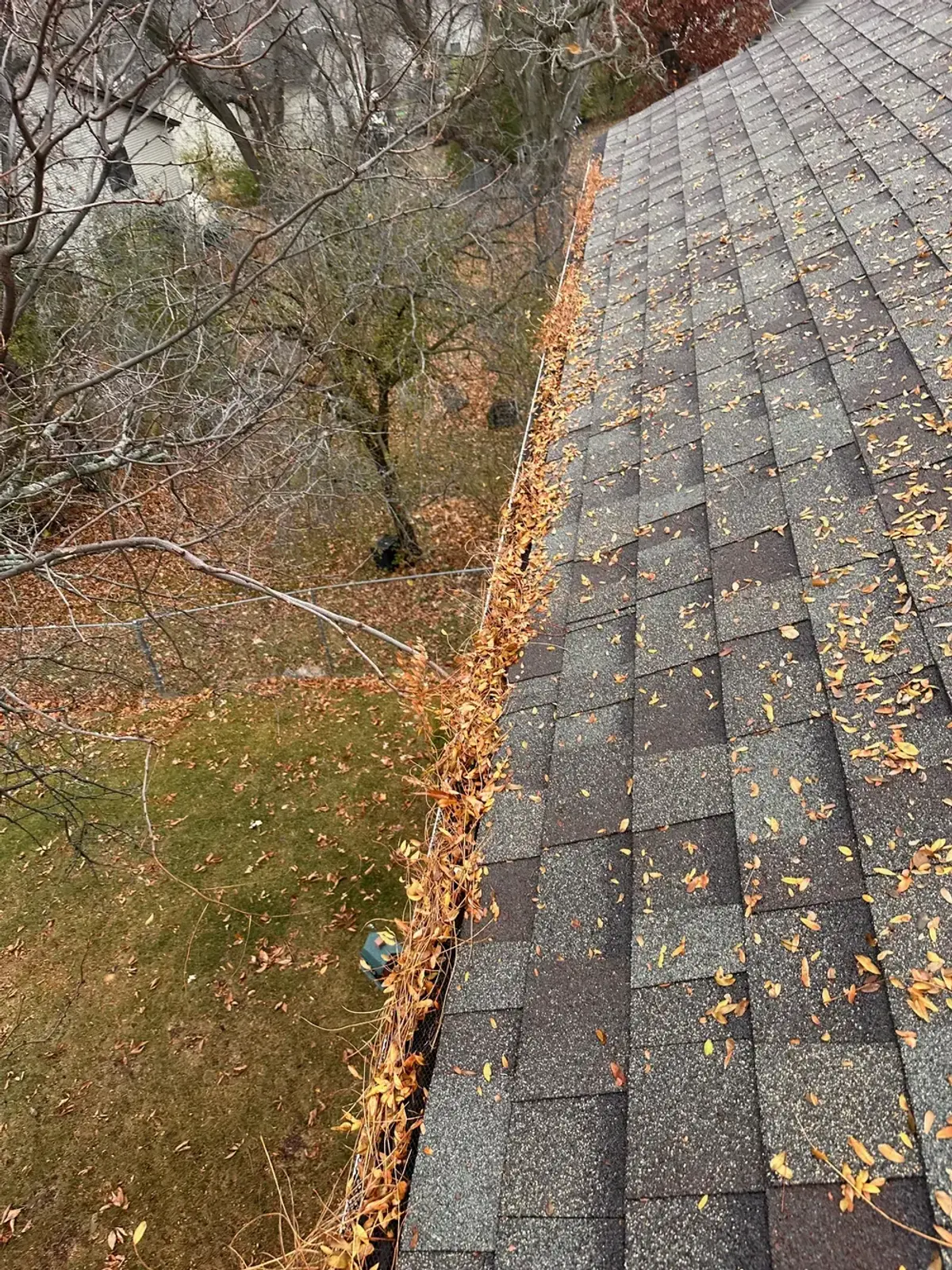
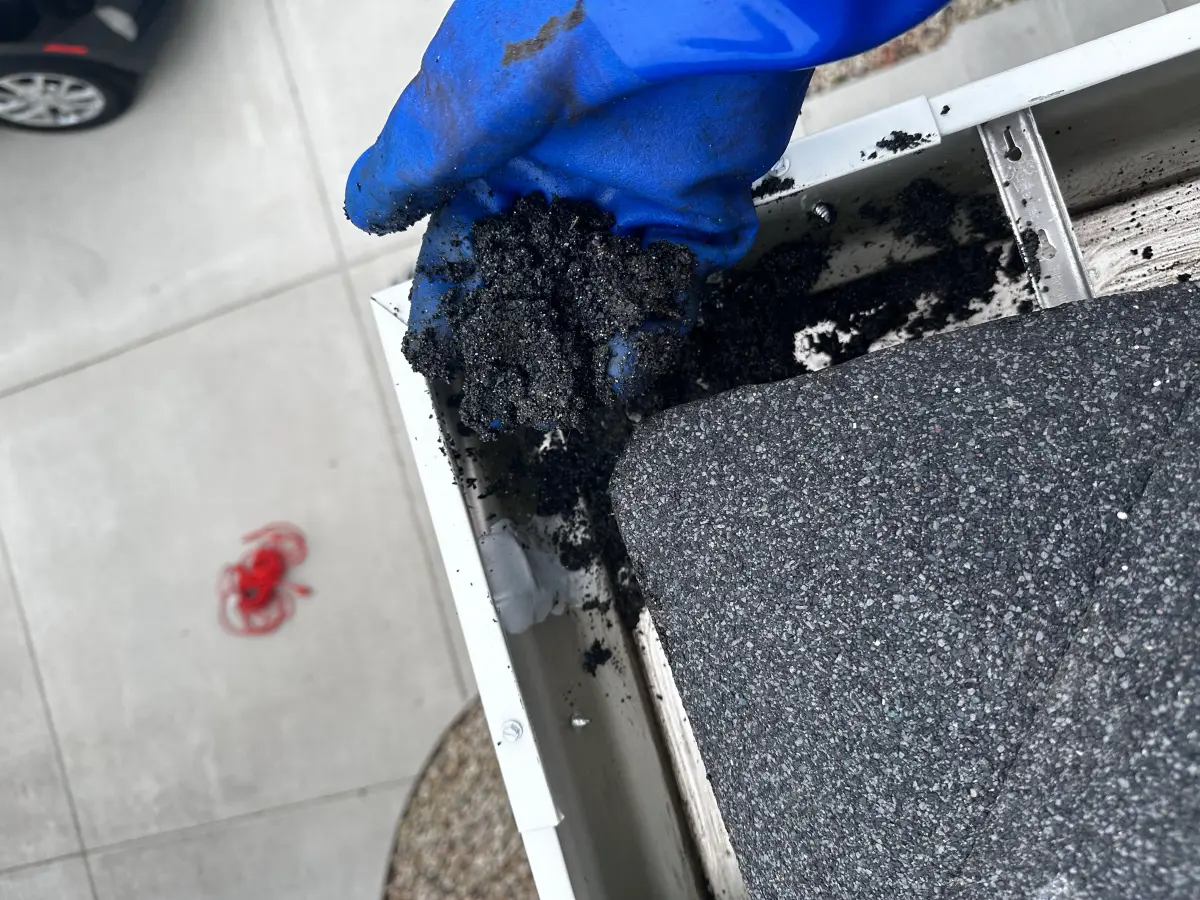
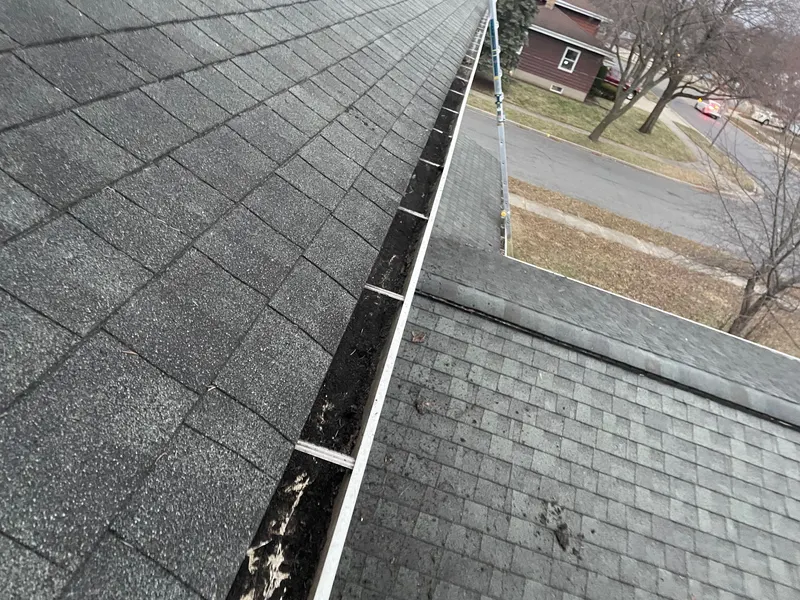
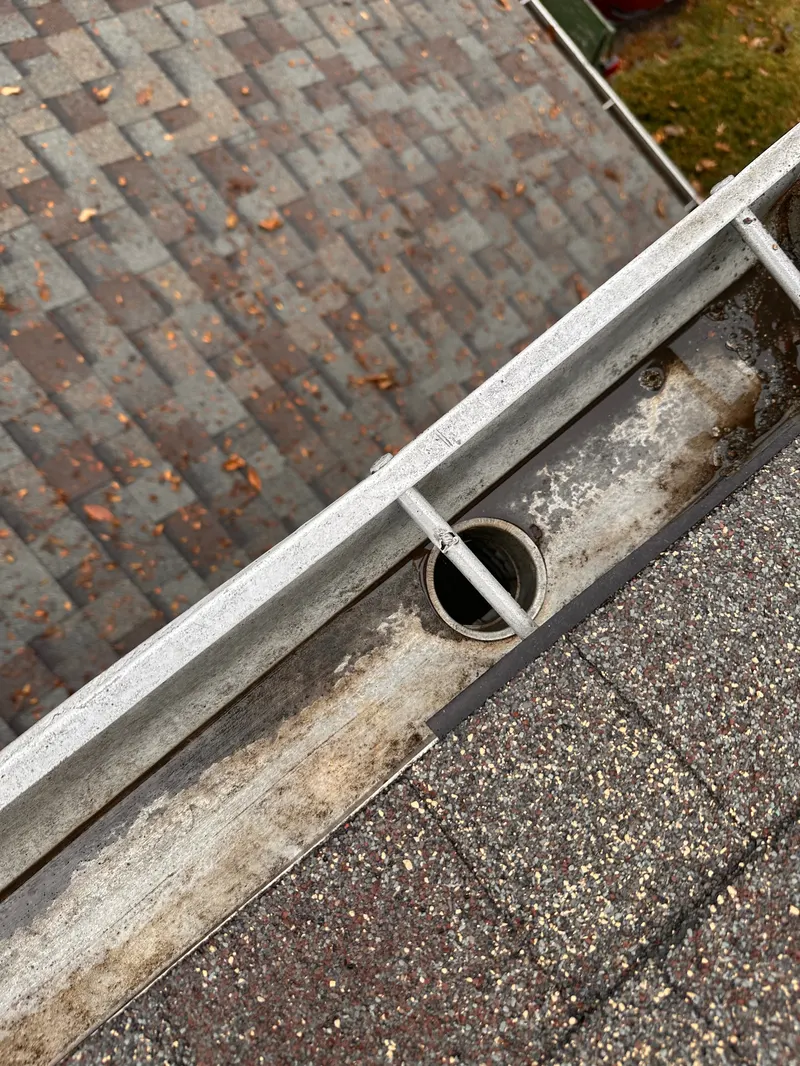
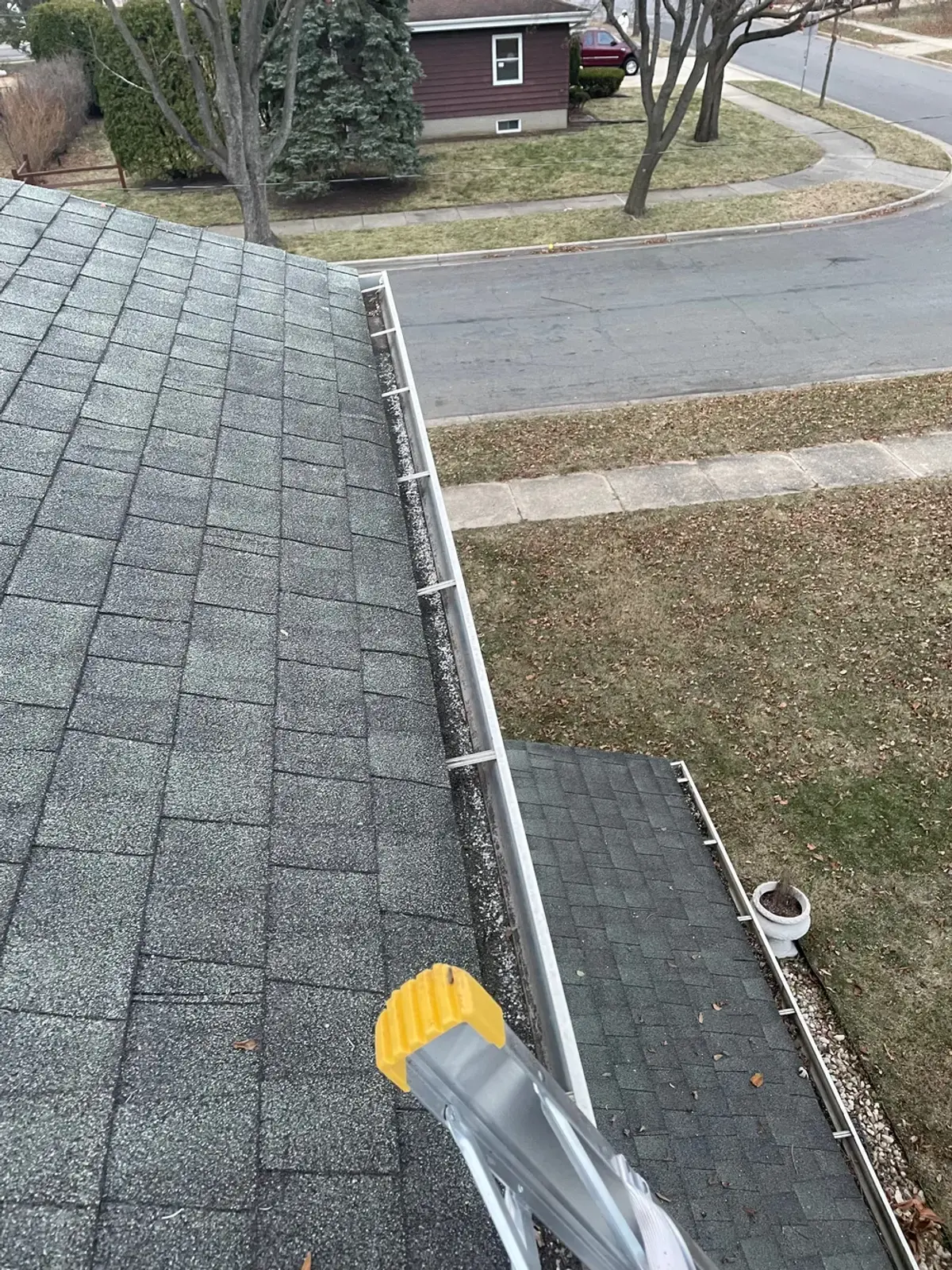
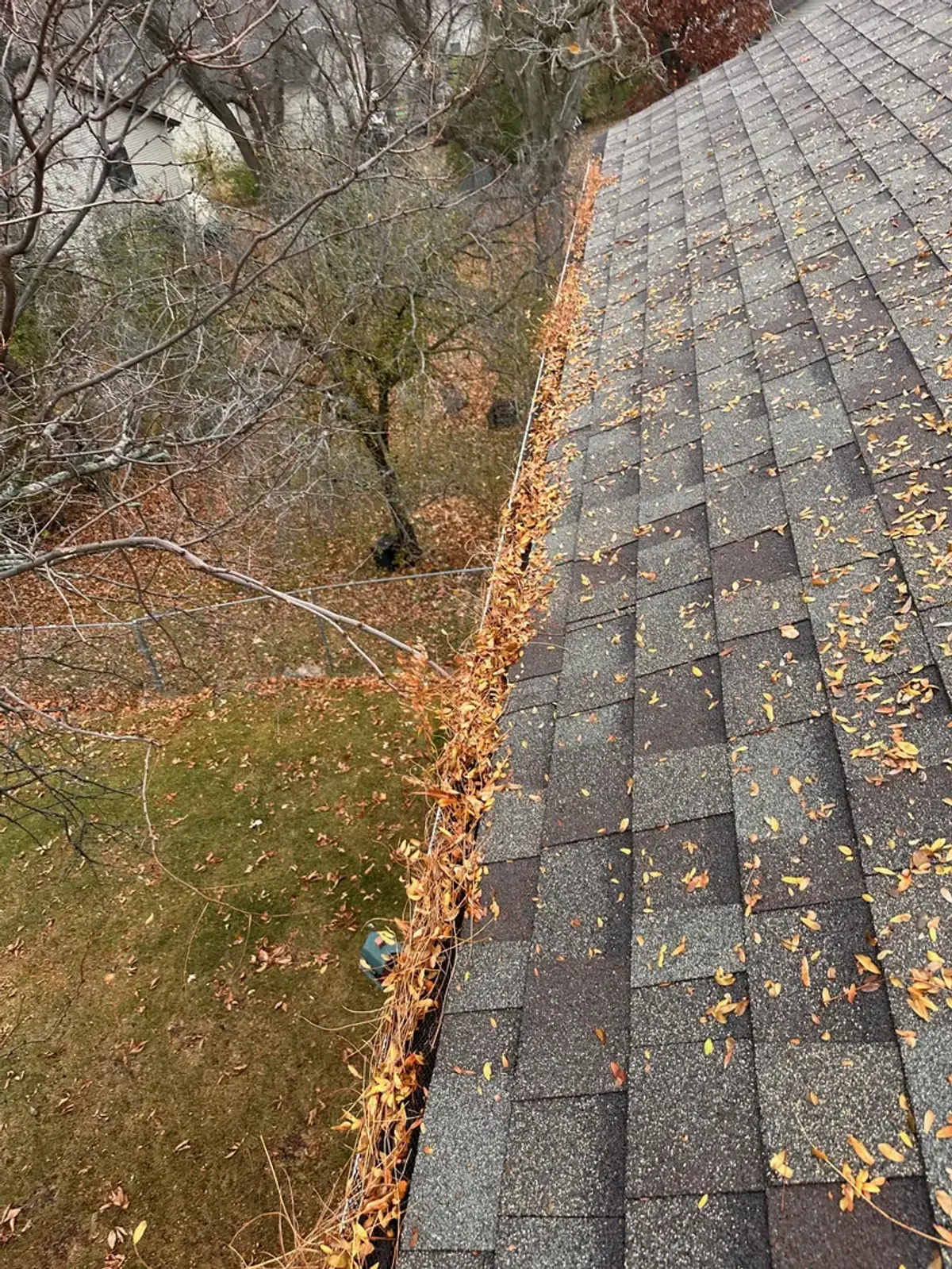
- Leaves and shingle grit pack the trough. By early November, a gutter under even a single mature maple can be 60–80% packed. Leaves decompose into a sponge-like mat. Shingle grit (from asphalt shingle wear) settles under it.
- The first freeze turns the mat into a plug. Water that’s trapped in the organic mat freezes first. The plug blocks any further drainage.
- Snowmelt has nowhere to go. On a sunny 38°F day, snow on the warm upper roof melts. That water runs down, hits the ice plug at the eave, and pools behind it on the roof deck.
- Pooled water refreezes overnight. When temps drop back to 22°F at 2 a.m., the pool becomes an ice dam on the roof itself — no longer just in the gutter.
- Capillary action drives water under the shingles. The next day’s melt finds the path of least resistance: backward, under the shingle course, onto the roof decking. That water then travels along the decking until it finds your attic insulation, your drywall, or the top of a window frame.
This is why a homeowner in Schenk-Atwood can get a ceiling stain in January from a gutter that was clogged in October. The damage is almost always upstream of where the stain appears.