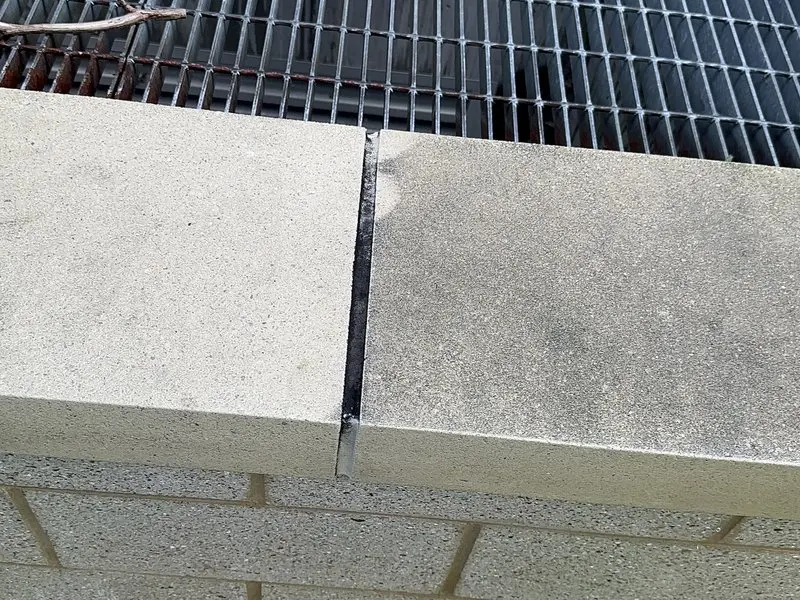
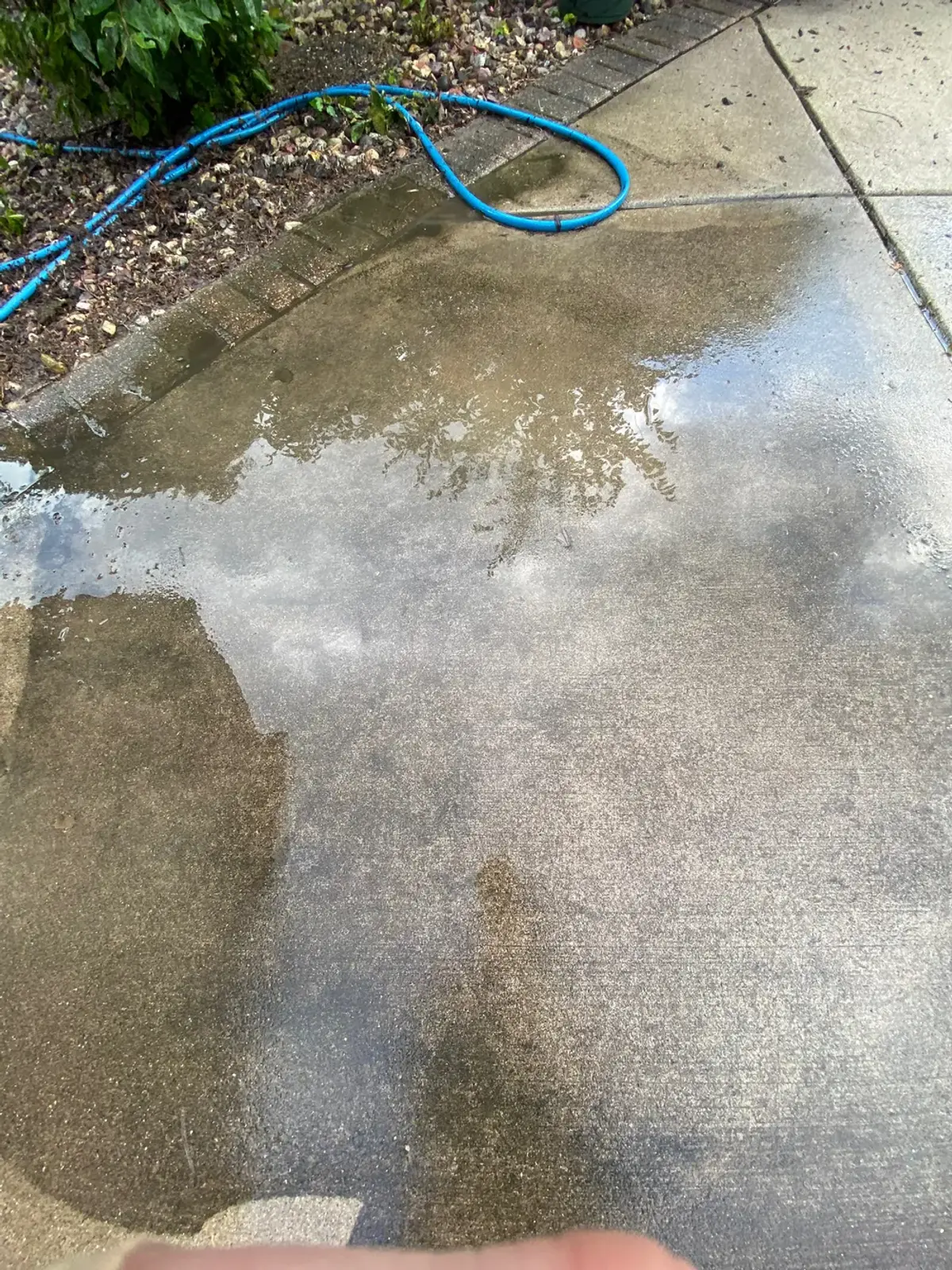
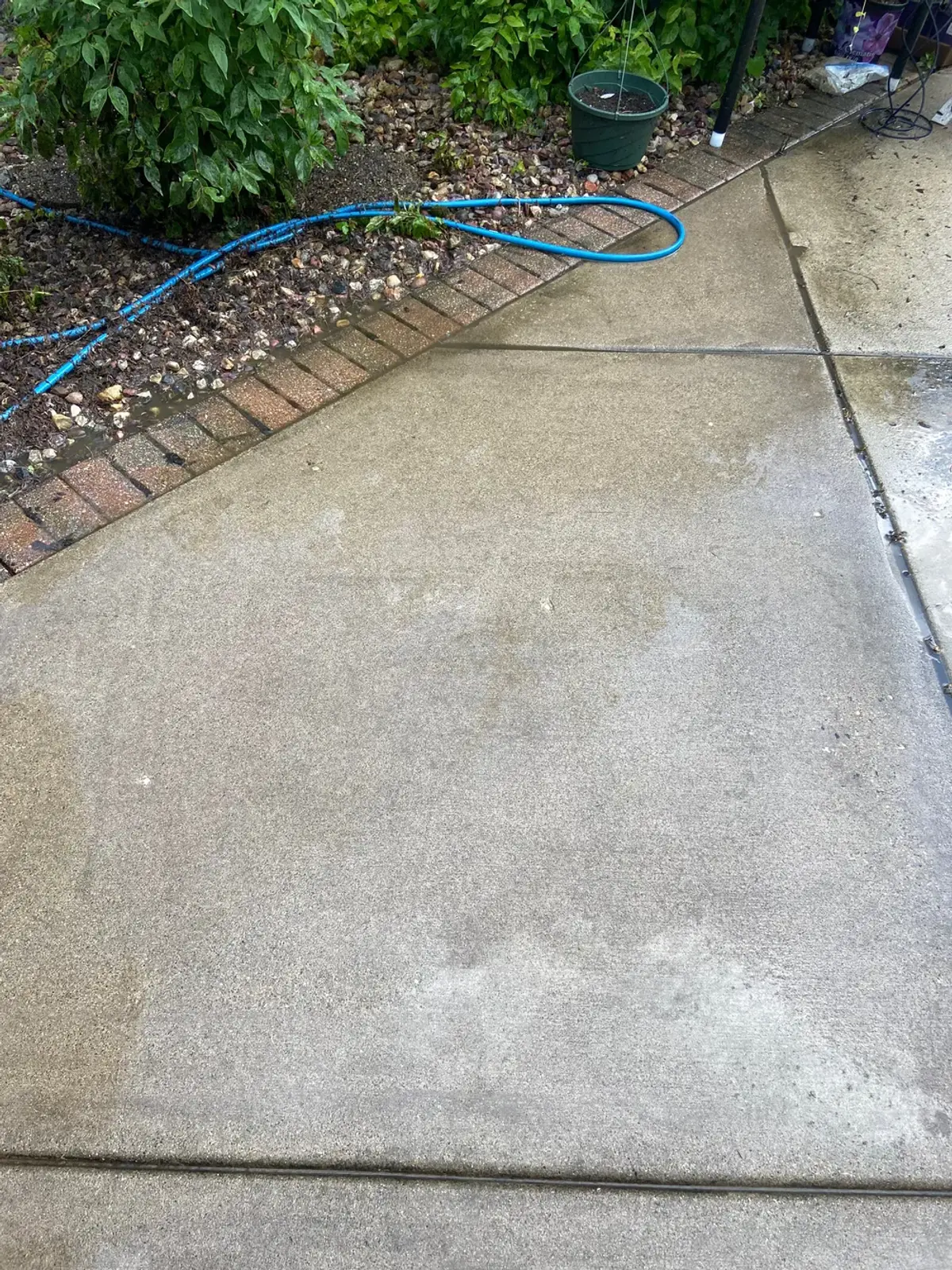
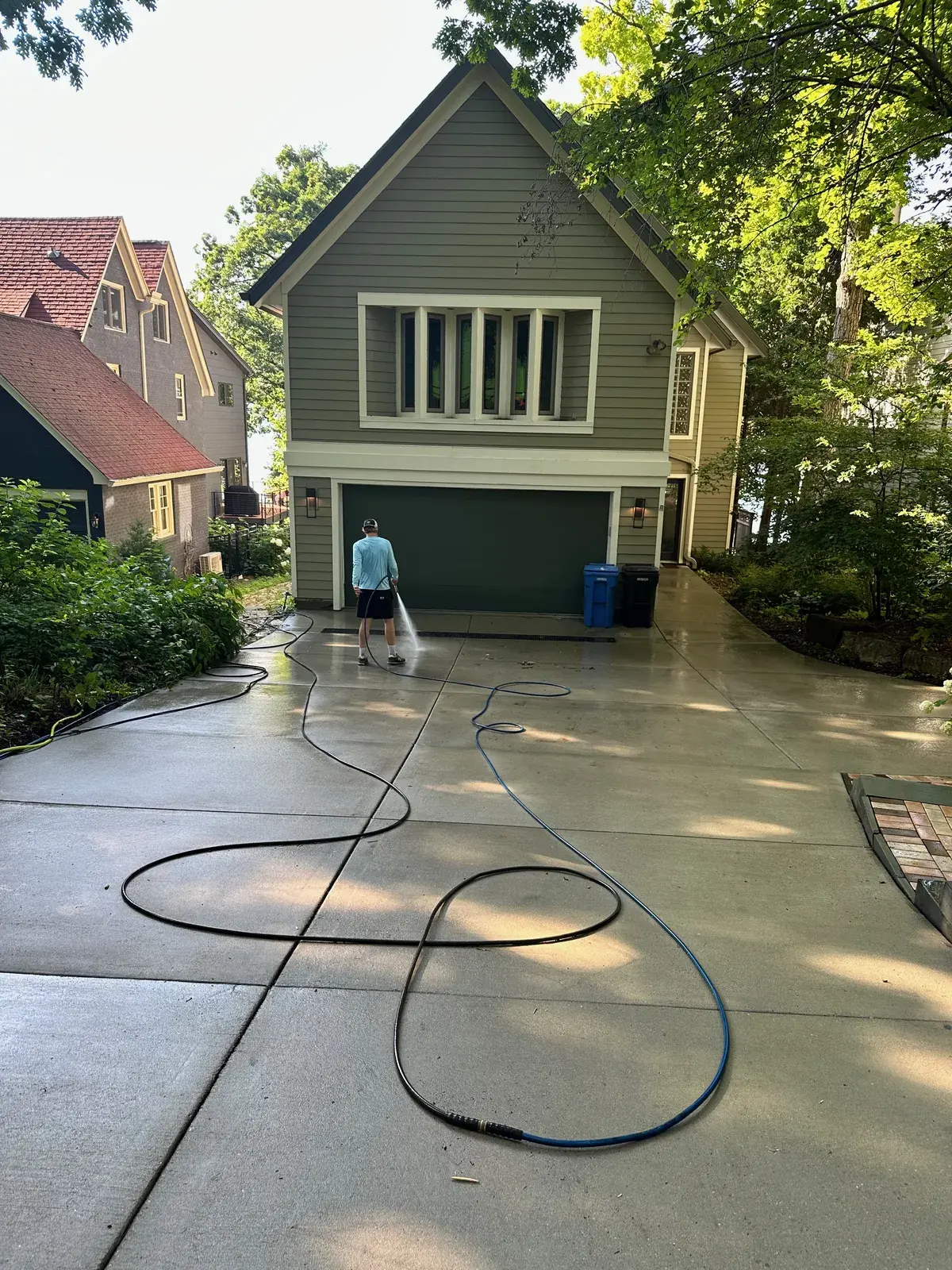
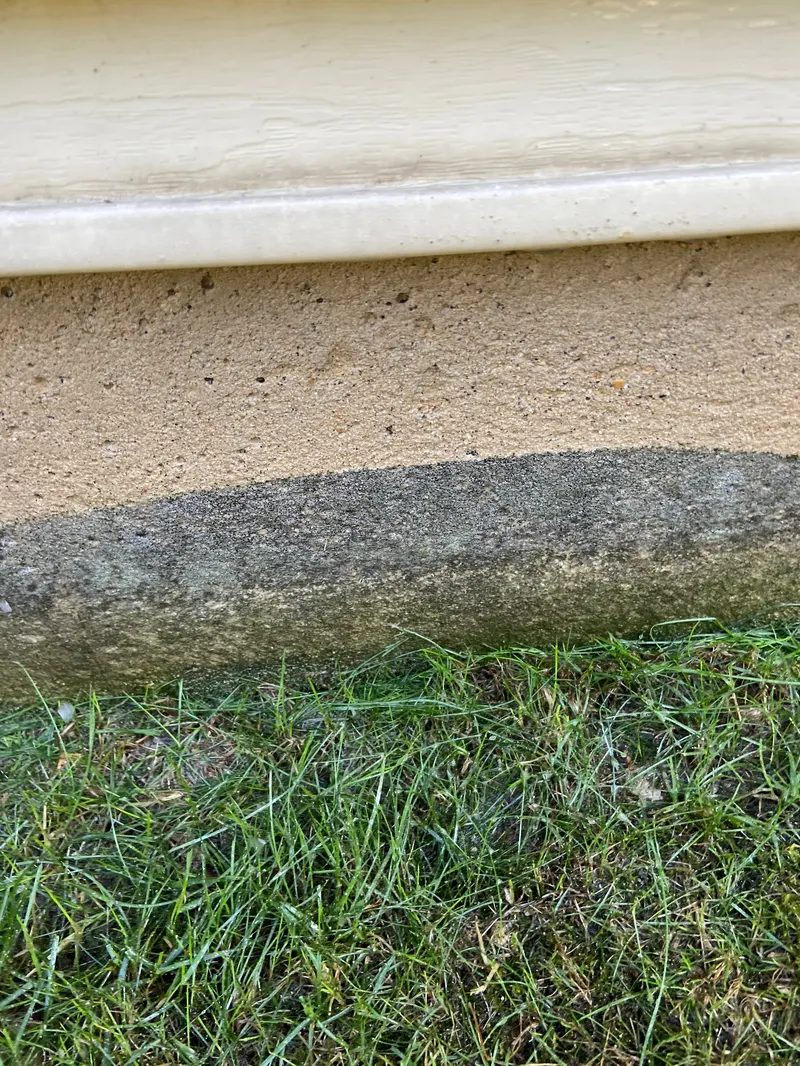
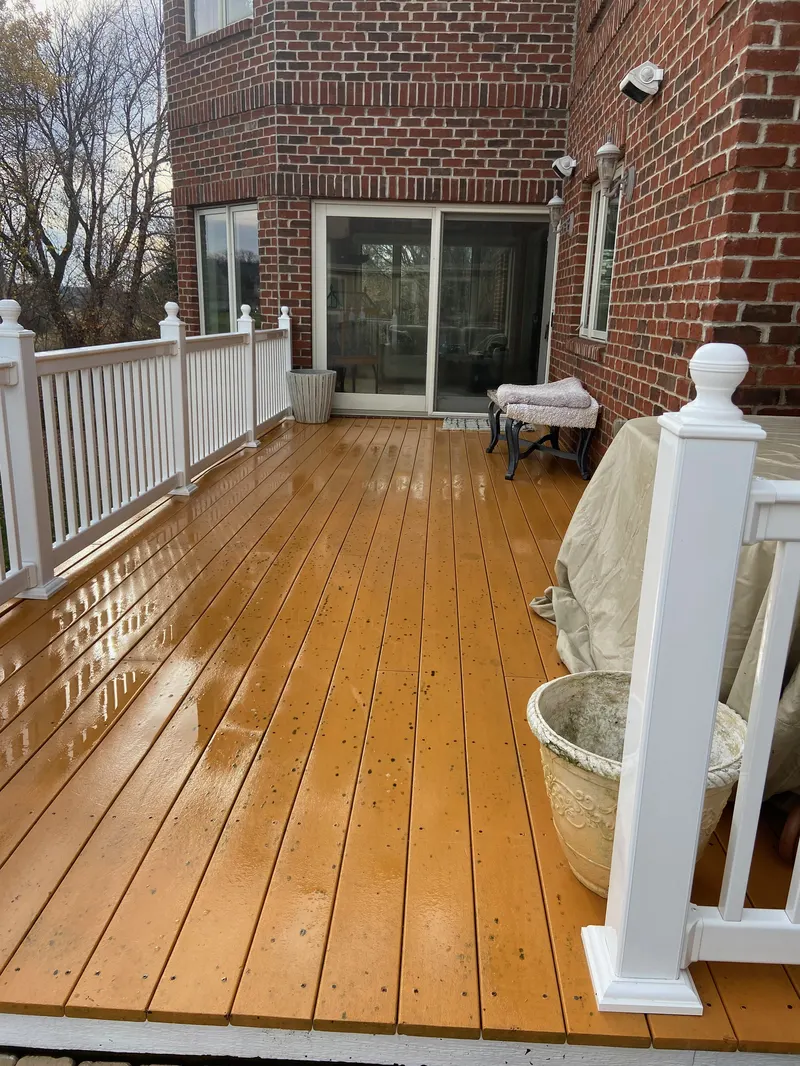
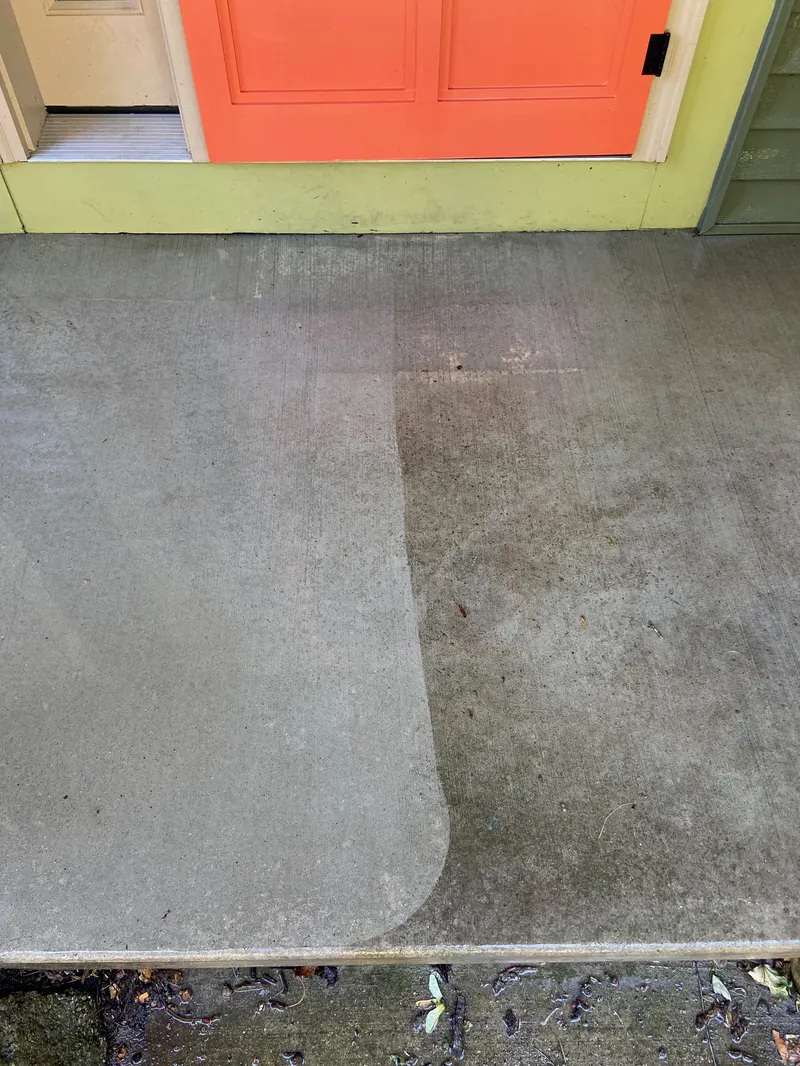
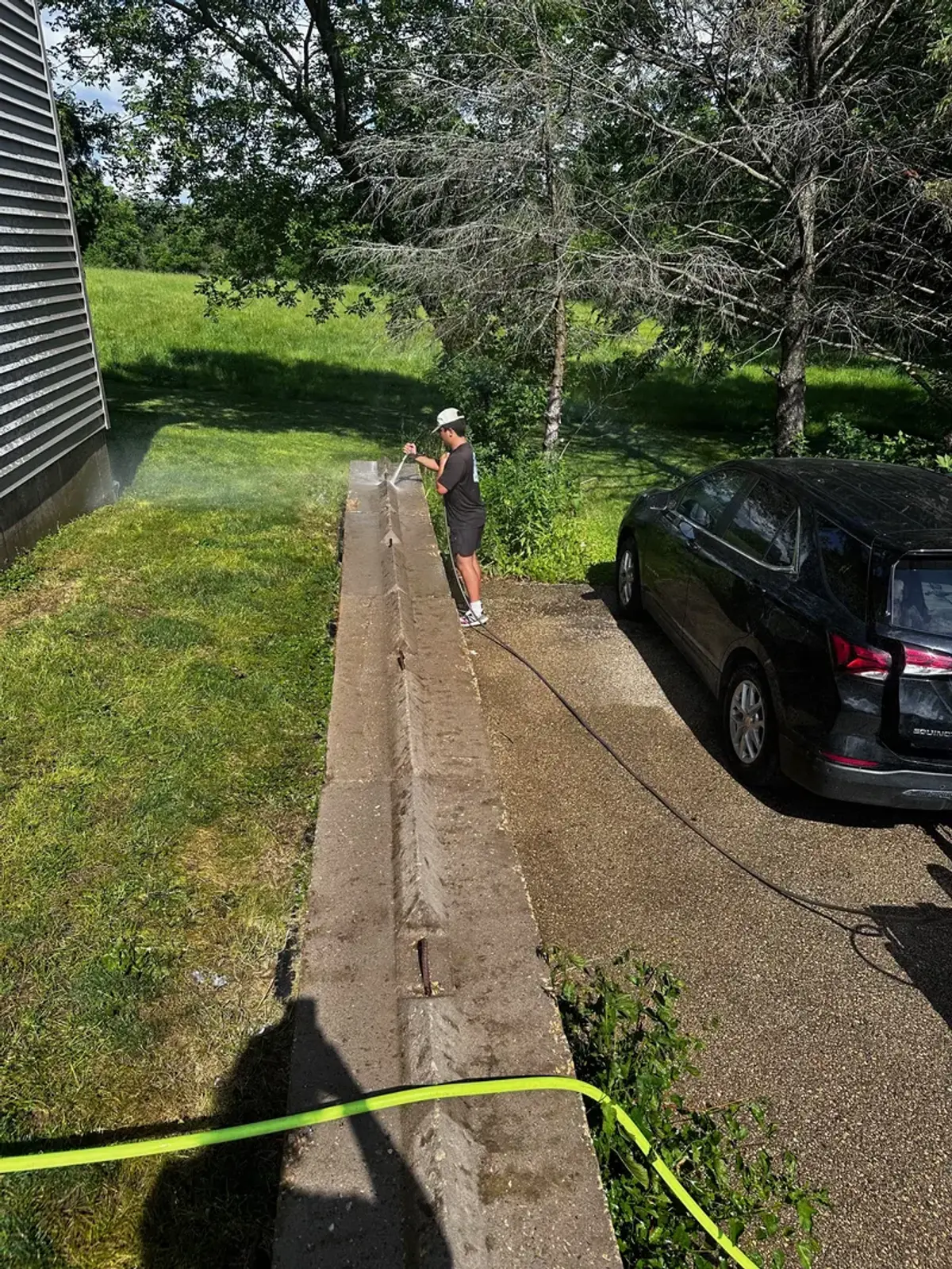
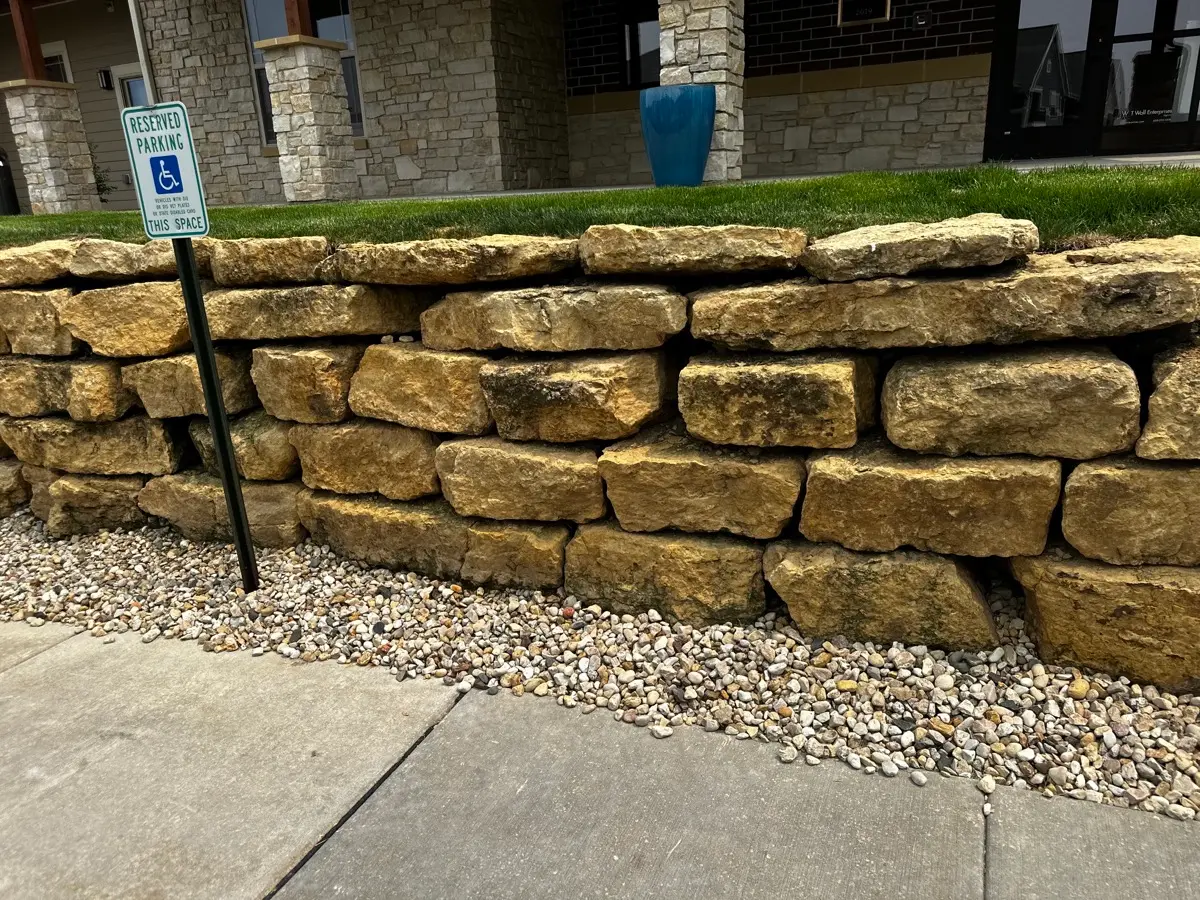
Real results from a recent clean concrete job in Madison, WI by The Total Wash Co.
# How Often Should You Pressure Wash Your Home's Exterior in Wisconsin?
Here's the short answer: **most homes in the Madison area need their exterior washed once a year, and some need it twice.** If you're asking how often to pressure wash your home exterior and hoping for a single number, that's it — one to two times per year, depending on your siding material, your lot, and what kind of Wisconsin winter just happened.
But the honest answer is a little more nuanced than that. I've washed hundreds of homes across Dane County, from older craftsman bungalows in Nakoma to newer vinyl-sided builds out in Waunakee and Sun Prairie, and the variables that determine your cleaning schedule are pretty consistent. Shaded lots accumulate biological growth faster. Homes near Lake Mendota or Lake Monona deal with extra humidity. And every single Wisconsin winter dumps road salt, freeze-thaw grime, and oxidation onto your siding in ways that warm-weather states just don't experience.
Let me walk you through what actually drives the answer.
---
## Why Wisconsin's Climate Makes Exterior Cleaning a Real Annual Need
I'm not going to pretend that everyone *needs* a wash every year just to sell jobs. But in Wisconsin, the case for annual exterior cleaning is genuinely strong — and it comes down to a few specific conditions.
**Winter road salt and brine.** The City of Madison and WISDOT pre-treat roads with liquid brine before storms and spread rock salt heavily through the season. That salt travels. It mists onto siding, gets into brick mortar joints, and accelerates oxidation on painted and vinyl surfaces. By the time March rolls around, homes close to arterial roads in neighborhoods like Monona or Fitchburg have a visible white haze along their lower courses of siding. That's salt residue and it's not doing your home any favors the longer it sits.
**Freeze-thaw cycles and biological growth.** Wisconsin averages somewhere around 100 freeze-thaw cycles per year in a typical winter. That repeated expansion and contraction opens up micro-pores in siding, brick, and wood — which then become ideal habitat for algae, mold, and mildew once temperatures climb in spring. Add in our summer humidity (Madison sits on an isthmus between two lakes, which keeps things damp well into the evening most of August) and you've got a perfect environment for organic growth to take hold fast.
**Glacial till soil and splash-back.** If you've ever looked at the bottom 18 inches of a home's foundation after a few hard spring rains, you know what I'm talking about. Madison's native soil is heavy glacial till — dense, clay-rich, and when it gets wet, it splashes. That lower band of siding gets hammered with organic-loaded mud every spring, and it shows.
All of this is why, when homeowners ask me how often to pressure wash their home exterior, my baseline recommendation for a typical Madison-area home is **every 12 months, ideally in late spring** after the last hard freeze.
---
## Factors That Push You Toward Twice a Year
Some homes genuinely need two washes per year. Here are the factors I look at when I'm giving a quote:
**Heavy tree canopy.** Homes in Shorewood Hills and Maple Bluff — beautiful neighborhoods, heavily wooded — deal with constant tannin staining, leaf debris, and pollen deposit. In a shaded environment, mold and algae have a shorter path to establishing themselves because the siding never fully dries out between rains. If more than 30-40% of your home's exterior is in shade for most of the day, you're a candidate for spring and fall washes.
**Composite or wood siding.** LP SmartSide, Hardie board, and genuine wood siding are more porous than standard vinyl. They hold moisture and biological growth more aggressively. I've seen Hardie board on a five-year-old home in Middleton that looked like it hadn't been touched in fifteen years because it faced north and sat under a large oak. Two washes per year keeps organic growth from getting a foothold and preserves the factory finish longer.
**High-traffic or road-facing frontage.** Homes on busier corridors — think Odana Road, Gammon Road, or anything along the Beltline corridor in Madison — collect exhaust particulate and road grime at a faster rate than homes on quiet residential streets. For those, a mid-summer or early fall secondary wash can make a noticeable difference in curb appeal.
**Recent pest or mold activity.** If you've dealt with a mold issue in or around your home, more frequent washing of the exterior helps interrupt recolonization cycles before they compound.
---
## The Difference Between Pressure Washing and Soft Washing — and Why It Matters for Frequency
This is a question I get all the time, and it's directly relevant to how often you pressure wash your home exterior, because the *method* affects how long the clean lasts.
**Pressure washing** uses high-pressure water (typically 1,500–3,000+ PSI) to blast contaminants off surfaces. It's highly effective on concrete, brick, and some hard surfaces. On siding, though, high pressure can drive water behind panels, crack vinyl, and strip paint if the operator isn't careful.
**Soft washing** is what I use on the vast majority of residential siding — vinyl, wood, Hardie, EIFS, stucco. It uses low pressure (under 100 PSI at the surface) combined with a properly diluted sodium hypochlorite (SH) solution and a surfactant to kill and remove biological growth at the root. The key advantage for homeowners: **a proper soft wash kills the mold and algae spores** rather than just blasting the visual growth off the surface. That means a soft-washed home stays cleaner longer — typically 12–18 months before visible regrowth — versus a pressure-only wash that may look great for 3–4 months and then quickly regreen.
So if someone washed your home last year with high-pressure only and you're seeing green again six months later, that's not evidence that you need four washes a year. It's evidence that the method was wrong. A soft wash done correctly actually *extends* your interval.
---
## What Happens If You Wait Too Long
I try not to use scare tactics, but I'll be honest about what I see when homeowners push their cleaning cycle to every 3–5 years or longer.
**Biological growth becomes structural.** Algae, mold, and mildew that sit on siding for years don't just stain — they eat. The hyphae (root structures) of mold and algae work into micro-gaps in vinyl, wood, and painted surfaces. What started as a cosmetic issue becomes a substrate degradation issue. I've cleaned homes in McFarland and DeForest where vinyl siding had to be replaced — not because it was old, but because unchecked organic growth had permanently discolored and warped it.
**Oxidation on vinyl accelerates.** Vinyl siding oxidizes naturally over time. Biological growth and acid rain residue speed that process dramatically. Once oxidation is severe, cleaning can actually reveal how chalky and faded the underlying surface has become — at which point the homeowner is looking at repainting or residing rather than just washing.
**Resale value takes a hit you can't easily recover.** If you're in Verona or McFarland and you're thinking about listing your home, a heavily soiled exterior is one of the first things a buyer's agent will photograph and flag. A full exterior wash typically runs a few hundred dollars. A negative impression in listing photos or a price concession at closing is a lot more expensive.
---
## My Recommended Schedule for Madison-Area Homeowners
Here's what I tell most of my customers when they're trying to establish a routine:
- **Late April to late May:** Primary annual wash. This is the sweet spot. The worst of the freeze-thaw season is behind us, pollen has finished its peak run, and you're not yet into the heavy summer humidity window. Salt residue, winter grime, and early-season algae all come off cleanly.
- **Late September to mid-October (for candidates only):** Secondary wash if you're in a heavily shaded lot, have had biological growth issues before, or want the home looking sharp heading into the holiday season. This also clears out any debris that's settled into gaps over the summer before it freezes in place.
- **After any major weather event:** Ice storms and severe wind events can deposit debris, staining, and organic matter in unusual ways. It's worth a visual inspection — not necessarily a full wash, but sometimes spot-cleaning is warranted.
Understanding how often to pressure wash your home exterior isn't just about aesthetics. It's about protecting a major investment. For most of us in Madison and the surrounding communities — Waunakee, Middleton, Fitchburg, Verona, Sun Prairie — our homes are the biggest single asset we own. Keeping the exterior clean is cheap maintenance relative to what neglect costs.
---
## How to Know If Your Home Is Overdue for a Wash
You don't need me to tell you. Walk around your home on a sunny afternoon and look for:
- **Green or black streaks** running down from roof overhangs, gutters, or windows — that's algae and mold tracking down the wall
- **Chalky white haze** on lower siding courses — salt residue or oxidation
- **Brown or gray staining** at the foundation line — mud splash and tannin staining
- **Dark patches in shaded areas** — mold colonies getting established
- **Dingy overall color** — your siding should look close to its original color in good light
If you're seeing two or more of these, you're overdue. If you genuinely can't remember the last time the exterior was professionally washed, assume it's time.
I offer free on-site quotes across the Madison area, including Nakoma, Maple Bluff, Shorewood Hills, Monona, Middleton, and all surrounding Dane County communities. I'll take a look at what's going on with your siding and give you a straight answer about what needs to be done and what it'll cost — no upselling, no pressure.
---
## Vinyl vs Hardie vs Cedar vs Brick: Siding Material Changes the Schedule
I want to be direct about something I see misunderstood constantly: pressure washing isn't one-size-fits-all, and the siding material on your house changes nearly everything about how I approach a job. PSI, chemistry, frequency — all of it shifts depending on what we're actually cleaning.
**Vinyl siding** is what I see on probably 60% of the homes we service, especially anything built in Madison after the mid-90s. Vinyl's main enemies are green algae streaking along the north face and black mold along the bottom courses, plus that chalky oxidation on older panels that looks like someone rubbed chalk dust on your house. The good news is vinyl tolerates soft-wash chemistry well — a diluted sodium hypochlorite (SH) mix with a good surfactant like Sunburst or EBC will knock biological growth flat without scrubbing. The honest caveat: heavy oxidation chalking on older vinyl doesn't fully come back after cleaning. I'll tell you that upfront rather than take your money and leave you disappointed. Most vinyl homes in Madison need a proper soft-wash once a year, maybe twice if you're near Starkweather Creek or have mature tree canopy overhead.
**Fiber-cement and James Hardie** boards are everywhere in newer Fitchburg and Verona builds, and they require the most careful approach on my entire service menu. Hardie's own published spec warns against pressure washing above 1,500 PSI, and for good reason — the paint bond on fiber-cement is everything. Blast it wrong and you're not just cleaning the house, you're starting the clock on a $15,000 repaint. I keep pressure low, let the chemistry do the work, and I always inspect the horizontal joint caulking while I'm there because failed caulk on Hardie is how moisture gets behind the panel and causes delamination. Last spring I was at a five-year-old Verona home off County PB — beautiful board-and-batten Hardie installation — and found three joints on the west gable that had already started separating. The homeowner had no idea. That's the kind of thing I mention, not because it adds to my invoice, but because ignoring it turns into a contractor call next year.
**Cedar and wood siding** on the older Maple Bluff and Nakoma homes I service needs the same mindset I bring to deck restoration. I treat it almost identically: low pressure, SH to kill the biological growth, then follow with an oxalic acid brightener to pull the gray oxidation out of the wood grain and restore color before any sealing or staining. Skip the brightener step and the wood looks clean but still gray and lifeless. The oxalic also neutralizes the SH residue, which matters on bare or lightly finished wood.
**Brick** is common on older Shorewood Hills and Dudgeon-Monroe homes, and it's the one where I'm most cautious about what I *don't* use. Efflorescence — that white salt bloom you see near downspouts and grade level — is tempting to hit with acid cleaners, but muriatic or any strong acid will attack the lime mortar in older brick joints. I use very diluted applications and always wet the wall first. If the mortar looks soft or crumbly already, I'd rather tell you to call a mason before I make it worse.
---
Ready to schedule? [Get a free quote →](/quote) or call us at (608) 393-7899
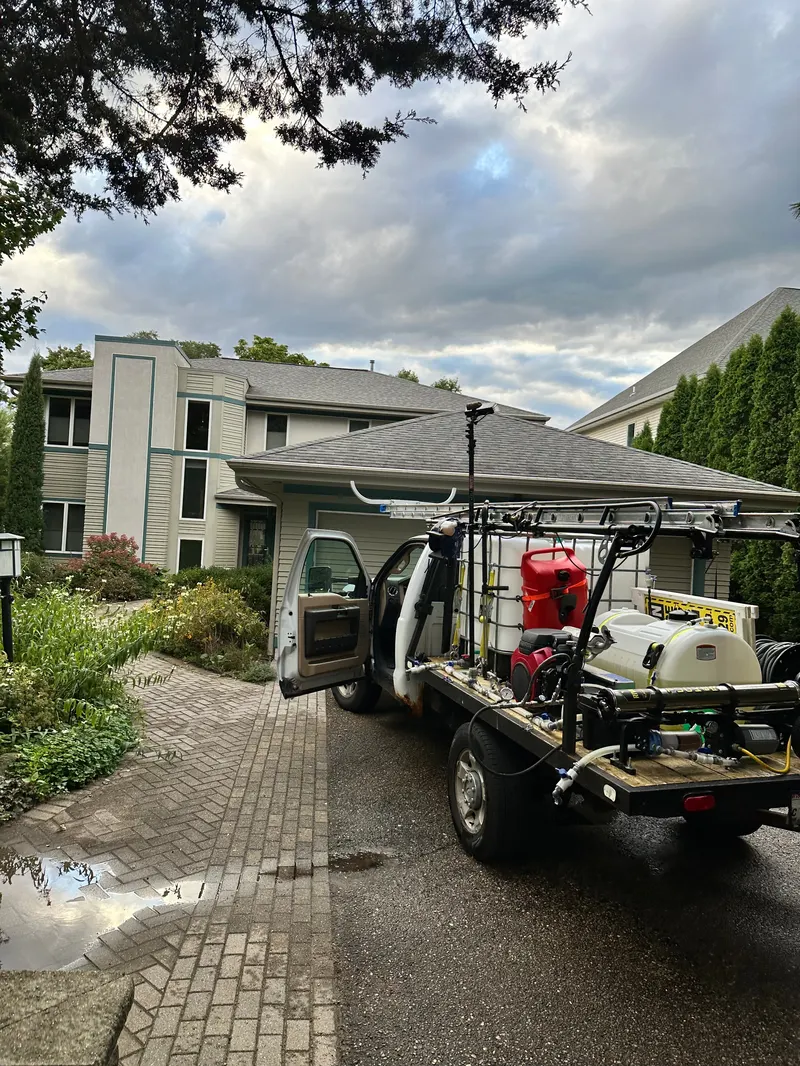
Professional equipment — The Total Wash Co., Madison WI
Professional-grade equipment used by The Total Wash Co. on every job in Madison, WI
Real Results — How Often Should You Pressure Wash Your Home Exterior? in Madison, WI
Actual job photos from The Total Wash Co. — not stock photography
More Results
Frequently Asked Questions
What Madison Customers Say
"Our driveway hadn't been cleaned in years and looked terrible. The Total Wash Co. made it look brand new in a couple hours. Incredible difference."
"Ashton and his crew did a fantastic job soft washing our home. The green mildew and stains are completely gone. House looks like it was just painted!"
Founder & Owner · The Total Wash Co. · Madison, WI
Ashton has personally led 2,000+ exterior cleaning projects across Dane County since founding The Total Wash Co. in 2022. Every article is grounded in real field experience — not generic content.
PWNA Member201+ 5-Star ReviewsFully InsuredAngi Super Service Award
No-Obligation Quote
Get Your Instant Price. No Surprises.
See exact pricing in 60 seconds — no call, no pressure. No surprises, no hidden fees — just honest pricing.